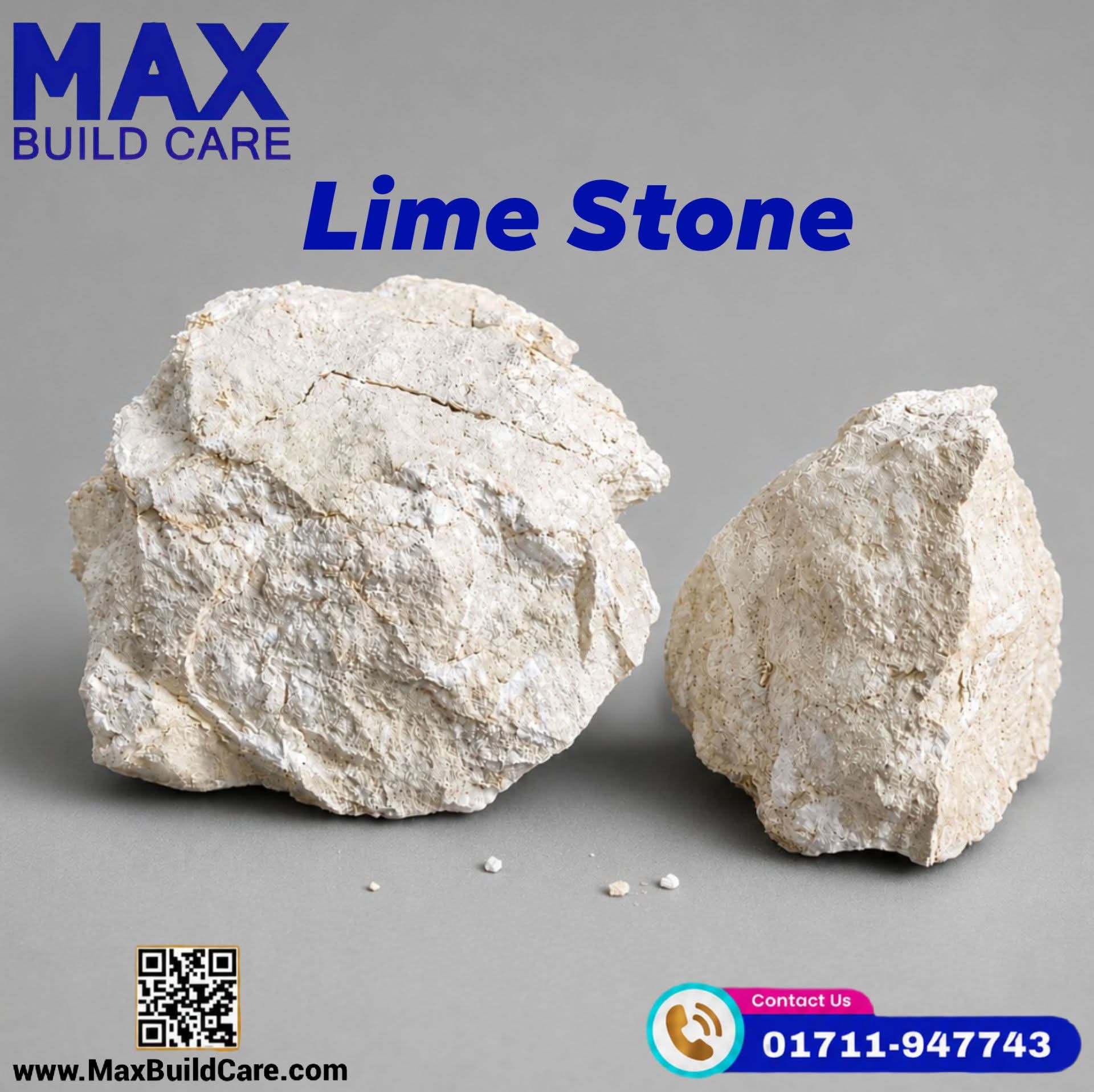
Description
Limestone (Calcium Carbonate – CaCO₃) – Complete Industrial Description
Chemical Formula: CaCO₃
Chemical Name: Calcium Carbonate
Appearance: White, Grey, or Off-White Natural Stone, Lumps, Chips, Granules, or Powder
Type: Natural Sedimentary Mineral
Limestone (Calcium Carbonate) is one of the world’s most abundant and valuable natural minerals. It is a sedimentary rock composed primarily of Calcium Carbonate (CaCO₃), formed over millions of years through the accumulation of marine shells, corals, algae, and other calcium-rich organisms. Because of its exceptional purity, high calcium content, and wide industrial applicability, limestone has become one of the most important raw materials for modern construction, manufacturing, and environmental industries.
Limestone is widely used in cement production, construction, steel manufacturing, glass production, agriculture, water treatment, chemical processing, paper, plastics, paint, ceramics, rubber, and many other industries. It is also the primary raw material for producing Quick Lime (Calcium Oxide – CaO) and Hydrated Lime (Calcium Hydroxide – Ca(OH)₂), making it indispensable in numerous industrial processes.
Depending on customer requirements, limestone is supplied as large rocks, crushed aggregates, chips, granules, or finely ground limestone powder.
Chemical Composition
Limestone consists mainly of calcium carbonate, along with small amounts of naturally occurring minerals.
Chemical Formula
CaCO₃
Typical Chemical Composition
- Calcium Carbonate (CaCO₃): 95–99%
- Magnesium Carbonate (MgCO₃): Trace to 3%
- Silica (SiO₂): Low
- Iron Oxide (Fe₂O₃): Trace
- Alumina (Al₂O₃): Trace
- Moisture: Very Low
High-purity limestone is preferred for industrial applications requiring consistent quality and chemical composition.
Manufacturing and Processing
Limestone is extracted from quarries using controlled mining methods. After extraction, it is processed according to the intended industrial application.
Processing Steps
- Quarrying from natural limestone deposits
- Crushing into different sizes
- Screening and grading
- Grinding (for limestone powder)
- Quality inspection
- Packaging or bulk transportation
Advanced processing techniques ensure uniform particle size, high purity, and consistent product performance.
Production of Quick Lime
One of the most important uses of limestone is the production of Quick Lime (Calcium Oxide).
Limestone is heated in a lime kiln at temperatures between 900°C and 1100°C, a process known as calcination.
Chemical Reaction
CaCO₃ → CaO + CO₂↑
The carbon dioxide is released, leaving behind Quick Lime (Calcium Oxide).
Production of Hydrated Lime
Quick Lime reacts with water to produce Hydrated Lime (Calcium Hydroxide).
Chemical Reaction
CaO + H₂O → Ca(OH)₂ + Heat
This process is called hydration or slaking, producing a highly reactive material widely used in construction, water treatment, and chemical industries.
Key Properties
Limestone offers numerous industrial advantages:
- High calcium carbonate content
- Excellent chemical stability
- Good compressive strength
- Easy to crush and process
- Low impurity content
- Excellent whiteness (selected grades)
- Cost-effective natural mineral
- Environmentally friendly
These properties make limestone suitable for a wide range of industrial applications.
Major Industrial Applications
Cement Industry
Limestone is the principal raw material used in cement manufacturing, supplying calcium required for clinker production and contributing to the strength and durability of cement.
Construction Industry
Widely used for:
- Building stone
- Road construction
- Concrete aggregates
- Infrastructure projects
- Decorative stone
- Foundation works
Steel Industry
Limestone acts as a flux during steel production by removing impurities such as silica, sulfur, and phosphorus, thereby improving steel quality and furnace efficiency.
Glass Industry
Provides calcium oxide for glass manufacturing, improving:
- Mechanical strength
- Chemical durability
- Heat resistance
- Product quality
Water and Wastewater Treatment
Used for:
- pH adjustment
- Water softening
- Acid neutralization
- Heavy metal removal
- Industrial wastewater treatment
Agriculture
Ground limestone is widely applied as agricultural lime to:
- Neutralize acidic soils
- Improve soil fertility
- Increase nutrient availability
- Enhance crop yields
Chemical Industry
Limestone is the primary raw material for manufacturing:
- Quick Lime (CaO)
- Hydrated Lime (Ca(OH)₂)
- Calcium Chloride
- Calcium Nitrate
- Various calcium-based industrial chemicals
Paint, Plastic, Paper, Rubber & Ceramic Industries
Finely ground limestone powder serves as a high-quality filler that:
- Improves product strength
- Enhances whiteness
- Reduces production costs
- Improves surface finish
- Enhances processing performance
Advantages
Limestone provides many industrial benefits:
- Naturally abundant
- Economical raw material
- High calcium content
- Multi-purpose industrial applications
- Easy processing
- Environmentally friendly
- Reliable and consistent quality
- Excellent long-term performance
Technical Parameters (Typical)
- Calcium Carbonate (CaCO₃): 95–99%
- Moisture: ≤1%
- Appearance: White to Grey
- Specific Gravity: Approximately 2.7
- Mohs Hardness: 3
- Solubility: Slightly soluble in water
Packaging and Supply
Limestone is supplied in:
- Large quarry blocks
- Crushed stone
- Aggregates
- Limestone chips
- Limestone granules
- Limestone powder
- 25 kg bags
- 50 kg bags
- Jumbo Bags (500–1000 kg)
- Bulk truck delivery
Custom particle sizes and grades are available according to customer specifications.
Storage and Handling
Limestone should be stored in a clean and dry location.
For limestone powder:
- Protect from moisture
- Keep bags tightly sealed
- Avoid contamination
Proper storage ensures product quality and ease of handling.
Safety and Handling
Limestone is generally safe under normal industrial conditions.
Safety Recommendations
- Wear a dust mask when handling powder
- Use safety goggles to protect eyes
- Maintain adequate ventilation
- Wash hands after handling
Follow standard industrial hygiene practices during storage and use.
Why Choose Max Build Care?
Max Build Care supplies premium-quality Limestone (Calcium Carbonate – CaCO₃) for cement plants, construction companies, steel mills, glass manufacturers, chemical industries, water treatment facilities, ceramic factories, paint manufacturers, and agricultural sectors throughout Bangladesh.
We offer:
- High-Purity Limestone
- Consistent Chemical Composition
- Competitive Wholesale Pricing
- Bulk Supply Capability
- Fast Nationwide Delivery
- Technical Documentation (TDS & COA)
- Professional Customer Support
Whether you need Limestone Rocks, Chips, Aggregates, Granules, or Powder, Max Build Care provides reliable products tailored to your industrial requirements.
Contact for the Best Price
If you are looking for high-quality Limestone (CaCO₃) in Bangladesh, contact Max Build Care today. We offer competitive pricing, dependable supply, and expert technical support for projects of all sizes. Our team is ready to provide customized quotations based on your required grade, particle size, and order quantity, ensuring the right solution for your industrial needs.
Reviews
There are no reviews yet.