Polyacrylamide (PAM) Price in Bangladesh
৳ 180.00
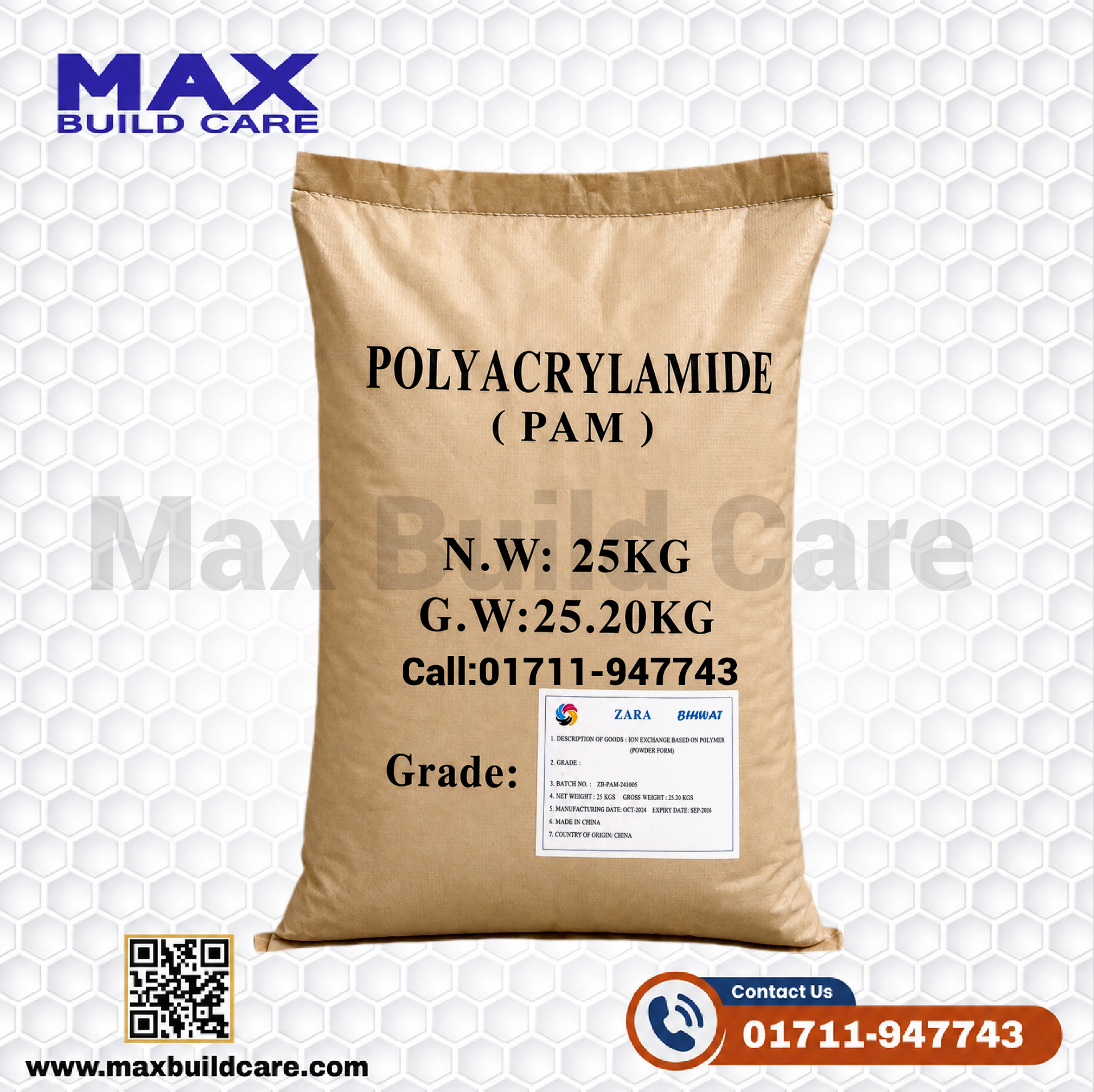
Polyacrylamide (PAM) is a water-soluble synthetic polymer widely used as a flocculant to separate suspended solids from water. It helps fine particles combine into larger flocs, making sedimentation, filtration, and sludge dewatering more efficient. Depending on its ionic type and molecular weight, PAM is used in industrial effluent treatment plants (ETP), sewage treatment plants (STP), paper manufacturing, mining, mineral processing, and various industrial applications.
Polyacrylamide (PAM) – Industrial Water Treatment & ETP Chemical in Bangladesh
Product Overview
Polyacrylamide (PAM) is a water-soluble synthetic polymer widely used in industrial water treatment, Effluent Treatment Plants (ETP), wastewater treatment, sludge dewatering, and solid-liquid separation processes. It functions primarily as a flocculant, helping fine suspended particles combine into larger aggregates called flocs. These flocs can then be separated from water through sedimentation, filtration, or other suitable treatment processes.
Polyacrylamide is an important industrial chemical for factories that need to improve wastewater clarification, manage sludge, and optimize treatment plant performance. It is used in textile manufacturing, dyeing and washing facilities, paper mills, mining operations, mineral processing plants, and other industries where effective solid-liquid separation is required.
Chemical Name: Polyacrylamide
Abbreviation: PAM
Chemical Formula: (C₃H₅NO)ₙ, representing the repeating unit of polyacrylamide
Typical Appearance: White granular powder
Available Types: Anionic, Cationic, and Nonionic
Main Applications: ETP, wastewater treatment, sludge dewatering, water clarification, and industrial processing
Types of Polyacrylamide (PAM)
Selecting the correct PAM type is essential for achieving effective treatment results. The suitable grade depends on the wastewater composition, suspended particles, pH, and treatment process.
1. Anionic Polyacrylamide (APAM)
Anionic PAM carries negatively charged functional groups and is commonly used for treating wastewater containing suitable positively charged particles or mineral solids. It is widely applied in mining, mineral processing, industrial wastewater treatment, and sludge settling applications.
2. Cationic Polyacrylamide (CPAM)
Cationic PAM carries positively charged functional groups and is frequently used in sludge conditioning, sludge dewatering, and wastewater treatment involving organic solids. It can improve floc formation and help separate water from sludge when the grade is compatible with the process.
3. Nonionic Polyacrylamide (NPAM)
Nonionic PAM has relatively low ionic character and may be suitable for selected wastewater treatment, mineral processing, and industrial applications where nonionic polymer characteristics are preferred.
Key Features and Benefits of Polyacrylamide
Efficient Flocculation
PAM helps suspended particles combine into larger flocs, supporting faster and more effective solid-liquid separation under suitable treatment conditions.
Improved Water Clarification
When the correct grade and dosage are selected, Polyacrylamide can help reduce suspended solids and improve the clarity of treated water.
Sludge Dewatering Support
PAM is widely used to condition sludge before mechanical dewatering. Depending on the sludge characteristics and equipment, it can improve dewatering performance and reduce the volume of wet sludge requiring handling.
Industrial ETP Applications
Polyacrylamide supports wastewater treatment operations in various manufacturing industries. It is generally used as part of a treatment system rather than as a complete replacement for other necessary treatment chemicals or processes.
Potential Operating Cost Savings
Optimized polymer selection and dosage may reduce chemical consumption, improve processing efficiency, and support more economical sludge management.
Major Applications of PAM
Polyacrylamide is used in a wide range of industrial and environmental applications, including:
- Effluent Treatment Plants (ETP)
- Sewage Treatment Plants (STP)
- Textile and dyeing industry wastewater treatment
- Paper and pulp manufacturing
- Mining and mineral processing
- Coal washing and tailings management
- Industrial sludge thickening and dewatering
- Water clarification and sedimentation
- Selected oilfield and drilling operations
- Industrial process-water treatment
The suitability of a particular grade should be confirmed through wastewater testing and supplier recommendations.
Preparation and Application Method
PAM is generally supplied as a dry powder and prepared as a dilute polymer solution before use.
Step 1: Solution Preparation
Gradually add the recommended quantity of PAM powder to clean water while mixing gently to prevent lump formation.
Step 2: Hydration
Allow sufficient mixing and hydration time according to the product’s Technical Data Sheet (TDS). Avoid excessive agitation that may damage the polymer chains.
Step 3: Dosage Optimization
Determine the appropriate dosage through jar testing or controlled plant trials. The required amount varies according to wastewater quality and treatment objectives.
Step 4: Dosing and Flocculation
Introduce the prepared solution at the designated treatment stage. Provide suitable mixing conditions to promote floc formation without unnecessarily breaking the flocs.
Step 5: Separation
Allow the formed flocs to settle, float, or undergo filtration, depending on the treatment system.
Storage and Safety
Store Polyacrylamide in sealed packaging in a cool, dry, well-ventilated area. Protect it from moisture and contamination. Avoid creating or inhaling powder dust and wear appropriate personal protective equipment.
Spilled dry PAM can make floors extremely slippery when wet. Clean spills carefully using the procedures specified in the Safety Data Sheet (SDS). Follow the manufacturer’s handling, storage, and disposal recommendations.
Polyacrylamide (PAM) Price in Bangladesh
The Polyacrylamide (PAM) price in Bangladesh depends on the polymer type, molecular weight, charge density, grade, brand, packaging, and order quantity. Anionic, cationic, and nonionic grades may have different prices and performance characteristics.
Max Build Care supplies industrial chemicals and water treatment chemicals for factories, ETP operators, and commercial and industrial projects across Bangladesh.
For the latest PAM price in Bangladesh, wholesale rates, bulk supply, and project-based quotations, contact Max Build Care. Please share your required grade, monthly consumption, application, and delivery location so that we can recommend a suitable product and provide a competitive quotation.
Max Build Care – Your Reliable Partner for Industrial Chemicals and ETP Solutions in Bangladesh.