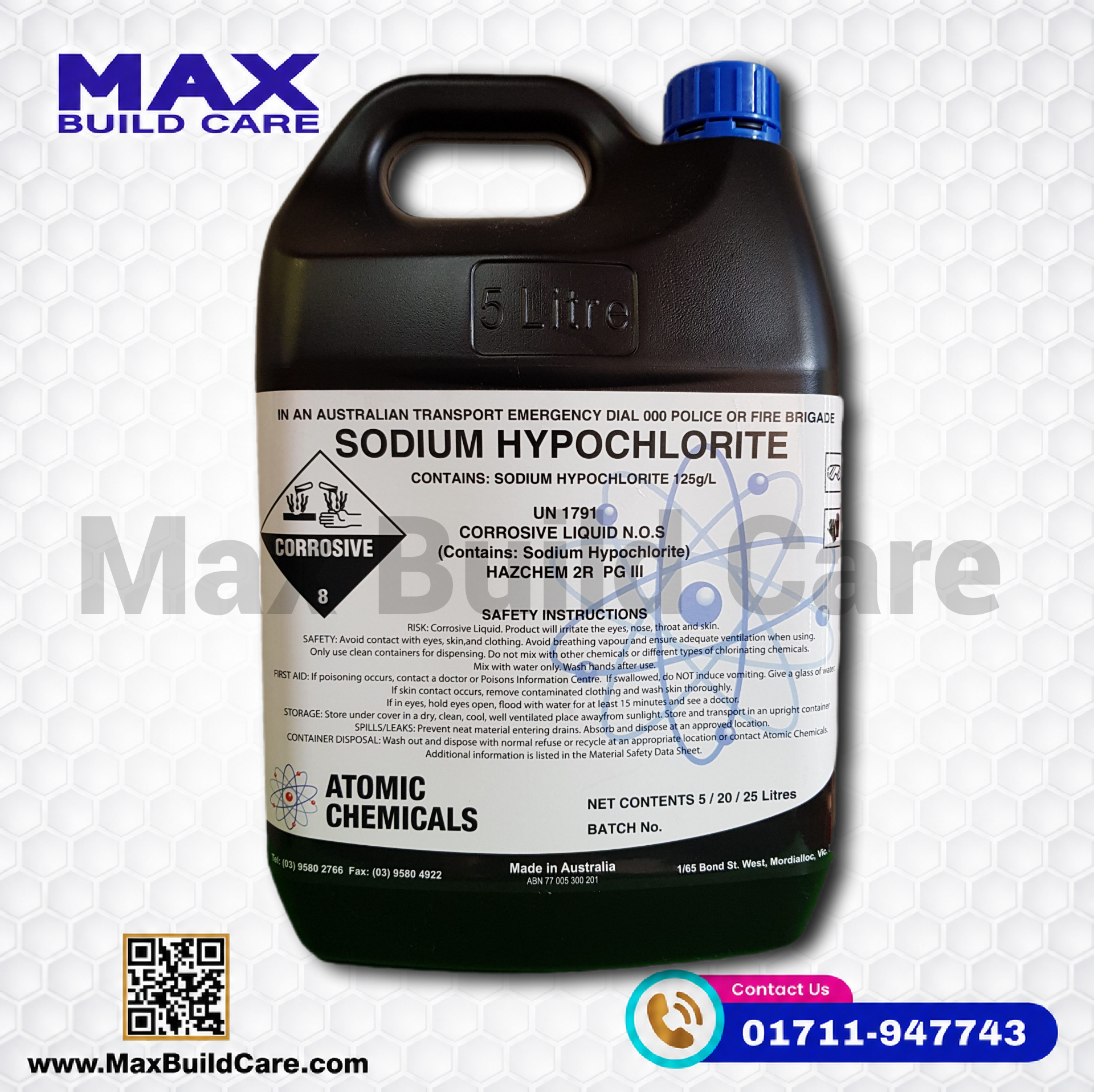
Sodium Hypochlorite
৳ 30.00
Sodium Hypochlorite is a powerful oxidizing and disinfecting chemical widely used in water treatment, bleaching, sanitation, and industrial cleaning applications. It effectively eliminates bacteria, viruses, algae, and other microorganisms while providing excellent disinfection and deodorizing performance.
Sodium Hypochlorite (NaOCl) – Complete Industrial Description
Chemical Formula: NaOCl
Appearance: Pale yellow to greenish-yellow liquid
Grade: Industrial / Technical Grade
Sodium Hypochlorite (NaOCl) is one of the most widely used disinfecting, bleaching, and oxidizing chemicals in the world. Known for its powerful antimicrobial properties and excellent oxidation capability, sodium hypochlorite plays a crucial role in water treatment, sanitation, healthcare, food processing, textile manufacturing, and industrial cleaning operations.
This highly effective chemical is commonly recognized as the active ingredient in liquid bleach solutions and is extensively utilized for eliminating bacteria, viruses, fungi, algae, and other harmful microorganisms. Due to its broad-spectrum disinfection performance and cost-effectiveness, sodium hypochlorite has become an essential chemical in both municipal and industrial sectors.
Sodium hypochlorite is generally produced through the controlled reaction of chlorine gas with sodium hydroxide (caustic soda). The resulting solution contains active chlorine compounds that provide strong oxidizing and disinfecting properties. Its ability to rapidly destroy pathogens and organic contaminants makes it one of the most reliable chemicals for water purification and hygiene maintenance.
Chemical Composition and Structure
Sodium hypochlorite is composed of sodium, oxygen, and chlorine atoms arranged in a highly reactive chemical structure.
Chemical Formula:
NaOCl
In aqueous solution, sodium hypochlorite releases hypochlorous acid (HOCl), which is primarily responsible for its powerful disinfecting action. This active compound penetrates microbial cell walls and destroys harmful microorganisms effectively.
Key Properties
Sodium Hypochlorite offers numerous important industrial characteristics:
- Strong oxidizing capability
- Excellent disinfecting performance
- Rapid microbial destruction
- Effective bleaching action
- High solubility in water
- Broad-spectrum antimicrobial activity
- Cost-effective treatment solution
- Easy application and handling
These properties make it suitable for a wide range of industrial and municipal applications.
Manufacturing Process
Sodium hypochlorite is commonly produced through the chlor-alkali process.
Basic Production Method:
- Chlorine gas is generated through electrolysis.
- Sodium hydroxide solution is prepared.
- Chlorine is reacted with sodium hydroxide under controlled conditions.
- Sodium hypochlorite solution is formed.
- The product is stabilized, tested, and packaged.
Strict quality control procedures ensure consistent chlorine content and product performance.
Major Industrial Applications
Water Treatment Industry
One of the largest applications of sodium hypochlorite is water treatment.
It is widely used for:
- Drinking water disinfection
- Municipal water treatment
- Wastewater treatment
- Swimming pool sanitation
- Industrial water purification
It effectively eliminates harmful microorganisms while improving overall water quality.
Industrial Cleaning and Sanitation
Used extensively for cleaning and sanitizing:
- Food processing facilities
- Beverage manufacturing plants
- Pharmaceutical industries
- Hospitals and healthcare facilities
- Commercial kitchens
Its strong antimicrobial action ensures hygienic operating conditions.
Textile Industry
Sodium hypochlorite is widely used as a bleaching agent for textiles and fabrics.
Benefits include:
- Improved fabric whiteness
- Removal of stains and impurities
- Enhanced fabric appearance
Paper and Pulp Industry
Used in paper bleaching processes to improve brightness and product quality.
Agriculture and Aquaculture
Used for disinfecting equipment, irrigation systems, fish farms, and water reservoirs.
Chemical Manufacturing
Serves as an oxidizing agent in various chemical production processes.
Advantages
Powerful Disinfection
Effectively destroys bacteria, viruses, fungi, algae, and other harmful microorganisms.
Fast Action
Provides rapid sanitation and oxidation performance.
Cost-Effective
Offers excellent treatment efficiency at relatively low operating costs.
Easy Application
Can be easily diluted and applied across different systems and industries.
Versatile Usage
Suitable for water treatment, cleaning, bleaching, and industrial processing applications.
Technical Parameters (Typical)
- Available Chlorine: 10%–15% (depending on grade)
- Appearance: Pale yellow liquid
- pH Value: 11–13
- Solubility: Completely soluble in water
- Odor: Characteristic chlorine smell
Working Principle
The effectiveness of sodium hypochlorite comes from its ability to release hypochlorous acid (HOCl) when dissolved in water.
Hypochlorous acid:
- Penetrates microbial cell membranes
- Oxidizes essential cellular components
- Disrupts metabolic processes
- Rapidly destroys microorganisms
This mechanism provides highly effective disinfection and sanitation performance.
Packaging and Storage
Sodium hypochlorite is commonly supplied in:
- 25 kg drums
- 30 kg drums
- 50 kg drums
- 200 kg HDPE drums
- Bulk tanker deliveries
Storage Conditions:
- Store in a cool and shaded area
- Protect from direct sunlight
- Avoid excessive heat exposure
- Keep containers tightly closed
- Use corrosion-resistant storage systems
Proper storage helps maintain chlorine stability and product effectiveness.
Safety and Handling
Sodium hypochlorite is a strong oxidizing and corrosive chemical and should be handled with appropriate safety precautions.
Recommended Safety Measures:
- Wear protective gloves and goggles
- Use protective clothing
- Avoid inhalation of vapors
- Ensure adequate ventilation
- Prevent contact with acids and incompatible chemicals
First Aid:
- In case of skin contact, wash immediately with plenty of water.
- If contact with eyes occurs, rinse thoroughly and seek medical attention.
- If inhaled, move to fresh air immediately.
Conclusion
Sodium Hypochlorite (NaOCl) is a highly effective disinfecting, bleaching, and oxidizing chemical widely used across water treatment, sanitation, textile, paper, healthcare, food processing, and industrial sectors. Its strong antimicrobial activity, rapid oxidation capability, and cost-effective performance make it one of the most trusted chemicals for maintaining hygiene, water quality, and industrial efficiency.
With its proven reliability, broad application range, and powerful disinfection properties, sodium hypochlorite continues to be an indispensable solution for modern industrial and municipal operations worldwide.