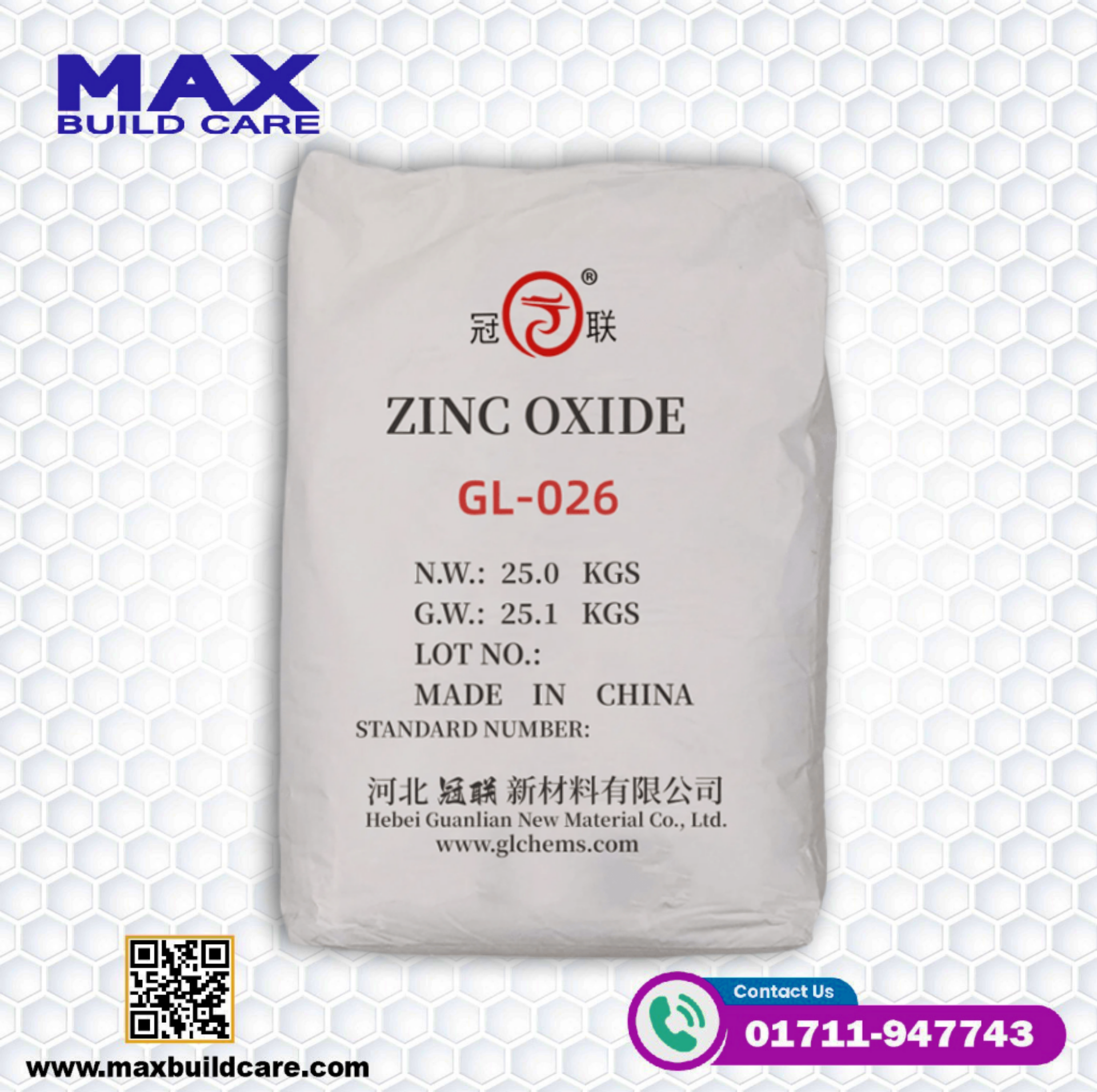
Zinc Oxide
৳ 1.00
Zinc Oxide is a high-purity white inorganic compound widely used in rubber, ceramics, paints, cosmetics, pharmaceuticals, and chemical industries. It provides excellent UV protection, antibacterial properties, thermal stability, and improved durability in various industrial and commercial applications.
Zinc Oxide (ZnO) – Complete Industrial Description
Chemical Formula: ZnO
Appearance: White fine powder
Zinc Oxide (ZnO) is a versatile inorganic compound widely used in rubber manufacturing, ceramics, paints, cosmetics, pharmaceuticals, chemicals, electronics, and many other industrial applications. Known for its high purity, excellent thermal stability, UV protection capability, and antibacterial properties, zinc oxide has become one of the most important industrial chemicals in modern manufacturing.
Zinc oxide occurs naturally as the mineral zincite, but commercial zinc oxide is mainly produced synthetically through advanced industrial processes to ensure consistent quality and purity. It is available as a fine white powder with excellent dispersion characteristics and chemical stability.
Due to its multifunctional properties, zinc oxide serves as a reinforcing agent, activator, pigment, UV absorber, and protective additive across numerous industries.
Chemical Composition and Structure
Zinc oxide consists of zinc and oxygen atoms arranged in a crystalline structure.
Chemical Formula:
ZnO
It is insoluble in water but soluble in acids and strong alkalis. Zinc oxide exhibits amphoteric behavior, meaning it can react with both acids and bases under suitable conditions.
Key Properties
Zinc Oxide offers several important physical and chemical properties:
- High purity and whiteness
- Excellent UV absorption capability
- Strong thermal stability
- Good antibacterial and antimicrobial properties
- High refractive index
- Excellent chemical stability
- Good electrical and thermal conductivity in specific applications
These characteristics make zinc oxide suitable for a wide variety of industrial uses.
Manufacturing Process
Commercial zinc oxide is generally produced using two major methods:
1. French Process (Indirect Method)
Metallic zinc is vaporized and oxidized at high temperatures to produce high-purity zinc oxide.
2. American Process (Direct Method)
Zinc ores are reduced and oxidized simultaneously to form zinc oxide.
The final product is processed into fine powder form with controlled particle size and purity.
Major Industrial Applications
Rubber Industry
One of the largest uses of zinc oxide is in rubber manufacturing. It acts as an activator in the vulcanization process, improving:
- Rubber strength
- Elasticity
- Heat resistance
- Durability
Used in tires, footwear, conveyor belts, hoses, and industrial rubber products.
Paint and Coating Industry
Used as a white pigment and protective additive in paints and coatings. It improves:
- UV resistance
- Corrosion protection
- Durability
- Surface finish
Ceramic and Glass Industry
Used in ceramic glazes and glass formulations to improve gloss, strength, and thermal performance.
Cosmetics and Personal Care
Widely used in sunscreens, creams, ointments, and cosmetics due to its UV-blocking and skin-protective properties.
Pharmaceutical Industry
Used in medicinal creams, antiseptic ointments, and skin-care products for its soothing and antibacterial effects.
Electronics Industry
Applied in semiconductors, varistors, sensors, and electronic components because of its electrical properties.
Advantages
- Excellent UV protection capability
- Improves product durability and strength
- High thermal and chemical stability
- Antibacterial and antimicrobial properties
- Multi-purpose industrial applications
- Safe and reliable performance in regulated applications
Technical Parameters (Typical)
- Purity: 99% minimum
- Appearance: White fine powder
- Melting Point: ~1975°C
- Specific Gravity: ~5.6
- Solubility: Insoluble in water
Working Principle in Rubber Industry
In rubber applications, zinc oxide acts as a vulcanization activator by reacting with stearic acid and accelerators. This process enhances cross-linking within rubber compounds, resulting in improved mechanical properties and durability.
Its reinforcing effect also improves resistance to heat, abrasion, and aging.
Packaging and Storage
Zinc oxide is commonly supplied in:
- 25 kg bags
- 50 kg bags
- Jumbo bags for industrial use
Storage Conditions:
Store in a dry, cool, and well-ventilated environment away from moisture and contamination.
Proper sealing helps maintain product purity and prevent clumping.
Safety and Handling
Zinc oxide is generally considered safe under normal industrial handling conditions. However, fine dust should be handled carefully.
Safety Precautions:
- Use protective masks and gloves
- Avoid inhalation of dust
- Ensure adequate ventilation
- Wash hands after handling
Follow standard industrial safety procedures during use and storage.
Environmental Considerations
Zinc oxide should be handled and disposed of responsibly according to local environmental regulations. Proper waste management helps minimize environmental impact.
Conclusion
Zinc Oxide (ZnO) is a highly versatile and essential industrial compound widely used in rubber, paints, ceramics, cosmetics, pharmaceuticals, and electronics industries. Its excellent UV protection, thermal stability, antibacterial properties, and chemical performance make it an indispensable material in modern manufacturing. With reliable quality, broad industrial compatibility, and multifunctional benefits, zinc oxide continues to play a vital role in improving product performance and industrial efficiency worldwide.