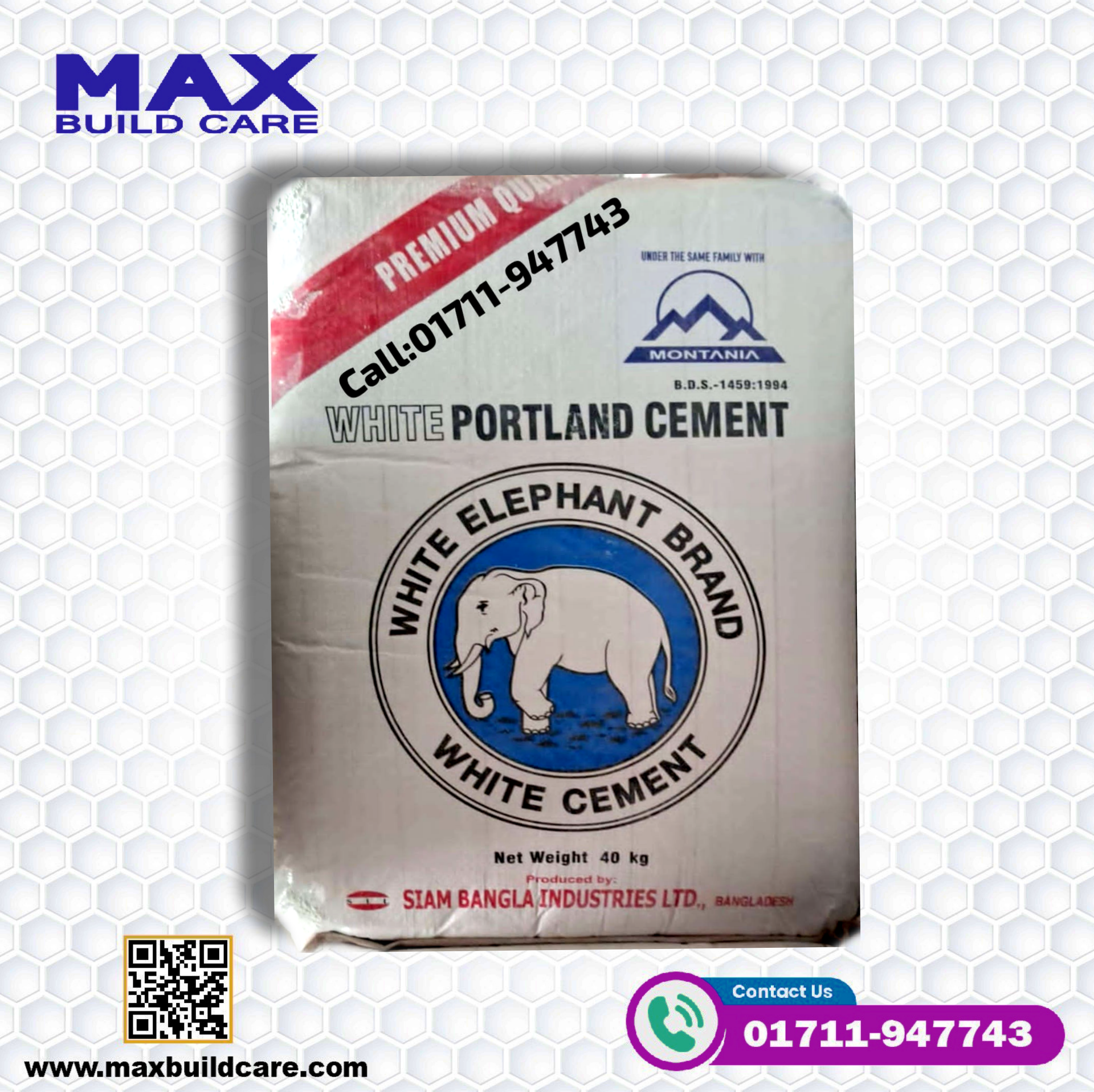
White Portland Cement is a high-purity, premium-grade cement engineered to deliver a bright white finish and superior strength for architectural, decorative, and high-value construction applications. Its low iron content ensures exceptional whiteness, while its fine particle structure provides excellent workability, smooth finishing, and enhanced bonding performance. Ideal for terrazzo floors, marble fixing, precast elements, wall rendering, designer concrete, and aesthetic structures, White Portland Cement ensures long-lasting durability, crack resistance, and a flawless, elegant appearance.
White Portland Cement is a premium-grade, high-purity cement specifically manufactured to deliver exceptional whiteness, superior strength, and excellent aesthetic value. Unlike ordinary grey cement, White Portland Cement contains very low levels of iron, manganese, and chromium compounds—minerals that typically create the grey coloration in regular cement. Its controlled chemical composition and specialized production process give it a bright, elegant finish that makes it an essential material in architectural, decorative, and designer construction applications.
Manufacturing & Chemical Composition
White Portland Cement is produced from high-purity limestone, kaolin clay, and select raw materials with minimal metallic oxides. During manufacturing, the rotary kiln temperature and atmospheric conditions are precisely controlled to avoid contamination and maintain bright whiteness. Even slight variations in iron or manganese content can affect color, so strict quality control is applied throughout the entire process.
The primary chemical compounds include:
Tricalcium Silicate (C₃S)
Dicalcium Silicate (C₂S)
Tricalcium Aluminate (C₃A)
Tetracalcium Aluminoferrite (C₄AF – extremely low content)
Because the iron content is kept minimal, the C₄AF phase—which gives grey color in ordinary cement—is significantly reduced, ensuring the desired white shade.
Physical Characteristics
White Portland Cement is ultra-fine, smooth, and uniform in texture.
Key physical properties include:
High Whiteness Index (85–90+)
Ensures bright, clean architectural finishes.
High Early Strength & Final Strength
Performs similarly or even better than standard OPC in many applications.
Excellent Workability
Its fine particle size allows smoother mixes, easier spreading, and superior finishing quality.
Low Alkalinity & Low Impurities
Makes it ideal for bonding with pigments and aggregates for colored concrete.
These properties make it suitable for intricate detailing where precision and aesthetics are key.
Major Applications
White Portland Cement is widely used across decorative, structural, and industrial sectors. Its unique properties allow for a broad range of specialized applications:
—
1. Architectural & Decorative Construction
Aesthetic appeal is the primary reason white cement is used in modern architecture. It provides a clean, bright surface that enhances visual appearance.
Applications include:
Decorative exterior and interior walls
Precast cladding panels
Designer structures and facades
Modern architectural sculptures
Ornamental works and molded elements
Its consistency and smooth texture allow architects to create complex shapes with fine detailing.
—
2. Terrazzo Flooring & Mosaic Works
White Portland Cement is the main binder used in terrazzo and mosaic flooring. Its whiteness helps highlight the color and texture of marble chips, granite pieces, and colored aggregates.
Benefits:
Long-lasting shine
High abrasion resistance
Smooth and elegant surface appearance
—
3. Marble & Tile Fixing
White cement-based adhesives are preferred for marble, granite, ceramic, and porcelain tile installation because:
It prevents staining on light-colored stones
Provides strong bonding strength
Maintains long-term color stability
—
4. Precast Concrete & GRC Products
White cement is used to manufacture:
Garden décor items
Precast sculptures
Fountains
White concrete blocks
GRC (Glass Reinforced Concrete) panels
Its consistent color tone and strength make it ideal for premium precast products.
—
5. Grouts, Putty & Decorative Mortars
White Portland Cement is a primary raw material in:
Wall putty manufacturing
White grout mixes
Decorative plasters
Stucco and texture coatings
Because of its brightness, it can be tinted effortlessly with pigments to create various shades for interior and exterior design.
—
6. Colored Concrete Applications
Architects often mix white cement with mineral pigments to produce:
Colored concrete pavers
Designer tiles
Pathway blocks
Artistic landscape elements
White cement acts as a neutral base, allowing vibrant and accurate color expression.
—
Advantages of White Portland Cement
1. Superior Whiteness & Aesthetic Appeal
Ideal for high-end architectural finishes.
2. High Strength & Durability
Comparable to traditional OPC but with improved surface finishing.
3. Versatile & Easy to Tint
Works perfectly with pigments for colored applications.
4. Low Impurity Levels
Ensures brightness, cleanliness, and long-term stability.
5. Excellent Workability & Smooth Finish
Suitable for detailed and decorative construction.
—
Packaging, Storage & Handling
White Portland Cement is typically supplied in sealed moisture-proof bags (25 kg or 50 kg). It must be stored:
in dry conditions,
away from moisture,
on elevated platforms,
with proper ventilation.
Moisture can cause lump formation and reduce performance, so proper storage is essential.
—
Conclusion
White Portland Cement is more than just a building material—it is a premium, aesthetic solution for modern construction. Its high purity, bright whiteness, superior strength, and versatility make it indispensable for architectural works, decorative floors, precast items, and designer concrete. From elegant finishes to durable structures, White Portland Cement delivers unmatched performance where quality and appearance truly matter.