Sodium Nitrate
৳ 1.00
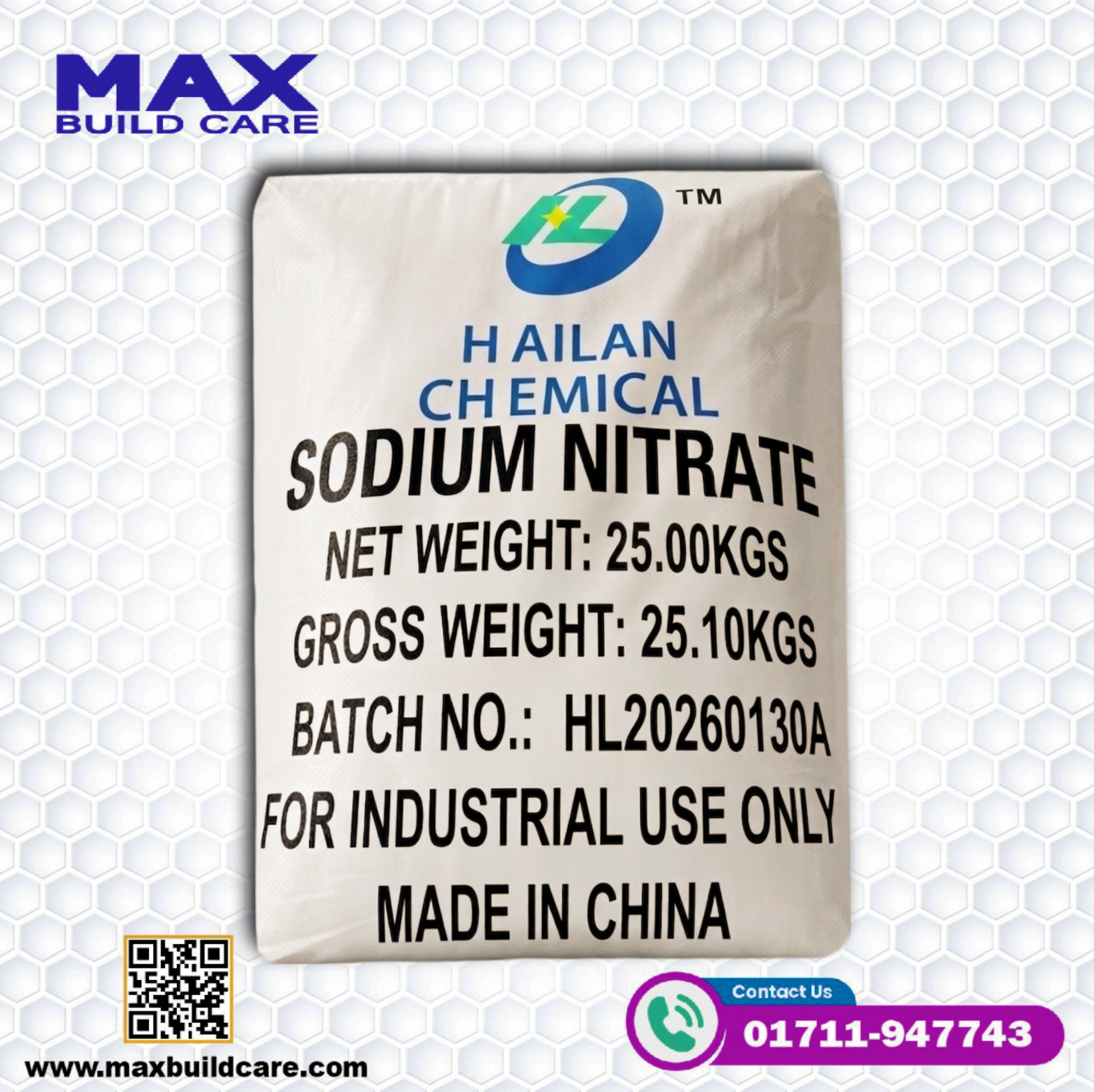
Sodium Nitrate is a highly soluble inorganic compound widely used in fertilizers, glass, explosives, food processing, and industrial manufacturing. It acts as an oxidizing agent and nitrogen source, offering excellent purity, fast solubility, and reliable performance in various chemical and industrial applications.
Sodium Nitrate (NaNO₃) – Complete Industrial Description
Chemical Formula: NaNO₃
Appearance: White crystalline powder or granules
Sodium Nitrate is a highly versatile inorganic compound widely used in fertilizers, glass manufacturing, explosives, food processing, pharmaceuticals, and various industrial applications. Known for its excellent water solubility, oxidizing properties, and high nitrogen content, sodium nitrate plays an important role in modern chemical and industrial processes.
Naturally occurring deposits of sodium nitrate are found in mineral-rich desert regions, particularly in Chile, where it is historically known as “Chile Saltpeter.” Today, sodium nitrate is also produced synthetically through controlled industrial processes to ensure high purity and consistent quality for commercial applications.
Due to its ability to release oxygen and supply nitrogen, sodium nitrate is extensively used as both an oxidizing agent and nutrient source in different manufacturing and agricultural sectors.
Chemical Composition and Structure
Sodium nitrate is composed of sodium, nitrogen, and oxygen atoms arranged in a stable ionic structure.
Chemical Formula:
NaNO₃
It is highly soluble in water and forms a neutral to slightly alkaline solution. Its oxidizing nature makes it reactive with combustible and reducing materials under certain conditions.
Key Properties
Sodium Nitrate offers several important physical and chemical properties:
- High water solubility
- Strong oxidizing capability
- High nitrogen content
- Excellent thermal stability under controlled conditions
- White crystalline appearance
- Fast dissolution in water
- Chemically stable during normal storage
These properties make it suitable for a broad range of industrial and commercial applications.
Manufacturing Process
Sodium nitrate is commonly produced through chemical reactions involving nitric acid and sodium compounds such as sodium carbonate or sodium hydroxide.
Basic Production Steps:
- Chemical neutralization reaction
- Filtration and purification
- Crystallization
- Drying and granulation
- Packaging
Strict quality control ensures high purity and consistent particle size.
Major Industrial Applications
Fertilizer Industry
Sodium nitrate is widely used as a nitrogen fertilizer because it provides readily available nitrate nitrogen for plants. It promotes:
- Healthy plant growth
- Improved crop yield
- Enhanced root and leaf development
Glass Industry
Used in glass manufacturing to improve clarity and remove bubbles during melting processes.
Explosives and Pyrotechnics
Acts as an oxidizing agent in explosives, fireworks, and blasting materials.
Food Industry
In regulated food-grade applications, sodium nitrate is used as a preservative and curing agent for processed meats.
Chemical Industry
Used in the production of nitric acid, dyes, and specialty chemicals.
Heat Transfer Systems
Applied in molten salt mixtures used for thermal energy storage and solar power systems.
Advantages
- Provides fast-acting nitrogen source
- Excellent oxidizing performance
- High purity and reliable quality
- Easy handling and fast dissolution
- Versatile industrial applications
- Cost-effective for large-scale use
Technical Parameters (Typical)
- Purity: 99% minimum
- Nitrogen Content: ~16%
- Moisture Content: ≤ 0.5%
- Solubility: Highly soluble in water
- Appearance: White crystals or granules
Working Principle
In agricultural applications, sodium nitrate dissolves rapidly in water, releasing nitrate ions that are easily absorbed by plant roots. This provides immediate nitrogen nutrition for plant growth.
In industrial applications, its oxidizing property helps supply oxygen during combustion or chemical reactions, improving reaction efficiency and performance.
Packaging and Storage
Sodium nitrate is generally supplied in:
- 25 kg bags
- 50 kg bags
- Jumbo bags for industrial use
Storage Conditions:
Store in a cool, dry, and well-ventilated area away from moisture, combustible materials, reducing agents, and direct sunlight.
Because it is hygroscopic to some extent, containers should remain tightly sealed.
Safety and Handling
Sodium nitrate should be handled carefully because it is an oxidizing substance.
Safety Precautions:
- Use protective gloves and safety goggles
- Avoid inhalation of dust
- Keep away from flammable materials
- Ensure proper ventilation during handling
In case of contact with eyes or skin, rinse thoroughly with clean water.
Environmental Considerations
Proper handling and disposal are important to minimize environmental impact. Excessive nitrate release into water systems may contribute to water pollution and eutrophication.
Industrial users should follow local environmental regulations and responsible handling practices.
Conclusion
Sodium Nitrate (NaNO₃) is a highly valuable industrial chemical widely used in fertilizers, glass manufacturing, explosives, food processing, and chemical industries. Its strong oxidizing properties, high nitrogen content, excellent solubility, and consistent performance make it an essential material for modern industrial and agricultural applications. With versatile functionality, reliable quality, and broad industrial compatibility, sodium nitrate continues to play a critical role in improving manufacturing efficiency and agricultural productivity worldwide.