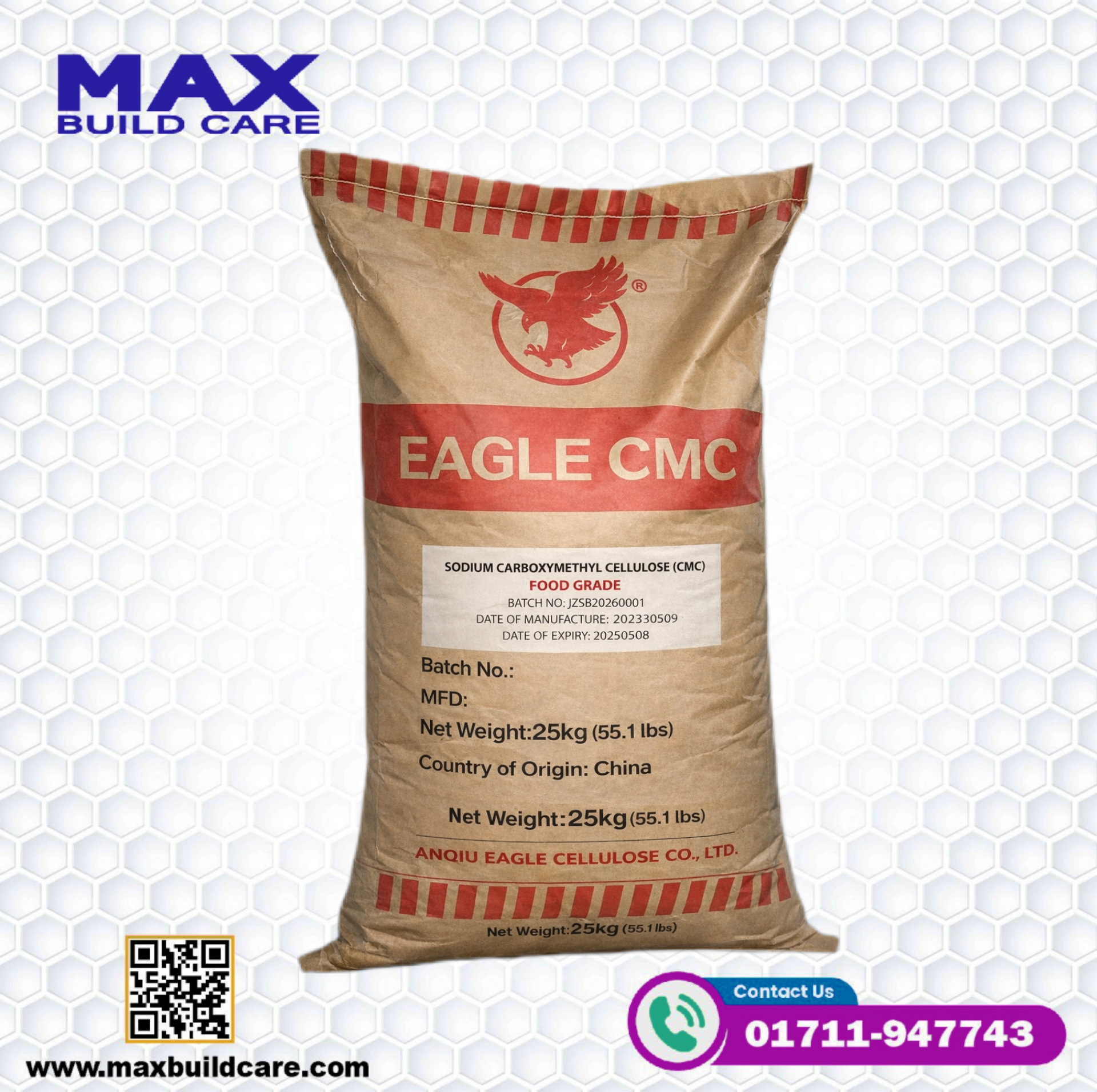
Sodium Carboxymethyl Cellulose (CMC) Food Grade (C₆H₇O₂(OH)₂OCH₂COONa) is a high-purity cellulose derivative widely used as a thickener, stabilizer, and emulsifier in food products. It improves texture, viscosity, and shelf stability in items like ice cream, beverages, sauces, and bakery products.
Sodium Carboxymethyl Cellulose (CMC) Food Grade is a high-purity, water-soluble cellulose derivative widely used in the food industry as a thickener, stabilizer, emulsifier, and texture modifier. It is produced by chemically modifying natural cellulose obtained from purified plant fibers. Because of its excellent binding and viscosity-enhancing properties, food-grade CMC plays an essential role in improving the texture, stability, and shelf life of many processed food products.
CMC powder appears as a fine white or slightly off-white powder that dissolves easily in water to form a clear, viscous solution. It is odorless, non-toxic, and safe for food applications when used within regulated limits. Due to its stable chemical structure and reliable performance, it has become one of the most widely used hydrocolloids in modern food processing.
Chemical and Physical Characteristics
Sodium Carboxymethyl Cellulose is derived from cellulose through a process where hydroxyl groups in the cellulose molecule are replaced with carboxymethyl groups. This modification makes the compound highly soluble in water and significantly enhances its thickening and stabilizing properties.
Food-grade CMC is known for its uniform particle size, high purity, and consistent viscosity. When dissolved in water, it forms a smooth colloidal solution that helps control moisture, prevent separation, and improve product consistency. The powder has excellent dispersibility and can be easily blended with other food ingredients.
CMC solutions are generally stable over a wide range of temperatures and pH conditions, making them suitable for various food formulations. Its ability to maintain viscosity and stability under processing conditions such as heating, freezing, or mixing makes it extremely valuable in industrial food manufacturing.
Functional Properties in Food Processing
One of the most important functions of food-grade CMC is its ability to increase viscosity. By thickening liquids and suspensions, it improves the mouthfeel and body of food products. This property is particularly useful in beverages, sauces, and dairy products where consistent texture is essential.
CMC also acts as a stabilizer. In many food products, ingredients such as fats, proteins, and water tend to separate over time. Sodium Carboxymethyl Cellulose helps maintain uniform dispersion and prevents separation, ensuring a stable and visually appealing product throughout its shelf life.
Another important role of CMC is its emulsifying capability. It helps stabilize emulsions by maintaining the uniform distribution of oil and water phases in food formulations. This function is widely utilized in salad dressings, sauces, and processed foods.
Additionally, CMC improves moisture retention. In bakery products and processed foods, it helps retain water, preventing dryness and extending product freshness. This property also contributes to better texture and improved shelf stability.
Major Food Industry Applications
Food-grade CMC is widely used across numerous food categories due to its multifunctional properties.
In the dairy industry, it is commonly used in products such as ice cream, yogurt, flavored milk, and dairy desserts. It helps improve creaminess, prevents ice crystal formation in frozen products, and enhances overall texture.
In beverages, CMC acts as a stabilizer that keeps ingredients evenly suspended. It prevents sedimentation in fruit drinks, flavored beverages, and energy drinks, maintaining product consistency.
In the bakery industry, CMC is used in bread, cakes, and pastries to improve dough stability and moisture retention. It enhances softness, improves volume, and extends shelf life by reducing staling.
In sauces and dressings, CMC provides the desired thickness and smooth texture. It also helps stabilize emulsions in mayonnaise, ketchup, and salad dressings, preventing oil separation.
CMC is also widely used in instant foods and ready-to-eat meals, where it acts as a thickening and stabilizing agent to maintain product consistency during storage and reheating.
Advantages of Food-Grade CMC
Sodium Carboxymethyl Cellulose offers numerous advantages that make it a preferred ingredient in food manufacturing.
It provides excellent thickening and stabilizing performance even at low concentrations. It improves product texture and mouthfeel while maintaining stability during processing and storage. The compound is also highly versatile, working effectively in both hot and cold systems.
Another key advantage is its compatibility with other food ingredients. CMC blends well with sugars, proteins, starches, and other hydrocolloids, allowing manufacturers to develop consistent and high-quality food formulations.
In addition, food-grade CMC is non-toxic, odorless, and safe for consumption. It meets international food safety standards and is widely approved by global regulatory authorities for use in food products.
Packaging and Storage
Sodium Carboxymethyl Cellulose powder is typically supplied in moisture-resistant bags or fiber drums. Standard packaging often includes 25-kg bags designed to maintain product quality during transportation and storage.
For best results, the product should be stored in a cool, dry, and well-ventilated environment. Proper storage prevents moisture absorption and ensures that the powder remains free-flowing and easy to use in food formulations.
Conclusion
Sodium Carboxymethyl Cellulose (CMC) Powder – Food Grade is a versatile and highly effective food additive widely used to enhance texture, stability, and shelf life in modern food products. Its excellent thickening, stabilizing, and moisture-retention properties make it indispensable in dairy products, beverages, bakery items, sauces, and many other processed foods.
With its high purity, reliable performance, and compatibility with various food ingredients, food-grade CMC continues to play a vital role in improving product quality and consistency across the global food industry.