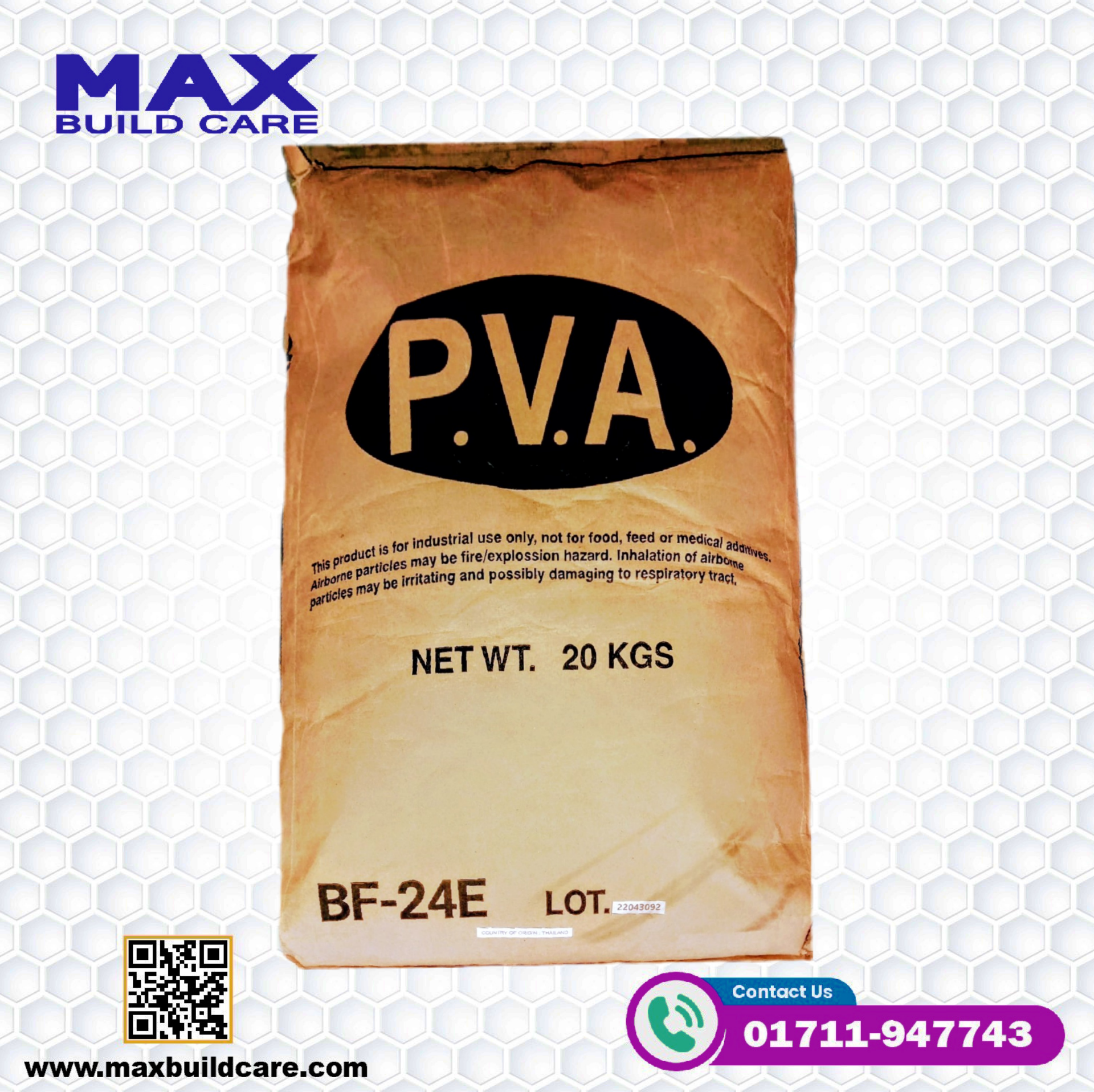
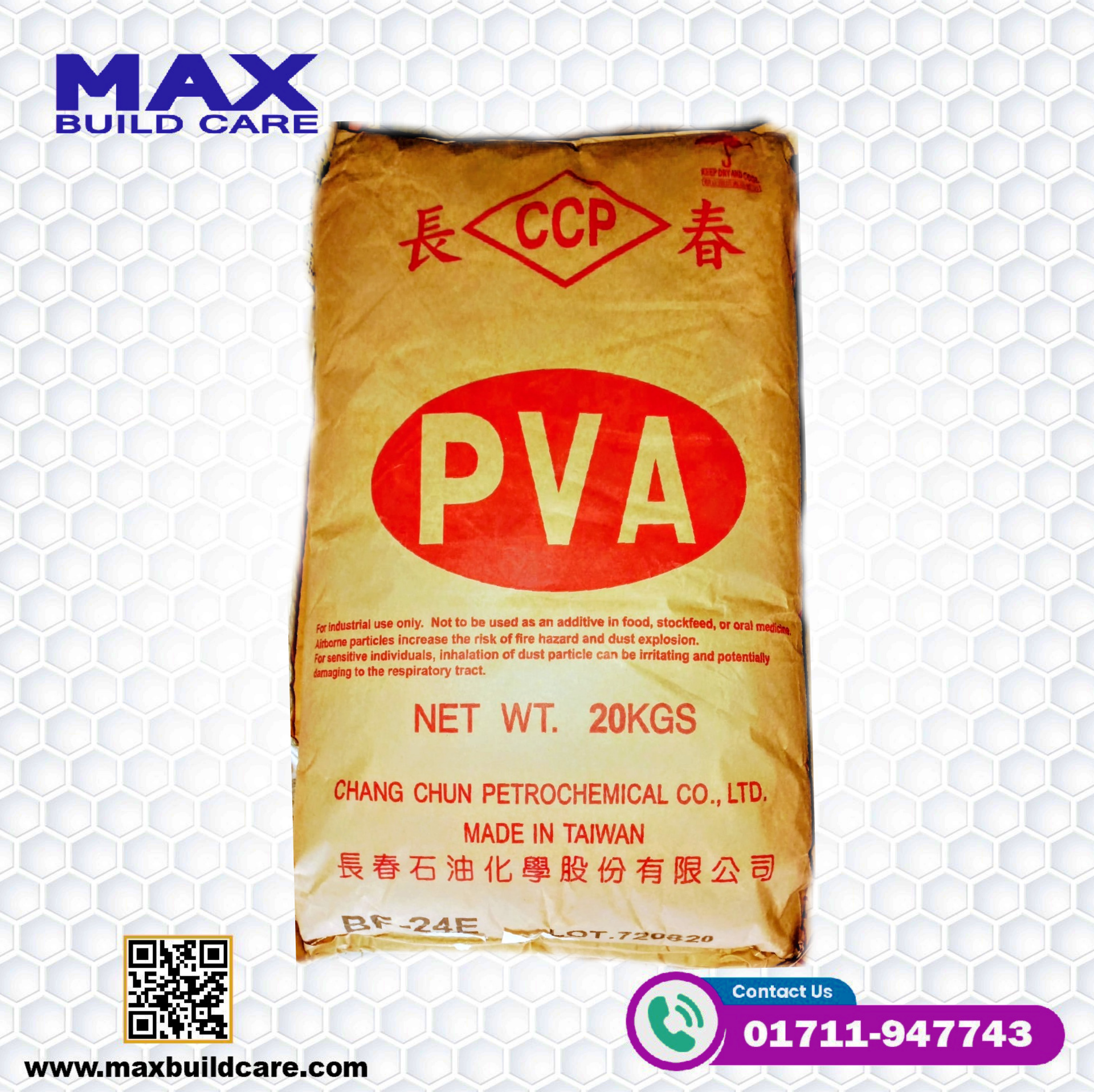
P.V.A (Polyvinyl Alcohol, C₂H₄O)n
Short Description:
P.V.A is a water-soluble synthetic polymer widely used in adhesives, textile sizing, paper coatings, and films. It provides excellent film-forming, binding, thickening, and emulsifying properties, ensuring enhanced strength, durability, and flexibility in industrial and commercial applications.
Polyvinyl Alcohol (P.V.A), represented chemically as (C₂H₄O)n, is a high-performance, water-soluble synthetic polymer widely utilized across diverse industries for its unique combination of film-forming, adhesive, thickening, binding, and emulsifying properties. Recognized for its excellent chemical stability, non-toxicity, and versatility, P.V.A has become a key component in textiles, adhesives, paper coatings, packaging films, construction, and specialty chemical applications. Its outstanding performance characteristics make it an indispensable polymer in modern industrial and commercial formulations.
—
Chemical and Physical Properties
Polyvinyl Alcohol is a semi-crystalline, water-soluble polymer obtained by the hydrolysis of polyvinyl acetate. Its degree of hydrolysis and polymerization influences properties such as solubility, viscosity, and film strength. P.V.A is available in various grades to meet the specific requirements of industries, including fully hydrolyzed, partially hydrolyzed, and high molecular weight grades.
Key Properties Include:
Chemical Formula: (C₂H₄O)n
Appearance: White or off-white granules, flakes, or powder
Solubility: Highly soluble in water, insoluble in most organic solvents
pH (aqueous solution): 5–7 (mildly acidic to neutral)
Viscosity: Adjustable based on molecular weight and concentration
Film-forming Ability: Excellent, providing strong, flexible, and transparent films
Non-toxic and Biodegradable: Safe for food and pharmaceutical applications
These properties allow P.V.A to function effectively in a wide range of applications where water solubility, adhesion, and film integrity are critical.
—
Industrial Applications
1. Adhesives and Coatings
P.V.A is extensively used as a primary ingredient in adhesive formulations, including:
White glue and school adhesives
Wood and furniture adhesives
Laminating and coating applications
Its strong binding ability ensures durability, smooth adhesion, and resistance to cracking in adhesives. Additionally, it forms clear, strong films when dried, making it ideal for coatings in industrial and decorative applications.
—
2. Textile Industry
In textiles, P.V.A is widely employed as a sizing and finishing agent. Its water-soluble nature and strong film-forming capability help:
Protect yarns during weaving and spinning
Enhance strength and smoothness of fabrics
Improve dye penetration and uniformity
High molecular weight P.V.A grades are preferred for applications requiring high-strength films and enhanced abrasion resistance.
—
3. Paper and Packaging
P.V.A plays a critical role in the paper and packaging sector as a coating, binder, and reinforcement additive. Benefits include:
Improving surface smoothness and printability
Enhancing water resistance and gloss
Acting as a binder in specialty paper products
P.V.A-based films are also widely used in laminated packaging, shrink films, and water-soluble pouches, providing excellent mechanical strength and controlled solubility.
—
4. Construction and Civil Engineering
P.V.A is an important polymer additive in construction materials. Its functions include:
Improving workability and cohesion in cement and plaster
Reducing water absorption in concrete and mortar
Enhancing crack resistance and durability in building materials
It is often used in tile adhesives, joint fillers, and plastering compounds to achieve superior performance.
—
5. Specialty Chemicals and Pharmaceuticals
In pharmaceutical and specialty chemical industries, P.V.A is utilized for:
Capsule coatings and controlled-release formulations
Thickening and stabilizing agents in cosmetic and personal care products
Emulsifying and dispersing agent for chemical formulations
Its biocompatibility and film-forming ability make it suitable for medicinal, food, and cosmetic-grade products.
—
Advantages of Polyvinyl Alcohol (P.V.A)
Water-soluble and environmentally safe
Excellent film-forming and adhesive properties
High mechanical strength and flexibility
Compatible with a wide range of chemicals and additives
Adjustable viscosity and molecular weight to meet specific industry requirements
Improves durability, water resistance, and cohesion in materials
These advantages make P.V.A a preferred choice for manufacturers, ensuring quality, reliability, and consistent performance in diverse applications.
—
Handling and Storage
To maintain its optimal quality and performance, P.V.A should be handled and stored properly:
Store in a cool, dry, ventilated place
Keep containers tightly sealed to prevent moisture absorption
Avoid direct contact with acids or strong oxidizers
Use personal protective equipment (PPE) when handling powders or flakes
Proper storage ensures long shelf life, ease of handling, and high solubility for industrial and commercial use.
—
Conclusion
Polyvinyl Alcohol (P.V.A, C₂H₄O)n is a versatile, high-performance synthetic polymer that offers exceptional water solubility, film-forming ability, and adhesive strength. Its wide-ranging applications in textiles, adhesives, paper coatings, packaging films, construction materials, pharmaceuticals, and specialty chemicals make it a vital ingredient for modern industrial and commercial processes. With adjustable molecular weight, viscosity, and solubility characteristics, P.V.A provides flexibility, durability, and efficiency, ensuring superior product performance and reliability. Whether used in water-soluble films, industrial adhesives, textile sizing, or specialty chemical formulations, P.V.A continues to be a trusted polymer for manufacturers and industries worldwide.