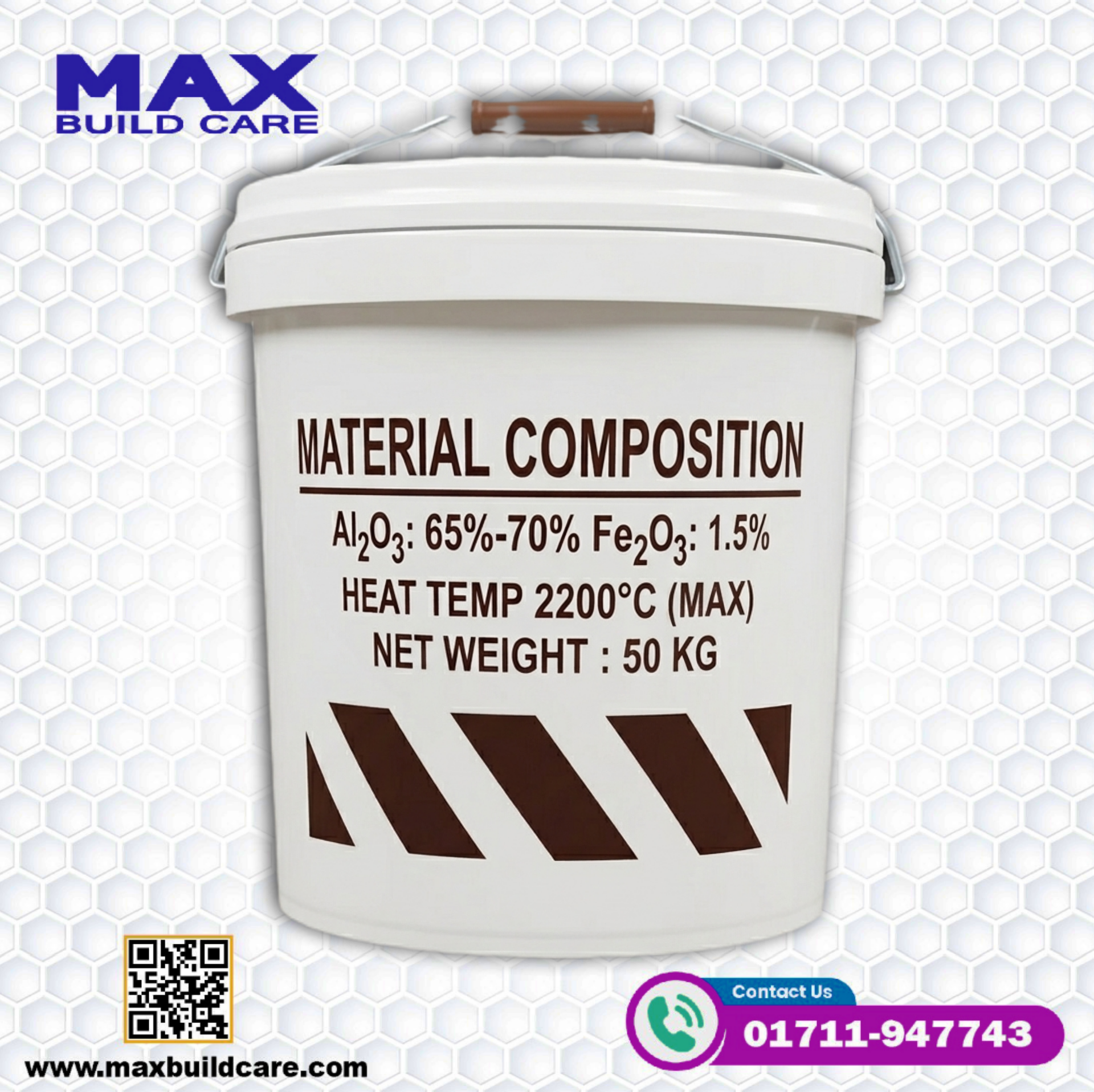
High Temperature Refractory Cement – 2200°C Max
৳ 1.00
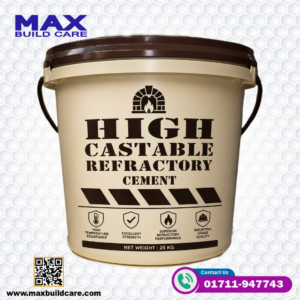
High Alumina Refractory Castable features 65%-70% Al_2O_3, offering exceptional heat resistance up to 2200°C. Engineered for extreme industrial environments, it is perfect for furnace linings, boilers, and kilns, ensuring maximum thermal stability, durability, and superior performance under intense heat.
High Temperature Refractory Cement – 2200°C Max
Maximum Service Temperature: Up to 2200°C
Appearance: Grey to off-white fine powder
High Temperature Refractory Cement (2200°C Max) is a premium-grade, heat-resistant material specially engineered for extreme industrial temperature applications. It is designed to perform where ordinary cement fails, making it highly suitable for furnaces, kilns, boilers, incinerators, and other high-heat processing systems.
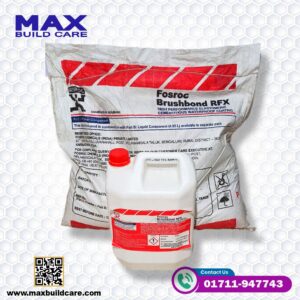
This cement is supplied as a dry powder that is mixed with water to form a castable or moldable material. After proper curing and controlled heating, it develops a dense, strong ceramic-like structure capable of withstanding temperatures up to 2200°C. Its high alumina content and carefully selected raw materials provide excellent resistance against thermal shock, chemical attack, and mechanical wear.
Composition and Material Structure
High Temperature Refractory Cement is formulated using:
- High-purity Calcium Aluminate Cement (CAC)
- High alumina aggregates (such as bauxite or fused alumina)
- Special performance-enhancing additives
The high alumina content is the key factor that ensures exceptional heat resistance and structural stability. A balanced combination of fine and coarse particles creates a dense microstructure with low porosity, improving both strength and thermal performance.
Key Properties
- Maximum temperature resistance up to 2200°C
- Excellent mechanical strength at high temperatures
- Superior thermal shock resistance
- Low thermal conductivity
- Strong resistance to chemical corrosion and slag attack
- Minimal shrinkage and cracking
- Easy mixing and application
These properties make it suitable for both continuous and intermittent high-temperature operations.
Working Principle
When mixed with water, the cement undergoes a hydraulic setting reaction similar to conventional cement and hardens at room temperature. Upon exposure to high temperatures, it forms additional ceramic bonds, significantly increasing its strength and heat resistance.
This dual bonding mechanism—hydraulic bonding at ambient temperature and ceramic bonding at elevated temperature—ensures long-lasting and reliable performance under extreme conditions.
Major Applications
Industrial Furnaces:
Used for lining steel, aluminum, and metal processing furnaces.
Kilns:
Suitable for rotary kilns, tunnel kilns, and ceramic kilns.
Boilers and Power Plants:
Used in combustion chambers, boiler linings, and thermal insulation systems.
Incinerators:
Provides durable heat-resistant lining for waste incineration plants.
Petrochemical Industry:
Used in reactors and high-temperature processing equipment.
Foundries:
Ideal for melting and casting operations due to excellent heat resistance.
Advantages
- Withstands extremely high temperatures up to 2200°C
- Long service life and high durability
- Excellent resistance to thermal cycling
- Reduces maintenance and repair costs
- Easier installation compared to refractory bricks
- Suitable for complex shapes and structures
Installation and Usage
For best performance:
- Mix with clean water in the recommended ratio
- Use mechanical mixing for uniform consistency
- Cast or apply directly to the required surface
- Compact properly to remove air pockets
- Allow proper curing before heating
- Heat gradually to avoid thermal stress and cracking
Packaging and Storage
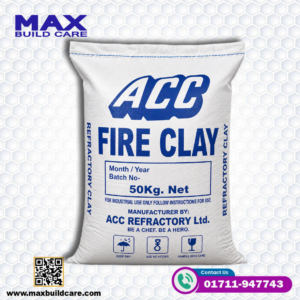
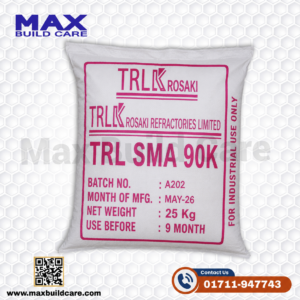
High Temperature Refractory Cement is typically supplied in 25 kg or 50 kg moisture-resistant bags. It should be stored in a dry and cool environment, away from moisture and humidity to maintain its quality and shelf life.
Safety and Handling
During handling, use appropriate protective equipment such as gloves, masks, and safety goggles. Ensure proper ventilation in the working area to avoid dust exposure.
Conclusion
High Temperature Refractory Cement – 2200°C Max is a high-performance industrial material designed for extreme heat environments. Its superior thermal resistance, strong mechanical properties, and long-term durability make it an ideal solution for furnaces, kilns, boilers, and other high-temperature applications. It offers a cost-effective and reliable alternative for industries requiring durable heat-resistant construction materials.