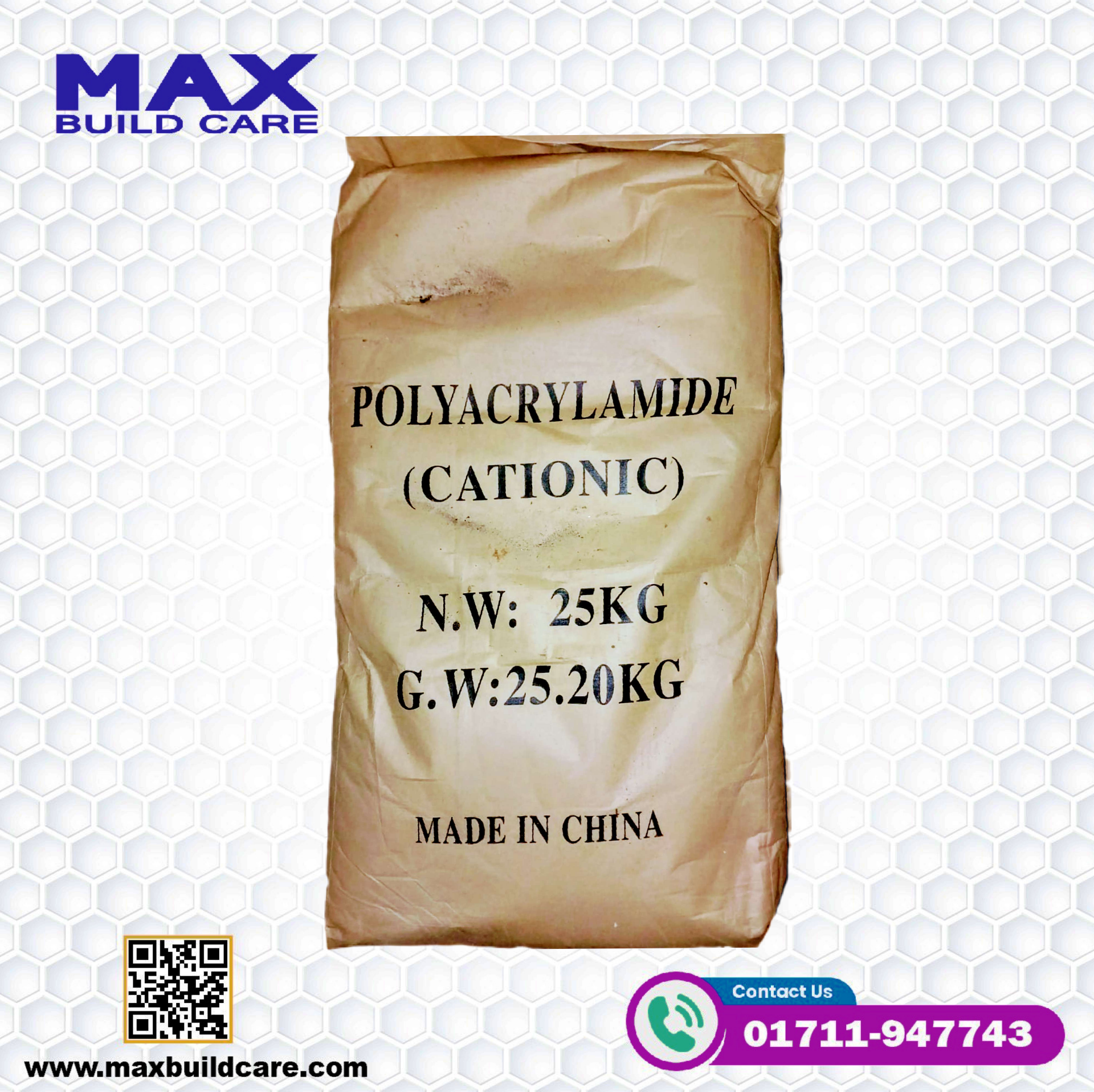
Cationic Polyacrylamide (CPAM) is a high-performance, water-soluble polymer widely used across industrial, environmental, and water treatment applications. As a positively charged (cationic) polymer, it effectively binds suspended particles, colloids, and impurities, promoting rapid flocculation, efficient sludge dewatering, and enhanced water clarity. Its unique properties make it an indispensable additive for industrial processes, improving operational efficiency while supporting environmentally responsible water management.
Key Features
Chemical Formula: (C₃H₅NO)ₙ
Appearance: White or light cream powder/granules
Solubility: Rapidly water-soluble
Functionality: Strong flocculation, particle aggregation, and sludge dewatering
Viscosity: Adjustable based on application needs
Eco-Friendly: Safe and environmentally compatible when used properly
Primary Applications
1. Water Treatment & Environmental Management:
CPAM is widely used for municipal and industrial water purification, effectively removing suspended solids, turbidity, and impurities. It accelerates floc formation, producing clean, clear water suitable for reuse or discharge.
2. Mineral & Mining Processing:
In mining, it facilitates aggregation of fine mineral particles, improving sedimentation efficiency and optimizing mineral recovery processes.
3. Paper, Polymer & Petrochemical Industries:
In paper manufacturing, CPAM enhances fiber retention, sheet formation, and overall quality. In polymer and petrochemical applications, it improves flocculation in liquid processes, increasing yield and consistency.
4. Textile & Dyeing Industries:
It ensures uniform distribution of fibers and particles, aiding dye penetration and fixation while improving fabric quality and color uniformity.
5. Additional Industrial Uses:
CPAM is also used in paints, coatings, cosmetics, and other formulations to control particle suspension, improve stability, and optimize process efficiency.
Benefits
High efficiency and rapid performance
Long-lasting and stable in application
Easily soluble and simple to handle
Extends the lifespan of equipment and improves process efficiency
Environmentally safe and versatile across multiple industries
Mechanism of Action
When dissolved in water, the positively charged polymer molecules of CPAM attach to negatively charged particles in suspension. Electrostatic attraction and Van der Waals forces cause particles to aggregate into large flocs, which can then be easily separated or settled. This results in significant improvement in water clarity, reduced sludge volume, and enhanced separation efficiency.
Conclusion
Cationic Polyacrylamide (C₃H₅NO)ₙ is a high-quality, versatile, and reliable polymer that plays a critical role in modern industrial and environmental applications. Its strong flocculation capacity, rapid particle aggregation, and stable performance make it essential for water treatment, mining, paper production, textile processing, and petrochemical industries. By improving operational efficiency and water quality, CPAM is recognized globally as a trusted solution for industrial water and process management.