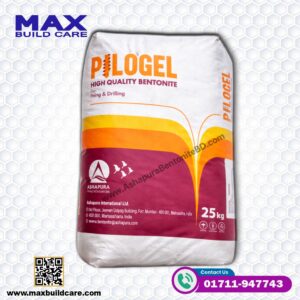
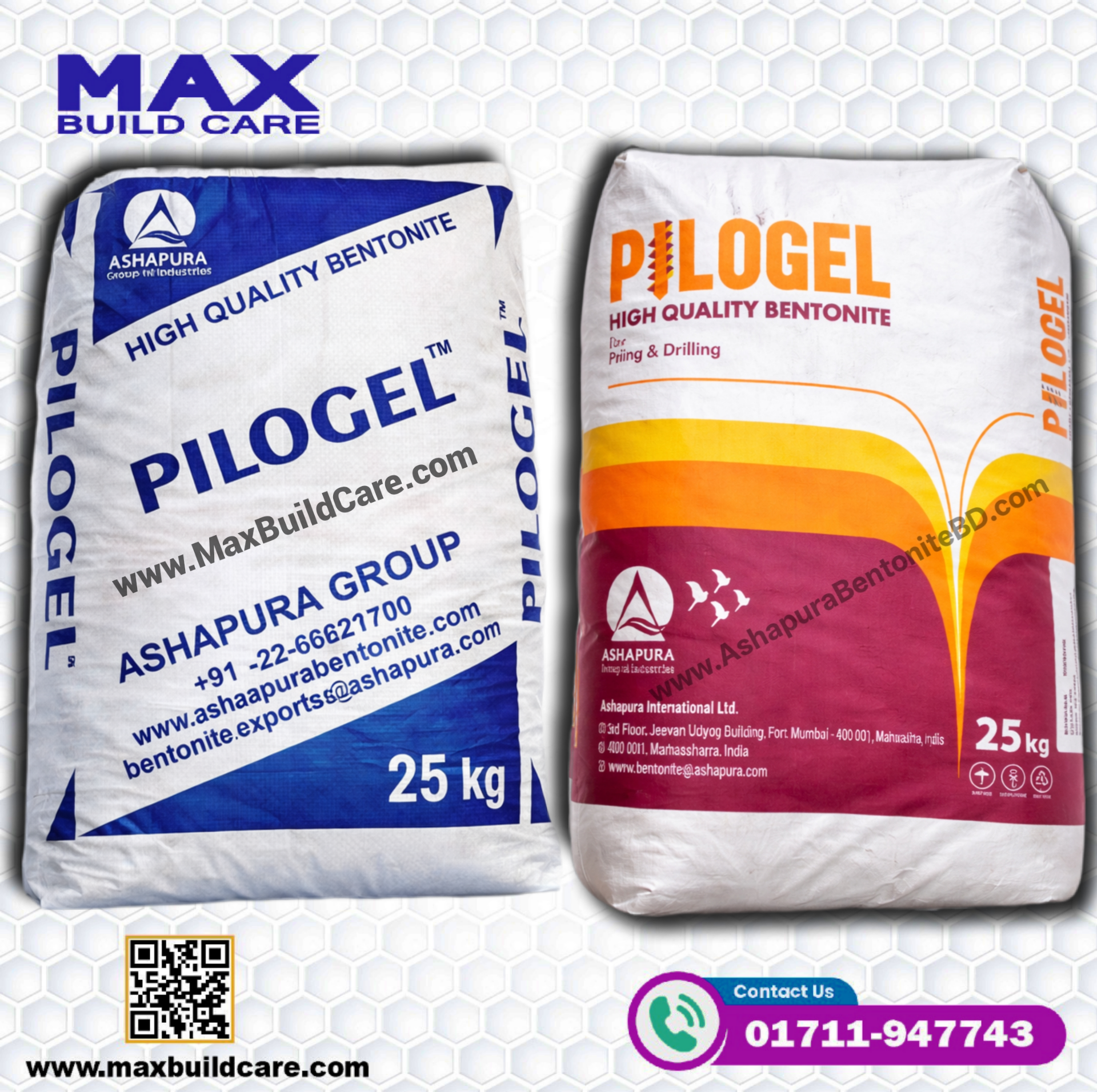
Bentonite for Piling (Sodium Bentonite) is a high-swelling sodium bentonite specially processed for bored pile foundation and diaphragm wall construction. When mixed with water, it forms a stable thixotropic slurry that supports borehole walls, prevents collapse, controls groundwater pressure, and improves drilling efficiency in deep foundation projects.
is a high-performance sodium bentonite clay widely used in modern foundation engineering, particularly in bored piling, diaphragm wall construction, and deep drilling operations. It is primarily composed of montmorillonite mineral, which gives it exceptional swelling capacity, viscosity, and filtration control properties. When mixed with water, piling bentonite forms a stable thixotropic slurry that plays a crucial role in maintaining borehole stability and ensuring safe excavation during foundation work.
Bentonite for piling is naturally derived but processed under controlled industrial conditions to achieve consistent particle size, purity, and performance quality. Its unique layered crystal structure allows water molecules to penetrate between clay particles, causing significant expansion and gel formation. This property makes it highly effective in supporting soil structures and preventing collapse in loose or water-saturated ground conditions.
Chemical Composition and Structure
Piling bentonite mainly consists of sodium montmorillonite, a smectite clay mineral with high cation exchange capacity.
Typical Chemical Formula:
(Na,Ca)₀.₃₃(Al,Mg)₂Si₄O₁₀(OH)₂·nH₂O
Key components include:
Silicon dioxide (SiO₂)
Aluminum oxide (Al₂O₃)
Sodium oxide (Na₂O)
Magnesium oxide (MgO)
Structural water molecules
The presence of sodium ions increases swelling ability and enhances slurry gel strength compared to calcium bentonite.
Working Principle in Piling Operations
When bentonite powder is mixed with clean water at approximately 5%–7% concentration, it forms a viscous drilling slurry with excellent suspension and sealing properties.
The slurry performs several important functions during piling work:
Borehole Wall Stabilization
The hydrostatic pressure generated by bentonite slurry helps balance soil pressure and prevents borehole collapse.
Filter Cake Formation
A thin impermeable layer forms on borehole walls, blocking groundwater infiltration and reducing soil erosion.
Suspension of Drill Cuttings
High viscosity allows soil particles and drilling debris to remain suspended, facilitating easy removal.
Groundwater Pressure Control
Helps maintain stability in water-bearing soil layers during excavation.
The thixotropic nature of bentonite slurry means it behaves like a gel when static but becomes fluid when agitated, making it highly suitable for continuous drilling operations.
Major Applications
Bored Pile Foundation Construction
Bentonite for piling is extensively used in high-rise building foundations, bridge construction, and heavy structural engineering projects. It ensures borehole integrity during deep drilling.
Diaphragm Wall Construction
Used in underground retaining wall systems, basement construction, and metro infrastructure projects to maintain excavation stability.
Horizontal Directional Drilling (HDD)
Supports pipeline installation, cable laying, and trenchless construction by providing lubrication and borehole stabilization.
Marine and Coastal Engineering
Helps stabilize soil structures in waterlogged or coastal environments.
Technical Performance Characteristics
High Swelling Index
Excellent Gel Strength
Low Permeability Barrier Formation
Superior Viscosity and Suspension Ability
Stable Performance Under Pressure
Effective Filtration Control
Typical Laboratory Values:
Swelling Index: 24–32 ml/2g
pH Value: 8–10
Moisture Content: ≤ 12%
Specific Gravity: ~2.6
Marsh Funnel Viscosity (6% slurry): 32–45 seconds
Sand Content: ≤ 2%
Advantages of Piling Bentonite
✔ Prevents borehole collapse during excavation
✔ Controls groundwater penetration
✔ Enhances drilling efficiency
✔ Provides strong slurry stability
✔ Environmentally safe natural clay material
✔ Cost-effective foundation solution
✔ Easy removal before concrete pouring
Mixing and Usage Guidelines
Add bentonite slowly into clean water while stirring continuously.
Use mechanical mixers or agitators for uniform dispersion.
Allow hydration time of 6–8 hours for optimum gel formation.
Monitor slurry viscosity and density during construction.
Regular field testing is recommended to maintain slurry quality.
Storage and Handling
Piling bentonite should be stored in a dry, moisture-free environment. Exposure to humidity may reduce swelling performance. Bags should be properly sealed after use.
Workers should use dust masks and protective equipment during handling to avoid inhalation of fine clay particles.
Conclusion
Bentonite for piling is an essential material in modern foundation engineering and deep excavation projects. Its high swelling capacity, excellent viscosity, and filtration control properties make it indispensable for safe and efficient piling operations. By stabilizing boreholes, controlling groundwater pressure, and improving drilling performance, piling bentonite ensures structural safety and long-term durability of foundation systems. Proper selection of grade, accurate mixing ratio, and quality control testing are key factors for achieving optimal performance in construction projects.