Activated Carbon price in Bangladesh
৳ 95.00
Activated Carbon is a highly porous adsorbent material designed to remove impurities, color, odors, organic compounds, and selected contaminants from water, air, and industrial processes. Widely used in water treatment, wastewater treatment, ETP, gas purification, food processing, chemicals, and environmental applications.
Activated Carbon – High-Performance Adsorbent for Water, Air & Industrial Purification
Activated Carbon is a highly porous carbonaceous material widely used for adsorption, purification, decolorization, odor removal, and contaminant reduction in water, wastewater, air, and various industrial processes. Its extensive internal pore structure provides a large surface area capable of attracting and retaining many dissolved or gaseous substances.
Activated Carbon is an important filtration and purification material used in drinking water treatment, wastewater treatment, ETP, industrial water purification, air and gas treatment, food and beverage processing, pharmaceutical manufacturing, chemical industries, and environmental applications.
What is Activated Carbon?
Activated Carbon is a specially processed form of carbon produced from carbon-rich raw materials such as coconut shell, coal, wood, and other suitable biomass sources. Through controlled activation processes, the carbon develops a highly porous internal structure with a large effective surface area.
This porous structure enables Activated Carbon to adsorb a wide range of organic compounds, color-causing substances, odors, and other contaminants from liquids and gases.
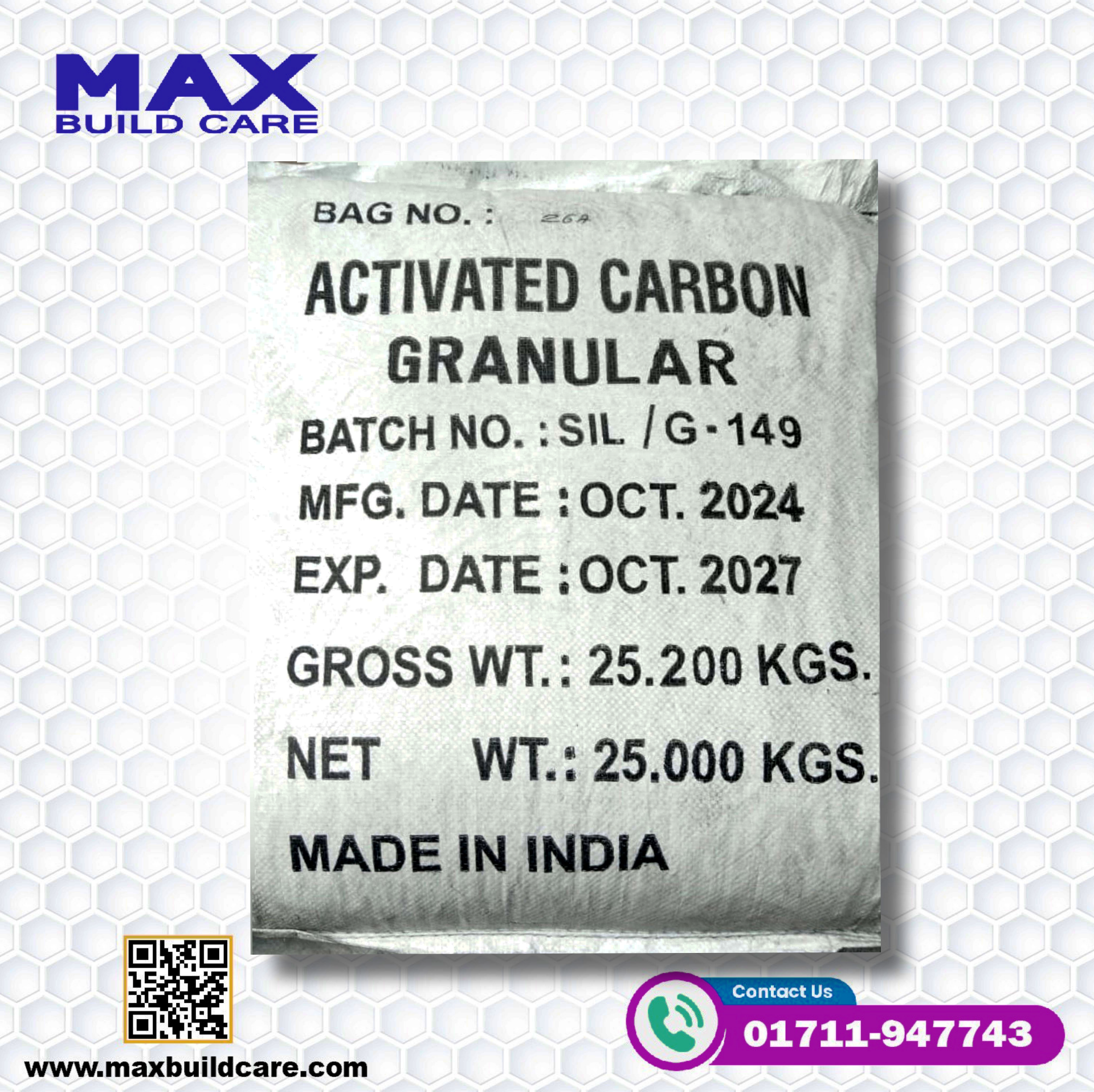
Activated Carbon is available in several physical forms, including Granular Activated Carbon (GAC), Powdered Activated Carbon (PAC), and Extruded or Pelletized Activated Carbon. The appropriate type depends on the filtration system, contaminant characteristics, contact time, and operating conditions.
How Does Activated Carbon Work?
Activated Carbon primarily works through a process known as adsorption. During adsorption, contaminants in water or air attach to the surface and pore structure of the activated carbon rather than being absorbed into the material.
The enormous internal surface area of Activated Carbon provides numerous sites where contaminants can be retained.
The effectiveness of the adsorption process depends on several factors, including:
- Carbon source and activation method
- Surface area and pore structure
- Iodine number
- Particle size
- Contaminant type and concentration
- Water or gas chemistry
- pH
- Temperature
- Contact time
- Flow rate
Therefore, the correct Activated Carbon grade should always be selected according to the specific treatment requirement.
Key Features and Benefits
High Adsorption Capacity
Activated Carbon has a highly developed pore structure that provides a large surface area for adsorption. This makes it effective for reducing many organic contaminants and unwanted substances.
Odor Removal
It is widely used to reduce unpleasant tastes and odors in water and air treatment systems.
Color Removal
Activated Carbon can remove or reduce certain color-causing organic compounds, making it useful in industrial and process-water treatment.
Organic Contaminant Reduction
Depending on the carbon grade and treatment conditions, Activated Carbon can adsorb many dissolved organic compounds and other contaminants.
Versatile Applications
Different carbon types can be selected for water treatment, wastewater treatment, air purification, industrial processing, food and beverage applications, and specialized purification systems.
Major Applications
Activated Carbon is commonly used in:
- Drinking water treatment
- Industrial water purification
- Wastewater treatment
- ETP systems
- Groundwater treatment
- Process water treatment
- RO pretreatment
- Odor control
- Air purification
- Gas purification
- Food and beverage processing
- Sugar and edible oil processing
- Pharmaceutical industries
- Chemical industries
- Textile wastewater treatment
- Industrial effluent treatment
- Environmental remediation
Water Treatment
One of the most common applications of Activated Carbon is water purification. Activated Carbon filters can reduce undesirable taste, odor, color, and various organic contaminants.
In water treatment plants, granular Activated Carbon is often installed in dedicated carbon filter vessels. Water passes through the carbon bed, allowing contaminants to interact with and become adsorbed onto the carbon surface.
Activated Carbon can be used as part of a larger treatment system alongside processes such as sedimentation, filtration, oxidation, membrane treatment, and disinfection.
Wastewater and ETP Applications
Activated Carbon is widely used in Effluent Treatment Plants (ETP) and industrial wastewater treatment systems where reduction of color, odor, and selected dissolved organic substances is required.
It may be used as a polishing treatment stage after primary or biological treatment. Powdered Activated Carbon can also be applied in certain treatment processes where rapid adsorption is required.
The carbon type and dosage should be determined through laboratory testing or treatment trials based on the actual wastewater characteristics.
Air and Gas Purification
Activated Carbon can also be used for purification of air and gases. Certain grades are designed to adsorb odors, volatile organic compounds (VOCs), and selected gaseous contaminants.
It is used in odor-control systems, industrial ventilation, air purification equipment, gas treatment units, and environmental control applications.
For specific gases or highly hazardous contaminants, specialized impregnated Activated Carbon may be required.
Types of Activated Carbon
Granular Activated Carbon (GAC)
GAC consists of relatively larger carbon particles and is commonly used in fixed-bed filtration systems. It can provide continuous treatment when installed inside properly designed filter vessels.
Powdered Activated Carbon (PAC)
PAC consists of fine carbon particles and is commonly added directly to a treatment process. It provides a large available surface area and can be useful when rapid adsorption is required.
Pelletized Activated Carbon
Pelletized or extruded carbon is manufactured into uniform shapes and can be used in specialized gas and air treatment systems where pressure drop and mechanical strength are important considerations.
Important Technical Specifications
When selecting Activated Carbon, important technical parameters may include:
- Carbon source
- Iodine number
- Methylene blue adsorption
- Surface area
- Moisture content
- Ash content
- Hardness
- Particle size
- Apparent density
- pH
- CTC activity for certain applications
- Decolorizing performance
The required specification depends on the application and target contaminants.
Application and Filtration
For fixed-bed applications, Activated Carbon is loaded into a properly designed filtration vessel. Water or air is then passed through the carbon bed at a controlled flow rate.
The required carbon quantity and contact time depend on contaminant concentration, flow rate, treatment objective, and carbon characteristics.
Over time, the adsorption capacity of the carbon becomes exhausted. Depending on the carbon type and system design, the media may need to be replaced or regenerated.
Storage and Handling
Activated Carbon should be stored in a clean, dry, and well-ventilated area. Packaging should remain sealed until use to prevent contamination and moisture absorption.
During handling, avoid creating excessive dust. Appropriate protective equipment, including respiratory protection where necessary, safety glasses, and gloves, should be used according to the product’s Safety Data Sheet (SDS).
Activated Carbon is combustible, so appropriate precautions should be followed during storage and handling, particularly where large quantities of dry carbon are present.
Conclusion
Activated Carbon is a highly versatile adsorption media used for purification and contaminant reduction across water, wastewater, air, gas, food, pharmaceutical, chemical, and environmental applications. Its highly porous structure and large surface area enable it to effectively adsorb many unwanted substances, including selected organic compounds, color, and odor-causing materials.
With different grades, particle sizes, pore structures, and forms available, Activated Carbon can be selected according to specific treatment requirements. Proper selection, dosage, contact time, filtration design, and timely replacement of exhausted media are essential for achieving optimum purification performance.