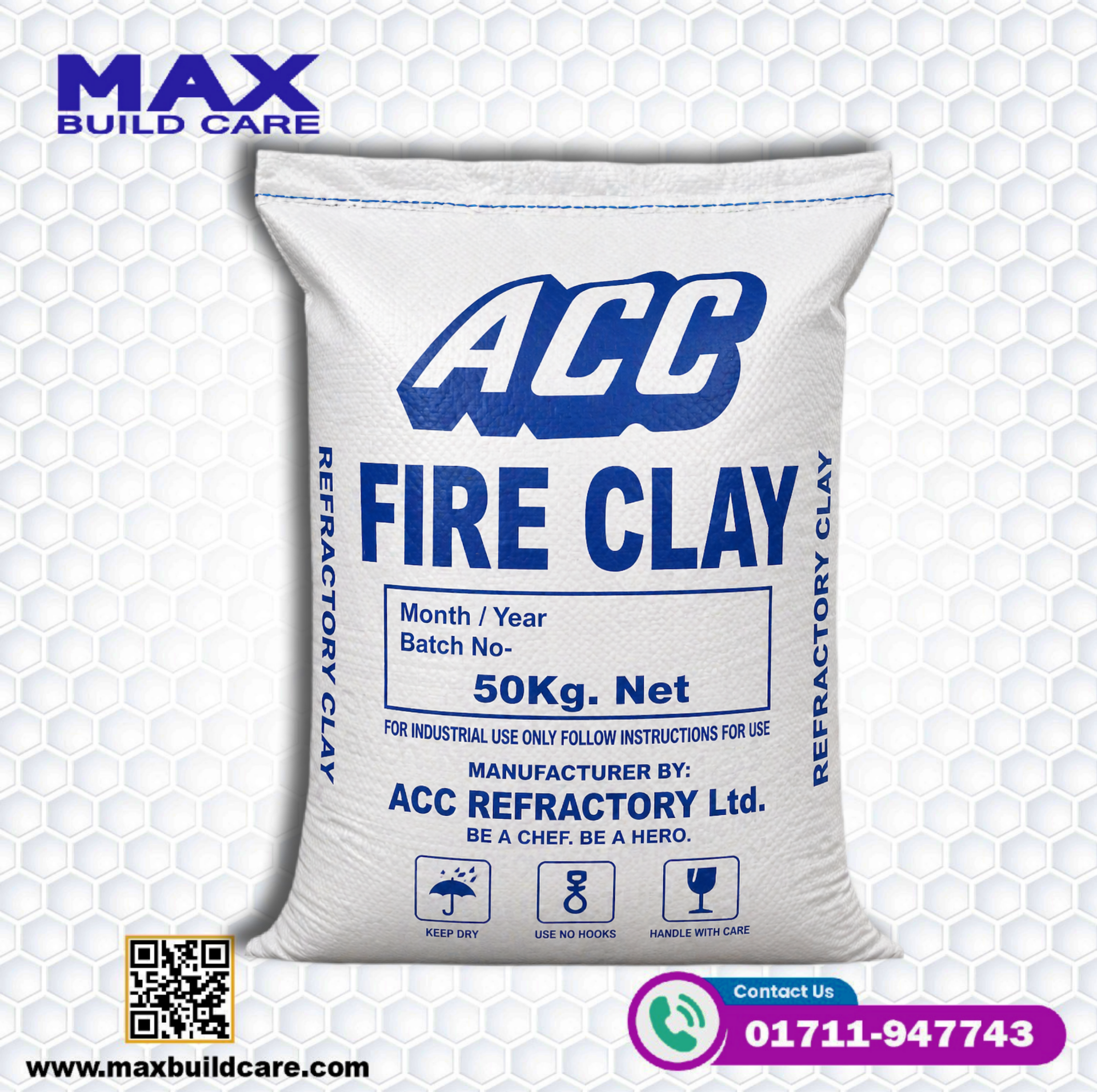
ACC Fire Clay
৳ 1.00
ACC Fire Clay is a high heat-resistant refractory material used in furnaces, kilns, and boilers. It acts as a lining to retain heat, improve efficiency, and protect equipment from thermal damage.It is also used as a mortar for refractory bricks, creating strong bonding and sealing gaps. The material withstands high temperatures without cracking or melting, ensuring durability and long service life.
ACC Fire Clay – Complete Detailed Product Description
🔷 Introduction
ACC Fire Clay is a high-quality refractory clay designed to withstand extremely high temperatures in industrial applications. It is widely used in heavy industries where ordinary clay or construction materials fail due to intense heat exposure. This specialized clay plays a vital role in maintaining structural stability, heat resistance, and durability in furnaces, kilns, boilers, and other high-temperature environments.
Unlike ordinary clay, ACC Fire Clay is engineered to perform under severe thermal conditions ranging from 1000°C to 1600°C or even higher, making it an essential material in modern industrial operations.
🔷 What is Fire Clay?
Fire Clay is a naturally occurring sedimentary clay rich in alumina (Al₂O₃) and silica (SiO₂). These two primary components give the material its excellent heat-resistant properties. It is classified as a refractory material because of its ability to resist melting, deformation, and structural breakdown under extreme heat.
Fire clay is typically found in coal measure deposits and is refined for industrial use to ensure consistent quality and performance.
🔷 Key Features of ACC Fire Clay
✔️ 1. High Temperature Resistance
ACC Fire Clay can withstand extremely high temperatures, typically ranging from 800°C to 1600°C, making it suitable for industrial furnaces and kilns.
✔️ 2. Excellent Thermal Shock Resistance
It can handle sudden temperature changes without cracking or losing structural integrity, which is crucial in continuous heating and cooling cycles.
✔️ 3. Strong Binding Properties
The clay has excellent adhesive properties, allowing it to bind strongly with fire bricks, refractory linings, and other construction materials.
✔️ 4. Low Shrinkage
During heating, ACC Fire Clay exhibits minimal shrinkage, ensuring structural stability and long-lasting performance.
✔️ 5. High Durability
It provides long service life even in harsh industrial environments, reducing maintenance costs and downtime.
🔷 Chemical Composition
The typical chemical composition of fire clay includes:
Silica (SiO₂): 50% – 60%
Alumina (Al₂O₃): 25% – 35%
Iron Oxide (Fe₂O₃): small traces
Calcium Oxide (CaO): minor content
Magnesium Oxide (MgO): trace amounts
This balanced composition gives the clay its high refractory characteristics and stability under extreme heat conditions.
🔷 Industrial Applications of ACC Fire Clay
ACC Fire Clay is widely used across various industries due to its heat-resistant and structural properties.
🔥 1. Furnace and Kiln Lining
It is extensively used in steel, cement, and ceramic industries for lining furnaces and kilns to protect them from extreme temperatures.
🔥 2. Refractory Brick Manufacturing
ACC Fire Clay is a key raw material in producing fire bricks, refractory blocks, and heat-resistant construction materials.
🔥 3. Steel and Cement Industry
It is used in rotary kilns and industrial furnaces to ensure long-lasting thermal protection.
🔥 4. Glass Industry
Fire clay is used in glass melting furnaces where continuous high heat is required.
🔥 5. Foundry and Metal Casting
It is used for molds and lining in metal casting processes where molten metals are handled.
🔥 6. Boilers and Chimneys
ACC Fire Clay provides heat-resistant lining for boilers and industrial chimneys to prevent structural damage.
🔷 Importance in Industry
ACC Fire Clay plays a critical role in modern industrial operations. Its importance includes:
Protecting machinery from extreme heat damage
Increasing operational efficiency
Reducing maintenance and repair costs
Ensuring safety in high-temperature environments
Enhancing the lifespan of industrial equipment
Without high-quality fire clay, many industrial processes would face frequent breakdowns and inefficiencies.
🔷 Application Method
ACC Fire Clay is typically used in the following ways:
Mixed with water to form mortar for refractory brick installation
Applied as lining material inside furnaces and kilns
Used in casting mixtures for heat-resistant molds
Combined with other refractory materials for enhanced performance
Proper mixing and application ensure maximum efficiency and durability.
🔷 Storage Instructions
To maintain quality and performance:
Store in a dry and moisture-free environment
Keep bags tightly sealed
Avoid exposure to water or humidity
Protect from contamination and direct sunlight
Proper storage ensures long shelf life and consistent performance.
🔷 Advantages of ACC Fire Clay
✔ High heat resistance
✔ Strong bonding strength
✔ Excellent thermal stability
✔ Long-lasting durability
✔ Suitable for multiple industrial applications
✔ Cost-effective refractory solution
🔷 Conclusion
ACC Fire Clay is an essential refractory material widely used in heavy industries where extreme heat resistance is required. Its superior thermal stability, strong bonding ability, and long service life make it a preferred choice in steel, cement, glass, and foundry industries.
By providing reliable protection against high temperatures, ACC Fire Clay ensures efficient industrial performance and reduces operational risks. It is truly a critical material for modern high-temperature engineering applications.