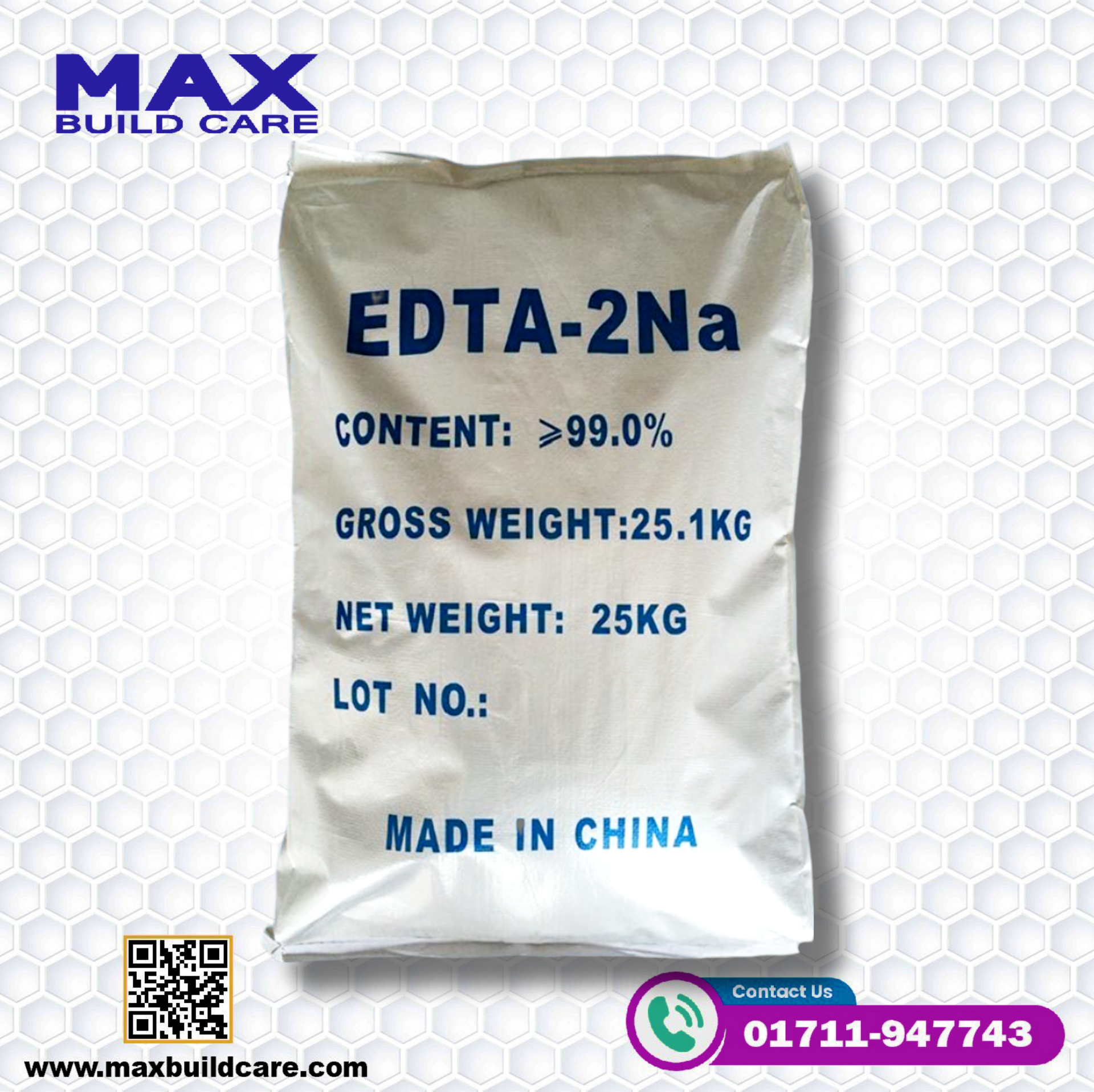
EDTA-2Na
৳ 1.00
EDTA-2Na (C₁₀H₁₄N₂Na₂O₈·2H₂O)
A high-purity (≥99.0%) disodium salt of Ethylenediaminetetraacetic Acid, widely used as a powerful chelating agent. It effectively binds metal ions to enhance stability and performance in applications such as water treatment, detergents, textiles, cosmetics, pharmaceuticals, and food processing.
EDTA-2Na (C₁₀H₁₄N₂Na₂O₈·2H₂O) is a high-purity chelating compound widely recognized across global industries for its exceptional ability to bind, stabilize, and sequester metal ions. With a minimum purity of ≥99.0%, this industrial-grade disodium salt of Ethylenediaminetetraacetic Acid ensures reliable performance, strong metal-binding capacity, and consistent results in applications ranging from water treatment and cosmetics to food processing and pharmaceuticals. Its multifunctional nature, chemical stability, and superior sequestering capability make EDTA-2Na an indispensable component of modern industrial and commercial formulations.
—
Chemical Structure and Properties
EDTA-2Na is characterized by its molecular structure containing multiple nitrogen and carboxyl groups, enabling it to form stable complexes (chelates) with metal ions such as calcium, magnesium, iron, copper, zinc, and manganese. This metal-binding property enhances the stability and efficiency of chemical formulations where metal contamination may cause discoloration, degradation, oxidation, precipitation, or reduced performance.
Key Physical and Chemical Features
Chemical Formula: C₁₀H₁₄N₂Na₂O₈·2H₂O
Purity: ≥99.0%
Appearance: White, free-flowing crystalline powder
Solubility: Highly soluble in water
pH (1% solution): Slightly alkaline
Chelation Value: Strong binding affinity for divalent and trivalent metal ions
These properties allow EDTA-2Na to perform exceptionally well in diverse industrial environments where metal-ion control is critical.
—
Major Industrial Applications
1. Water Treatment
EDTA-2Na plays a vital role in softening hard water by capturing calcium and magnesium ions. It prevents scale formation, improves water clarity, enhances chemical reactivity, and increases the efficiency of detergents and cleaning agents used in both industrial and municipal water treatment systems.
2. Detergents and Cleaning Agents
In household and industrial detergents, EDTA-2Na serves as a stabilizer and performance enhancer. By binding metal ions, it:
Improves detergent activity
Prevents the degradation of surfactants
Reduces discoloration and rancidity
Enhances cleaning efficiency even in hard water
Its presence ensures brighter, cleaner wash results and prolongs the shelf life of detergent formulations.
3. Cosmetics and Personal Care
In skincare and haircare products—such as shampoos, soaps, lotions, creams, and serums—EDTA-2Na helps maintain product clarity, color, and stability. It prevents metal-induced oxidation and contamination, ensuring the product remains fresh and safe for extended periods.
4. Pharmaceuticals
Pharmaceutical industries use EDTA-2Na as a stabilizer and preservative enhancer. It prevents metal-catalyzed reactions in medicinal formulations, ensuring:
Improved product stability
Reduced oxidation
Enhanced efficacy of preservatives
It is commonly found in injections, eye drops, ointments, and topical medications.
5. Food Industry (Approved in Many Countries)
In food processing, EDTA-2Na is used as a preservative, stabilizer, and color-retention agent. It prevents oxidation, rancidity, enzymatic browning, and nutrient loss by trapping trace metal ions that catalyze spoilage. Common applications include canned foods, sauces, mayonnaise, soft drinks, and processed vegetables.
6. Textile and Dyeing Industry
EDTA-2Na enhances dyeing efficiency in the textile sector by removing unwanted metal ions from water, ensuring:
Better dye absorption
Uniform coloring
Prevention of dye precipitation
Improved color brightness
Its chelation ensures deep and consistent penetration of dyes into fibers.
7. Agriculture
In agricultural formulations, EDTA-2Na is used to produce micronutrient chelates, which significantly improve nutrient absorption in plants. These chelates ensure stable, non-reactive, and easily absorbable forms of essential minerals like iron, zinc, and manganese.
8. Laboratory and Analytical Use
In analytical chemistry, EDTA-2Na is widely used in titration processes to determine metal ion concentrations. Its strong binding capacity ensures accurate and consistent analytical results.
—
Advantages of EDTA-2Na
High Purity (≥99%) ensures consistent performance
Superior chelating strength for a wide range of metal ions
Enhances stability of formulations by preventing oxidation and degradation
Improves color retention in cosmetics, food, and textile applications
Non-reactive and thermally stable, suitable for various industrial processes
Environmentally safer alternative to many older chemical chelators
—
Storage & Handling
EDTA-2Na should be stored in a cool, dry, well-ventilated place, away from moisture and direct sunlight. Containers must be tightly sealed to prevent clumping and preserve chemical integrity. Standard safety practices—such as protective gloves and eye protection—are recommended during handling.
—
Conclusion
EDTA-2Na (≥99.0%) is a high-performance, multi-industry chelating agent that provides unmatched stability, efficiency, and versatility in controlling metal ions. Its extensive applications across water treatment, cosmetics, detergents, pharmaceuticals, food processing, textiles, and agriculture make it a cornerstone chemical in modern manufacturing. With excellent solubility, high purity, and exceptional chelating properties, EDTA-2Na delivers dependable performance and long-term value in a wide range of industrial formulations.