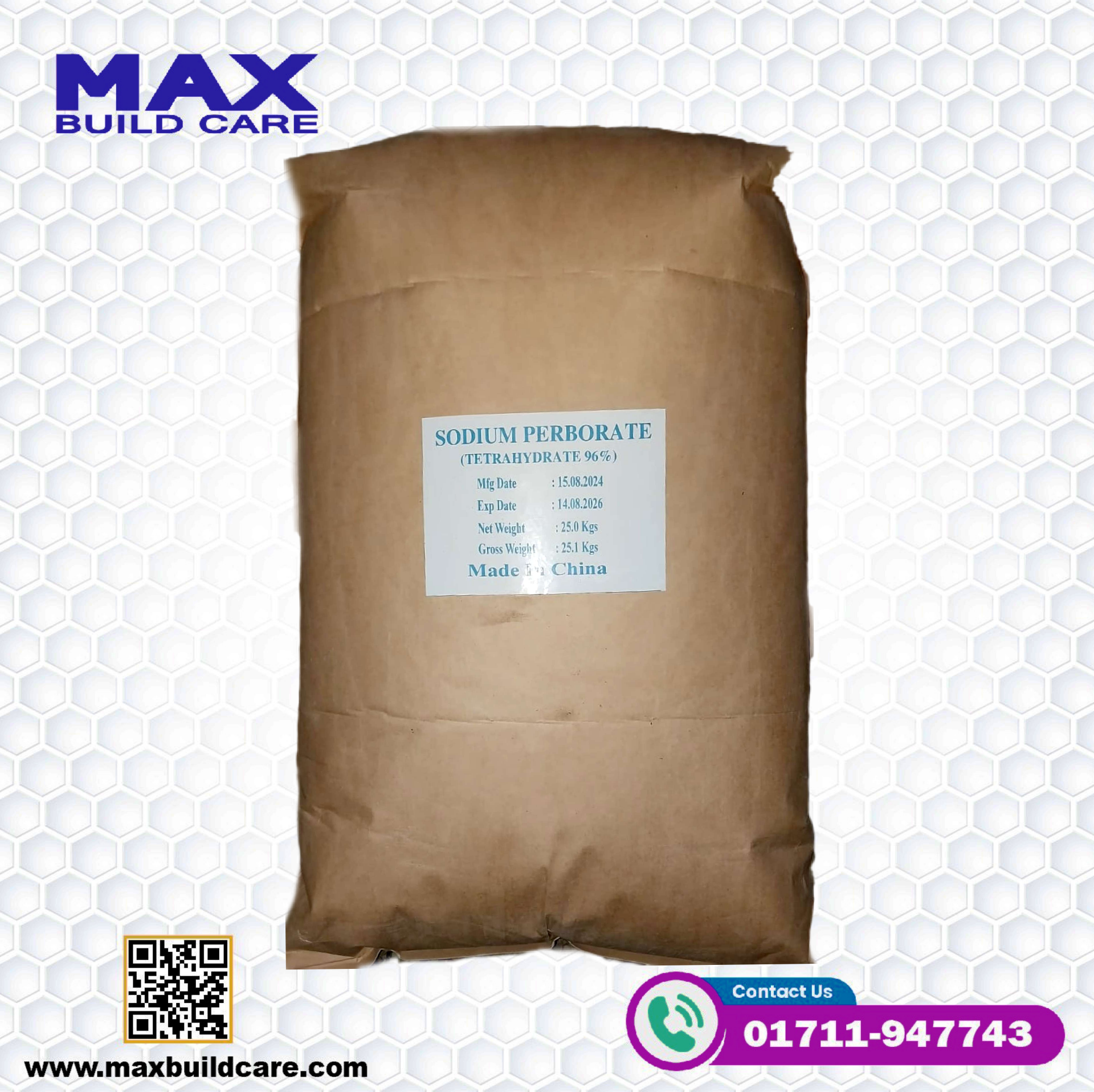
Sodium Perborate
৳ 1.00
Sodium Perborate (Tetrahydrate 96%, NaBO₃·4H₂O) is a white, water-soluble crystalline oxidizing agent widely used in detergents, bleaching, textile processing, paper, and cleaning applications. It releases active oxygen for effective stain removal, whitening, and microbial control, providing safe, stable, and eco-friendly performance in industrial and household formulations.
Sodium Perborate Tetrahydrate (NaBO₃·4H₂O, 96%) is a high-purity, water-soluble inorganic compound widely recognized for its oxidizing, bleaching, and disinfecting properties. It is extensively used across industrial, commercial, and household applications due to its stability, controlled release of active oxygen, and environmentally safe characteristics. This compound is a vital ingredient in detergents, bleaching agents, textile processing, pulp and paper manufacturing, cleaning formulations, and oral care products. With its exceptional performance, reliability, and versatility, Sodium Perborate Tetrahydrate 96% has become an indispensable chemical for manufacturers seeking high-quality and consistent results.
—
Chemical and Physical Properties
Sodium Perborate Tetrahydrate is a white, crystalline powder or granules that is highly soluble in water. The tetrahydrate form, containing four molecules of water, provides stability, safe handling, and controlled oxygen release, making it highly suitable for industrial and household applications.
Key Properties Include:
Chemical Formula: NaBO₃·4H₂O
Purity: 96% minimum
Appearance: White crystalline granules or powder
Solubility: Readily soluble in water, slightly soluble in alcohol
pH (1% aqueous solution): 9–10
Density: 1.73 g/cm³
Melting Point: Decomposes around 100–110°C
Odor: Odorless
Stability: Stable under dry, cool conditions; decomposes slowly under heat or moisture
These properties make it ideal for controlled bleaching, oxidation, and cleaning applications, ensuring safe and consistent performance across industries.
—
Industrial Applications
1. Detergents and Laundry Products
Sodium Perborate Tetrahydrate is a key oxidizing and bleaching agent in detergents and laundry formulations. Its primary functions include:
Breaking down tough organic stains on fabrics
Enhancing fabric whiteness and brightness
Maintaining color and texture of textiles
Controlled oxygen release to protect fabrics while ensuring effective cleaning
Synergy with surfactants for superior cleaning efficiency
It is commonly incorporated in powdered detergents, laundry bars, and bleaching powders, ensuring excellent performance and consumer satisfaction.
—
2. Textile Industry
In textiles, Sodium Perborate Tetrahydrate serves as a safe, eco-friendly bleaching agent. Its benefits include:
Uniform bleaching of cotton, wool, and synthetic fibers
Controlled oxidation that prevents fiber damage
Improved color consistency and brightness
Compatibility with wet processing chemicals and dyes
This ensures high-quality fabric finishing while reducing environmental impact compared to chlorine-based bleaches.
—
3. Pulp and Paper Industry
Sodium Perborate Tetrahydrate is widely used in pulp and paper processing to enhance brightness and quality:
Provides uniform pulp bleaching without harsh chemical degradation
Reduces chlorine usage, minimizing environmental pollution
Maintains fiber strength and integrity
Produces high-quality, bright, and durable paper products
Its stability and controlled oxidizing action make it an essential component in modern paper manufacturing.
—
4. Cleaning and Hygiene Applications
Sodium Perborate Tetrahydrate is extensively utilized in cleaning and oral care products, such as:
Tooth whitening powders and pastes
Household and industrial surface cleaners
Laundry additives for stain removal
Antimicrobial and disinfecting formulations
Its oxygen-releasing property ensures effective microbial control and safe cleaning action, making it a reliable choice for consumer and industrial applications.
—
5. Chemical and Industrial Uses
In the chemical industry, Sodium Perborate Tetrahydrate is used as:
An oxidizing agent in organic synthesis
A precursor for boron-based intermediates
A stable reagent for laboratory and industrial oxidation reactions
Its predictable reactivity, water solubility, and high purity make it a preferred chemical for precise industrial and laboratory processes.
—
Advantages of Sodium Perborate Tetrahydrate (96%)
High-purity grade ensures consistent and reliable performance
Water-soluble and easy to handle
Controlled release of active oxygen for safe bleaching and oxidation
Versatile across multiple industries including detergents, textiles, pulp, cleaning, and chemicals
Environmentally friendly alternative to chlorine-based bleaches
Maintains product quality, whiteness, and performance
Non-toxic and safe for commercial and industrial use
These benefits make Sodium Perborate Tetrahydrate 96% a trusted and cost-effective solution for manufacturers worldwide.
—
Handling and Storage
Proper handling and storage are critical to maintaining the stability and effectiveness of Sodium Perborate Tetrahydrate:
Store in a cool, dry, and ventilated area
Keep containers tightly closed to prevent moisture absorption
Avoid contact with strong acids, reducing agents, or flammable materials
Use appropriate PPE including gloves, masks, and protective eyewear
Correct storage ensures long shelf life, optimal performance, and safety for all applications.
—
Conclusion
Sodium Perborate Tetrahydrate (NaBO₃·4H₂O, 96%) is a versatile, high-performance, and eco-friendly oxidizing agent. Its controlled release of oxygen, water solubility, and chemical stability make it suitable for a wide range of applications including detergents, textile processing, pulp and paper bleaching, cleaning, oral care, and chemical synthesis. With high purity, reliability, and superior performance, Sodium Perborate Tetrahydrate 96% continues to be a trusted choice for industries worldwide, providing effective bleaching, cleaning, and microbial control while maintaining safety and environmental responsibility.