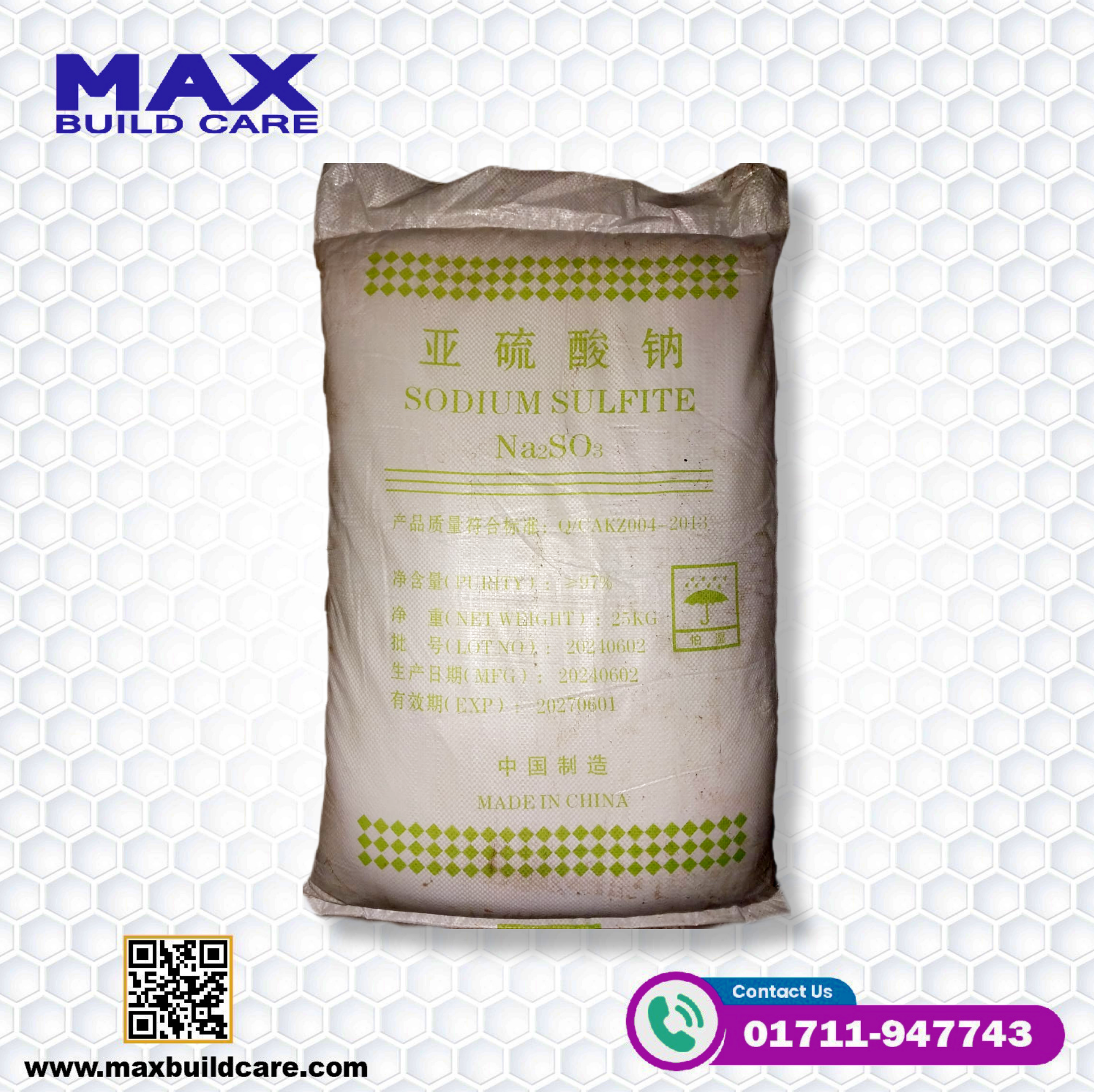
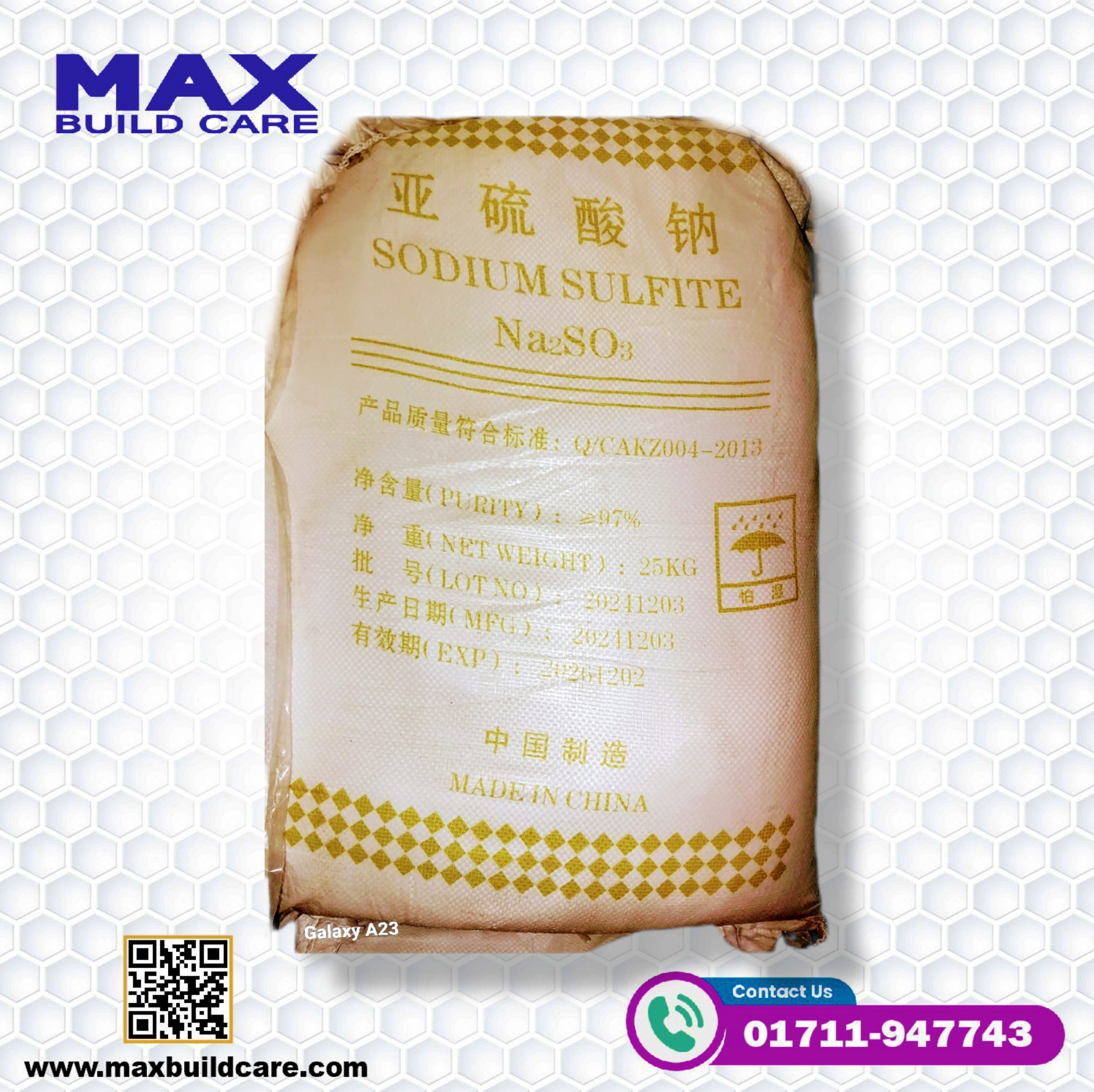
SODIUM SULFITE
৳ 1.00
- Sodium Sulfite (Na₂SO₃) is a high-purity reducing agent used in water treatment, photography, pulp & paper, textiles, and chemical processing to remove oxygen and prevent oxidation.
Sodium Sulfite (Na₂SO₃) is a high-purity, inorganic, water-soluble salt widely used across a diverse range of industrial and commercial applications. Known for its strong reducing properties, exceptional stability, and ability to effectively remove dissolved oxygen, Sodium Sulfite plays a crucial role in water treatment, pulp and paper production, food preservation, textiles, photography, and chemical manufacturing. Its efficiency, reliability, and cost-effectiveness make it one of the most valuable sulfite salts in modern industrial chemistry.
—
Chemical Identity and General Characteristics
Chemical Name: Sodium Sulfite
Chemical Formula: Na₂SO₃
Molecular Weight: 126.04 g/mol
Appearance: White, crystalline powder or granules
Solubility: Highly soluble in water
Odor: Odorless
CAS Number: 7757-83-7
Sodium Sulfite is produced commercially by reacting sulfur dioxide (SO₂) with sodium carbonate (Na₂CO₃) or sodium hydroxide (NaOH). The resulting compound is then purified, crystallized, and dried to achieve industrial-grade or food-grade quality.
—
Key Chemical and Functional Properties
Sodium Sulfite is valued for several key chemical properties that make it suitable for a wide range of industrial applications:
1. Strong Reducing Agent
One of the most notable characteristics of Sodium Sulfite is its ability to act as a strong reducing agent. It reduces contaminants, prevents oxidative reactions, and protects materials from degradation caused by air, oxygen, or oxidation catalysts.
2. Dissolved Oxygen Scavenger
Sodium Sulfite reacts rapidly with oxygen to form sodium sulfate (Na₂SO₄). This makes it ideal for removing dissolved oxygen from water systems, boilers, and industrial processes where corrosion must be prevented.
3. Anti-Oxidation Capability
Because it prevents oxidation, Sodium Sulfite is widely used for preservation, stabilization, and improving product shelf life—especially in food, chemicals, and pharmaceuticals.
4. Excellent Buffering Ability
It helps maintain stable pH conditions in various formulations, contributing to consistency and performance across industrial applications.
—
Major Industrial Applications
1. Water Treatment and Boiler Systems
Sodium Sulfite is extensively used as an oxygen scavenger in water treatment plants and high-pressure boiler systems.
Prevents corrosion in pipelines, boilers, heat exchangers
Protects metal surfaces
Ensures efficiency of steam generation systems
Its fast reaction rate with dissolved oxygen makes it indispensable in the power generation and manufacturing industries.
—
2. Pulp & Paper Industry
In the paper sector, Sodium Sulfite is used in the sulfite pulping process:
Helps break down lignin and separate cellulose fibers
Produces high-quality, bright paper
Provides uniform pulp consistency
It improves paper strength, texture, brightness, and printability.
—
3. Food & Beverage Industry
Food-grade Sodium Sulfite functions as a preservative and antioxidant.
Applications include:
Preventing spoilage
Maintaining color and freshness
Inhibiting microbial growth
Preventing oxidation in dried fruits, wines, syrups, and beverages
Its GRAS-status (where permitted) makes it widely used in controlled concentrations.
—
4. Photography and Film Processing
In traditional photography, Sodium Sulfite is used as a fixer and preservative:
Prevents oxidation of developing solutions
Enhances image clarity
Extends the shelf life of photographic chemicals
It has been a vital chemical in darkroom processes for decades.
—
5. Textile Industry
In textiles, Sodium Sulfite is used for:
Bleaching wool and silk
Removing excess dye
Preventing oxidative damage to fibers
Improving softness and finish
Its ability to control oxygen makes it effective in maintaining fiber strength and shine.
—
6. Chemical Manufacturing
Sodium Sulfite is also used as:
A reagent in chemical synthesis
A reducing agent in dye and pigment production
A stabilizer in adhesives and resins
A raw material for sodium thiosulfate and sodium bisulfite manufacturing
Its chemical versatility gives it a strong presence across industrial chemistry.
—
Advantages and Benefits
Highly effective oxygen scavenger
Prevents corrosion in industrial systems
Cost-efficient and fast-reacting
Excellent stabilizer and antioxidant
Safe, reliable, and widely approved for industrial applications
High solubility ensures easy mixing and handling
Available in multiple grades (industrial, food, photographic)
—
Packaging & Storage Recommendations
Sodium Sulfite should be stored:
In a cool, dry, well-ventilated area
Away from moisture and strong acids
In sealed, airtight containers
Because it readily absorbs moisture, proper storage ensures long-term stability and prevents degradation.
—
Conclusion
Sodium Sulfite (Na₂SO₃) is an essential industrial chemical known for its powerful reducing capabilities, oxygen-removal efficiency, and wide-ranging applications in water treatment, food preservation, paper production, textiles, photography, and chemical processing. Its reliability, versatility, and economic value make it a preferred choice in industries requiring oxidation control, stabilization, and corrosion prevention. As a multifunctional compound, Sodium Sulfite continues to play a vital role in modern manufacturing and environmental management.