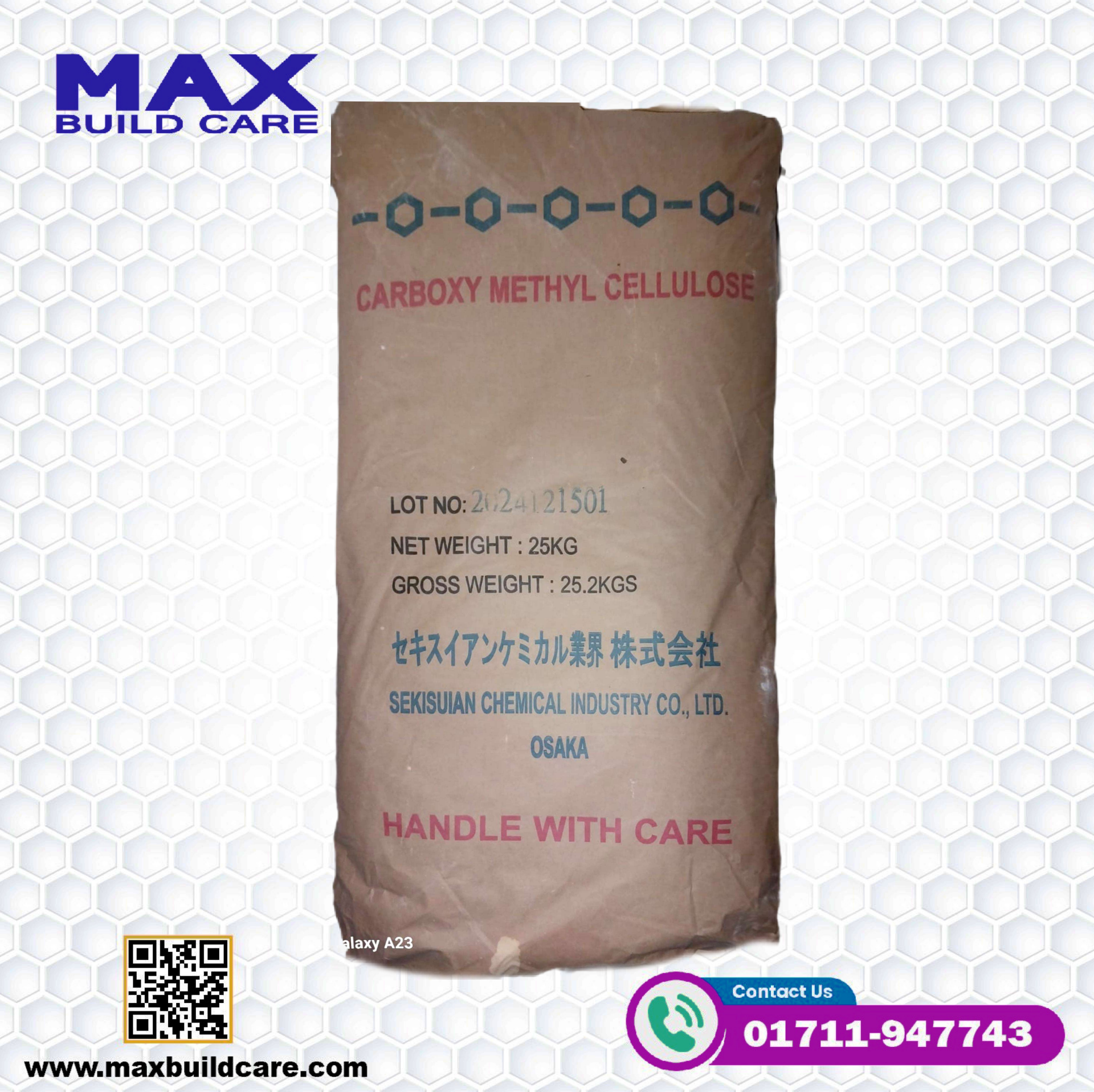
CARBOXY METHYL CELLULOSE (CMC)
৳ 1.00
Carboxy Methyl Cellulose (C₈H₁₅O₈Na) is a highly functional, water-soluble polymer used as a thickener, stabilizer, binder, and viscosity modifier in food, pharmaceuticals, detergents, drilling fluids, paints, and industrial applications.
Carboxymethyl Cellulose (CMC), also known as Sodium Carboxymethyl Cellulose, is a highly versatile, water-soluble cellulose ether widely used across diverse industrial sectors. Derived from natural cellulose, CMC is engineered through a precise chemical modification process that enhances solubility, viscosity, stability, and functional performance. With excellent rheological properties, non-toxic nature, and sustainable origin, CMC has become an indispensable ingredient in food production, pharmaceuticals, paints, textiles, detergents, drilling fluids, and more.
—
Chemical Identity & General Characteristics
Chemical Name: Carboxymethyl Cellulose
Molecular Formula: C₈H₁₅O₈Na (repeating unit)
Common Name: Sodium CMC
Appearance: White or off-white, free-flowing powder
Type: Anionic, water-soluble polymer
CAS Number: 9004-32-4
CMC is produced by introducing carboxymethyl groups into the cellulose backbone, increasing its affinity for water and allowing it to form smooth, high-viscosity solutions. The degree of substitution (DS) determines its performance and application suitability, making it adaptable to multiple industrial-grade requirements.
—
Key Physical & Chemical Properties
Carboxymethyl Cellulose is widely valued for:
High water solubility in both cold and hot water
Excellent thickening and viscosity-control ability
Superior stabilizing and suspending action
Outstanding water-retention capacity
Good film-forming characteristics
Non-toxic, biodegradable, and environmentally friendly nature
Stable performance in varying pH and moderate temperature ranges
These properties make CMC one of the most reliable and functional polymers in modern industrial formulations.
—
Manufacturing Process
CMC is manufactured from naturally sourced cellulose (usually cotton linter or wood pulp) through three primary stages:
1. Alkalization: Cellulose is treated with sodium hydroxide to open its fiber structure.
2. Etherification: The alkali-treated cellulose reacts with monochloroacetic acid or sodium monochloroacetate to form CMC.
3. Purification & Drying: Residual salts and by-products are removed, followed by drying and milling to obtain the final powder.
By adjusting the reaction conditions and DS value, manufacturers produce various grades of CMC tailored for food, pharmaceutical, industrial, or drilling applications.
—
Major Industrial Applications
1. Food Industry (E466 / INS 466)
Food-grade CMC is widely used for its stabilizing, thickening, and texturizing properties.
Applications include:
Ice cream (prevents crystallization)
Sauces, gravies, and dressings (improves thickness and flow)
Bakery products (enhances softness and moisture retention)
Drinks, jellies, and dairy items (improves mouthfeel and stability)
CMC helps maintain product quality, visual appeal, and shelf life without altering taste or safety.
—
2. Pharmaceutical & Personal Care Industry
CMC is a widely approved pharmaceutical excipient. It functions as:
Tablet binder and disintegrant
Suspension stabilizer
Thickener for syrups and lotions
Key ingredient in toothpaste for ideal gel structure
Its safe, hypoallergenic profile makes it suitable for topical and ingestible formulations.
—
3. Paints, Coatings & Adhesives
CMC enhances the performance of water-based paints by providing:
Viscosity control
Better brushability and leveling
Prevention of pigment settling
Film-forming support
These characteristics improve both application quality and final finish.
—
4. Textile Printing & Sizing
In textile operations, CMC serves as:
A reliable textile printing thickener
A sizing agent that strengthens yarn
A dyeing auxiliary that ensures uniform color distribution
Its clean washability and consistent rheology make it a preferred industrial solution.
—
5. Oil & Gas Drilling Fluids
CMC (especially LV and HV grades) plays a crucial role in drilling operations:
Reduces fluid loss
Enhances viscosity and mud stability
Helps maintain borehole integrity
Improves water retention in drilling mud systems
Its performance under challenging conditions makes it essential for both onshore and offshore drilling.
—
6. Detergents & Cleaning Products
CMC boosts cleaning efficiency by acting as an anti-redeposition agent:
Prevents dirt from reattaching to fabrics
Stabilizes detergent solution
Improves overall washing performance
Its compatibility with surfactants and builders makes it a valuable detergent additive.
—
7. Paper & Pulp Industry
Paper-grade CMC:
Enhances paper strength
Improves fiber binding
Supports coating adhesion
Provides surface smoothness
The result is stronger, higher-quality paper suitable for printing, packaging, and specialty applications.
—
Advantages of Carboxymethyl Cellulose
Highly versatile across industries
Cost-effective and efficient performance
Environmentally safe and biodegradable
Provides superior rheology and viscosity control
Available in multiple grades tailored for specific applications
Delivers stable performance in various formulations
—
Conclusion
Carboxymethyl Cellulose (CMC) is one of the most multifunctional and widely trusted industrial polymers in the global market. From food stabilization and pharmaceutical formulation to drilling mud conditioning, textile processing, paint modification, and detergent enhancement—CMC consistently delivers exceptional performance, stability, and economic value. Its natural origin, adaptability, and strong functional properties position it as an essential material in modern industrial chemistry.