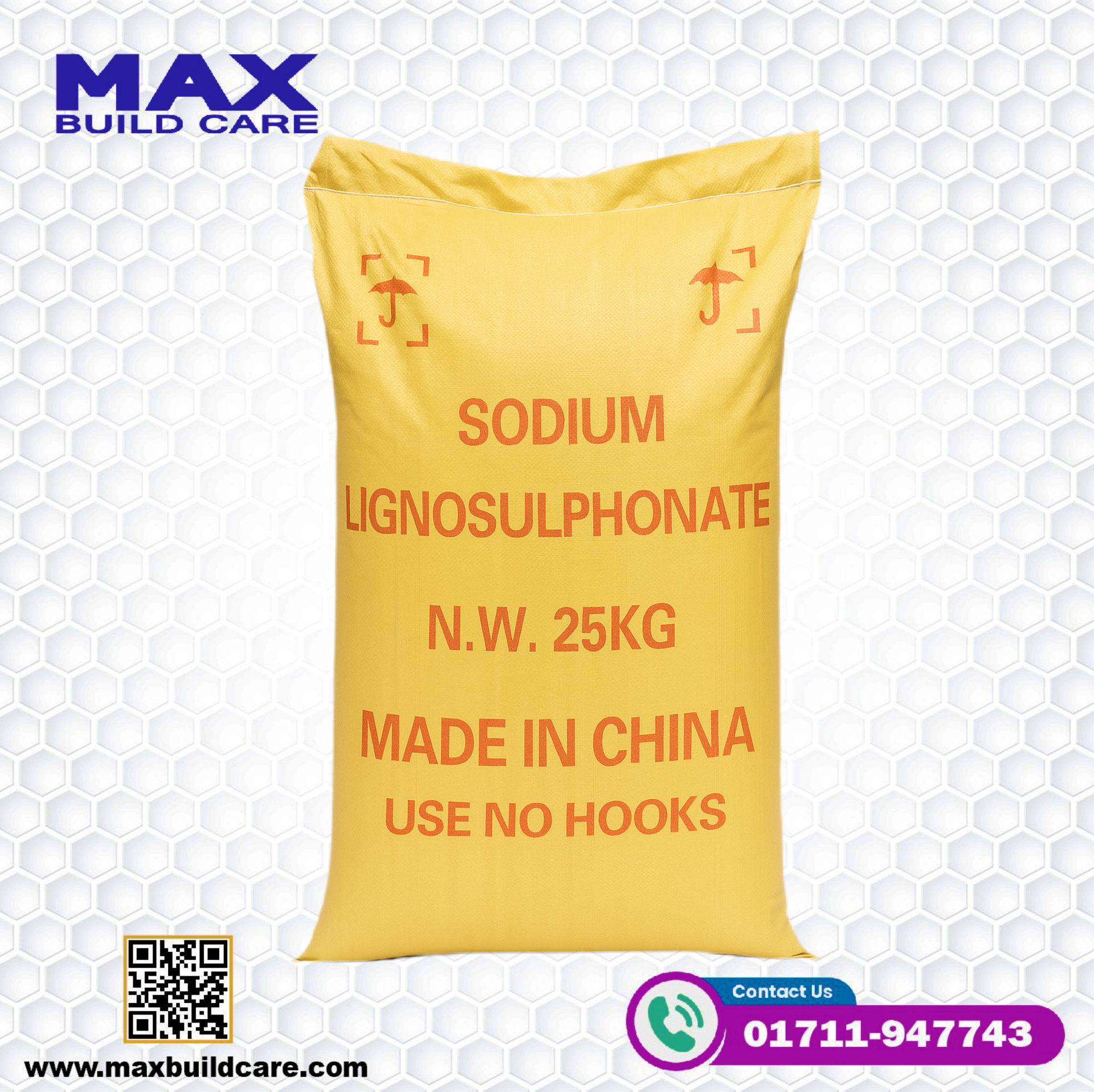
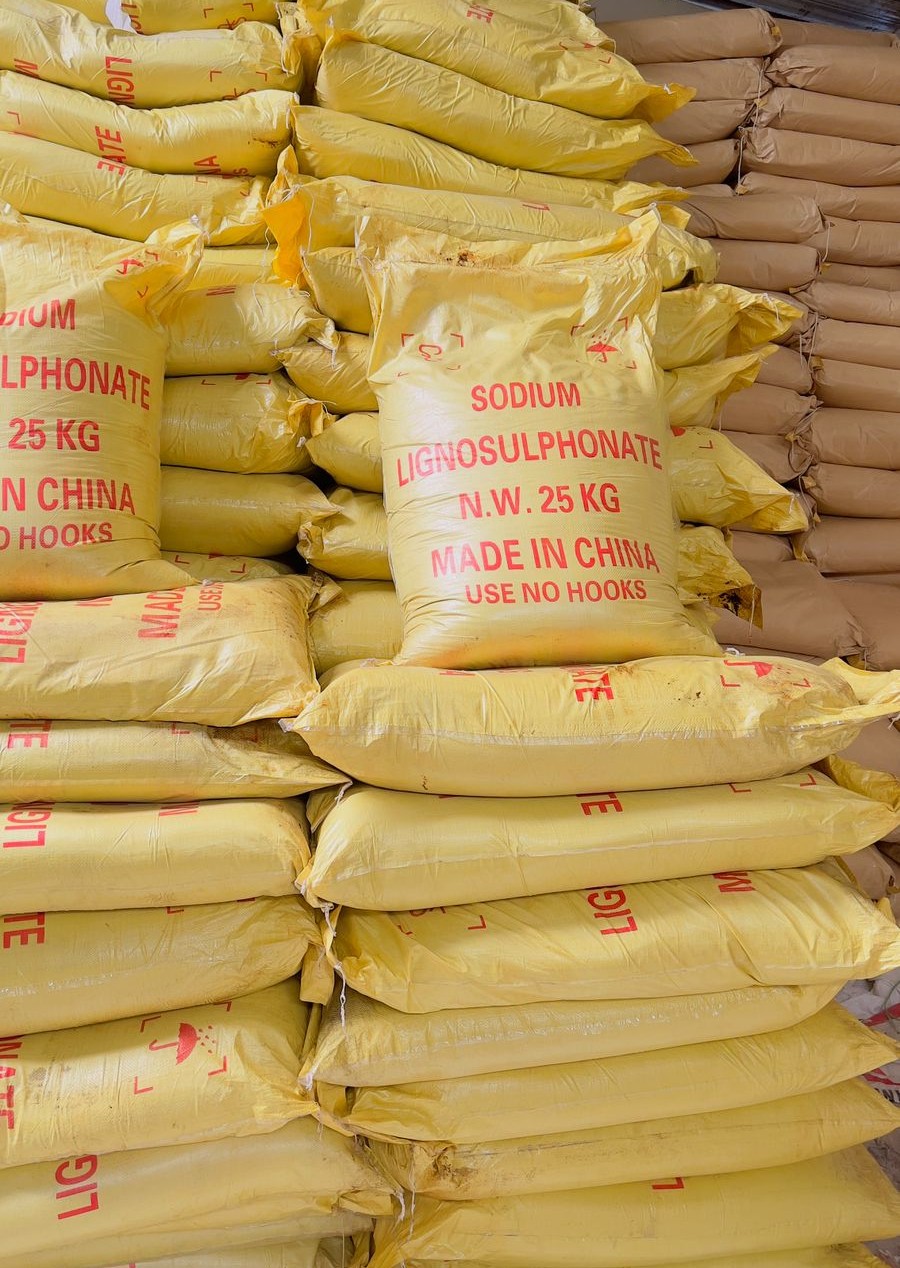
Sodium Lignosulphonate (C₁₀H₁₁NaO₅S) is a versatile dispersing, binding, and plasticizing agent widely used in construction, ceramics, agriculture, and industrial formulations to improve flowability, reduce viscosity, and enhance material performance.
Sodium Lignosulphonate (Na-Ligno) is a versatile, multi-functional industrial chemical derived primarily from the sulfite pulping process of wood. It is a water-soluble anionic surfactant belonging to the lignin family — a naturally occurring biopolymer found in plant cell walls. With its exceptional dispersing, binding, and complexing capabilities, sodium lignosulphonate has become an indispensable additive across a wide range of industries, including construction, ceramics, chemicals, agro-products, petroleum, and animal feed.
Origin and Chemical Nature
Sodium Lignosulphonate is produced during the processing of lignocellulosic biomass. When wood chips undergo sulfite pulping, lignin breaks down into lignosulphonic acid, which is then neutralized with sodium to form sodium lignosulphonate. It contains complex aromatic polymer chains with sulfonate groups (–SO₃⁻), making it highly reactive, dispersible in water, and capable of interacting with various organic and inorganic particles.
This unique chemical structure gives it multiple functionalities:
Strong dispersing action
Water-reducing capability (making it popular in concrete admixtures)
Binding and chelating properties
Dust suppression ability
Thermal stability and compatibility with other additives
Physical Properties
Sodium Lignosulphonate typically appears as a brown to dark-brown powder or a liquid solution, depending on the process. It is completely soluble in water and offers excellent fluidity improvement and particle separation. The pH usually ranges from moderately acidic to neutral (4–7), while the moisture content remains low in high-grade products. The powder is easy to mix with cement, clay, pesticides, and feed materials.
Industrial Applications
1. Construction Industry
One of the largest uses of sodium lignosulphonate is as a water-reducing agent and plasticizer in concrete admixtures. It improves the workability of fresh concrete by dispersing cement particles, reducing the need for excess water. This results in:
Higher compressive strength
Reduced cracking and shrinkage
Improved durability
Better finishing and compaction
It is also utilized in gypsum board production, cement grinding aids, and mortar formulations.
2. Ceramic and Tile Manufacturing
In the ceramics sector, sodium lignosulphonate acts as a high-efficiency dispersant, helping to reduce the viscosity of ceramic slurries while increasing their solid content. This enhances moldability, drying strength, and final surface finishing of tiles and pottery.
3. Agriculture and Fertilizers
Sodium lignosulphonate is used as a binder, filler, and dispersant in pesticides, herbicides, and fertilizers. It helps stabilize formulations, ensures uniform dispersion of active ingredients, and improves soil absorption of nutrients. It is also used in micronutrient chelation, helping plants uptake minerals more effectively.
4. Chemical and Industrial Applications
It serves as a dispersing, complexing, and emulsifying agent in a wide variety of chemical formulations, including:
Dye and pigment manufacturing
Leather tanning
Rubber and plastics processing
Oil drilling muds (as a thinning agent)
Carbon black dispersion
Textile processing agents
Due to its natural origin, biodegradability, and non-toxic properties, it is favored in environmentally sensitive industrial applications.
5. Animal Feed Industry
As a pellet binder, sodium lignosulphonate enhances the strength and durability of feed pellets without affecting nutritional value. It also improves digestion by minimizing pellet breakage during handling and transportation.
6. Dust Control and Soil Stabilization
Its natural ability to bind fine particles makes it suitable for dust suppression on unpaved roads, mining sites, and construction areas. It forms a protective, semi-stable crust on the soil surface, preventing erosion and reducing airborne dust.
Advantages of Sodium Lignosulphonate
Eco-friendly and biodegradable, as it is derived from natural wood materials
Cost-effective alternative to synthetic dispersants and plasticizers
Non-toxic and safe for use in agriculture and feed applications
High solubility and easy mixability with water-based systems
Reduces production cost in concrete, ceramics, and chemical formulations
Compatible with other additives, improving performance in blended formulations
Conclusion
Sodium Lignosulphonate stands as a powerful, multi-purpose industrial additive with remarkable dispersing, plasticizing, binding, and stabilizing characteristics. Its natural origin, environmental safety, and wide-ranging functionality make it an essential ingredient across construction, ceramics, agriculture, chemicals, petroleum, and animal feed industries. Whether used to improve concrete strength, enhance ceramic slurry performance, stabilize pesticides, or bind feed pellets, sodium lignosulphonate delivers reliable, cost-efficient, and high-quality results — making it a globally trusted product for manufacturers and industrial formulators.
+880 9638-076453
+8801711-947743
maxbuildcarebd@gmail.com
28 Kawran Bazar, Taj-Mention,Tejgaon, Dhaka-1215, Bangladesh.
Chunkutia Chowrasta,
South Keraniganj, Dhaka-1310, Bangladesh.
123/2 Jail Road,
South Keraniganj, Dhaka-1310, Bangladesh.