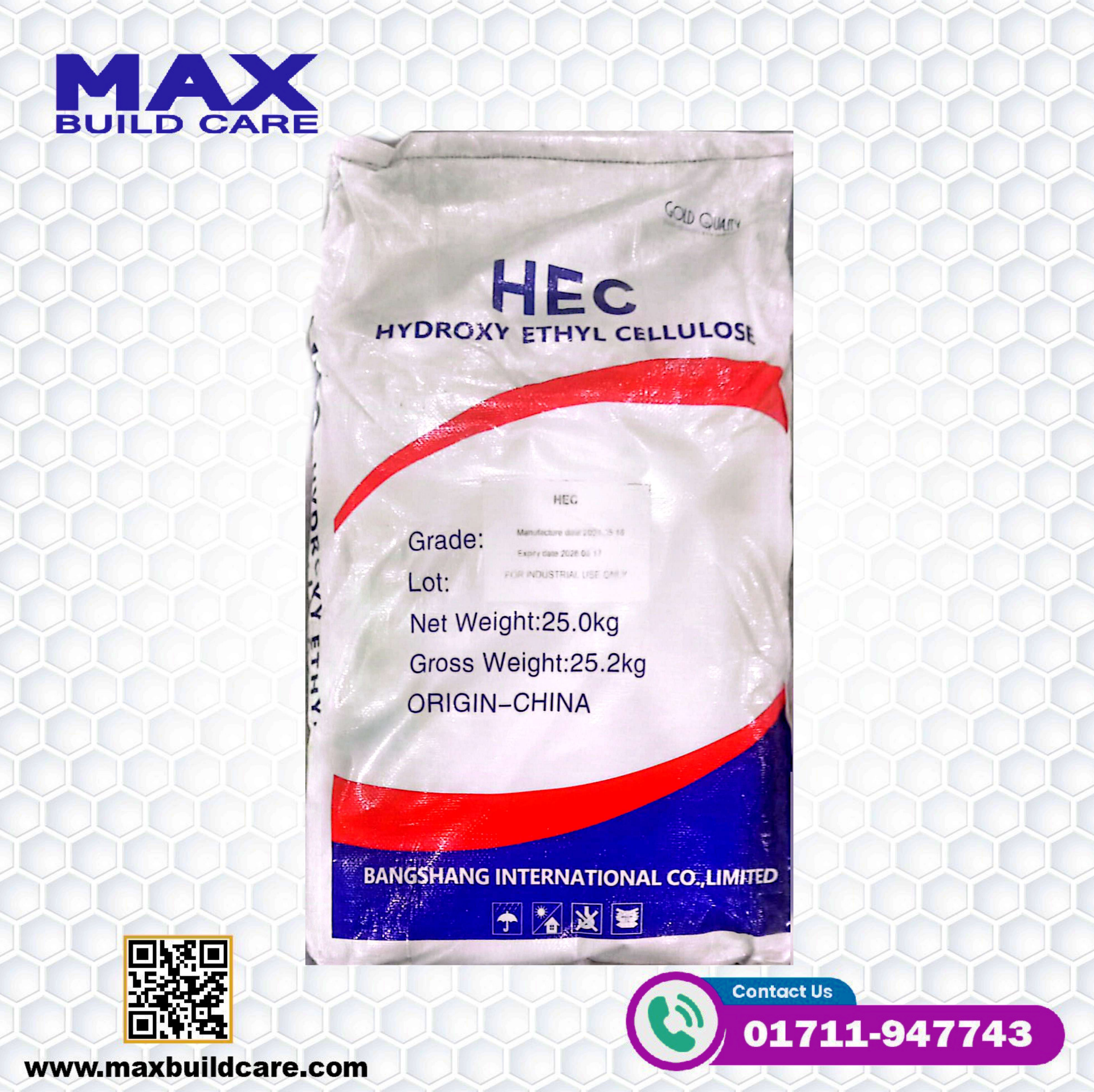
Hydroxypropyl Methyl Cellulose (HPMC)
৳ 1.00
HPMC (Hydroxypropyl Methyl Cellulose) – (C₁₀H₂₀O₆)n –is a high-performance polymer used in construction, pharmaceuticals, cosmetics, and industrial applications for its thickening, water-retention, bonding, and film-forming properties.
Hydroxypropyl Methyl Cellulose (HPMC) is a high-purity, water-soluble, organic polymer widely used across industrial, pharmaceutical, construction, cosmetic, and food applications. Typically available as a white or light crystalline powder, HPMC dissolves in water to provide excellent buffering capacity, viscosity control, and film-forming properties. Its high stability, controllable viscosity, and water solubility make it indispensable in modern industries, including concrete admixtures, pharmaceuticals, cosmetics, food processing, and other technical applications.
Key Features
Chemical Formula: (C₁₀H₂₀O₆)n
Appearance: White or light crystalline powder
Solubility: Easily soluble in cold water; slightly soluble in hot water
Viscosity: Controllable and versatile
Functionality: Viscosity regulation, film formation, suspension stabilization, buffering
Industrial Applications: Pharmaceuticals, construction, cosmetics, food, and general industrial use
Primary Applications:
1. Construction & Concrete Industry:
HPMC is widely used as a concrete admixture. It improves workability, maintains mortar and paste stability, and provides superior adhesion in plastering and sheet applications.
2. Pharmaceutical Applications:
Used in tablets, capsules, suspensions, and drug coatings. HPMC functions as a controlled-release agent, binder, and viscosity enhancer, ensuring stability and efficacy in medicinal formulations.
3. Cosmetics & Personal Care Products:
HPMC is used in lotions, creams, shampoos, and soaps. It stabilizes pH, retains moisture, and provides a smooth and consistent texture.
4. Food Industry:
As a food-grade additive, HPMC functions as a thickener, stabilizer, and emulsifier, enhancing the texture, consistency, and quality of food products.
5. Paints, Coatings & Industrial Processing:
In paints and coatings, HPMC acts as a rheology modifier and suspension stabilizer. It improves slurry stabilization, surface finish, and application properties.
Benefits:
High-quality and reliable
Rapidly and easily water-soluble
Versatile across multiple industries
Controls viscosity and forms durable films
Functions as a stabilizer, thickener, binder, and emulsifier
Safe, eco-friendly, and suitable for diverse applications
Mechanism of Action:
When dissolved in water, HPMC forms a hydrogen-bonded network and interacts with polymer chains to increase solution viscosity. It stabilizes colloids and suspended particles, reduces flocculation, and ensures uniform suspension. In concrete and plastering, it improves water retention and workability. In pharmaceuticals and food, HPMC supports controlled release, enhances texture, and maintains stability throughout processing.
Conclusion:
HPMC (Hydroxypropyl Methyl Cellulose) – (C₁₀H₂₀O₆)n is a high-quality, versatile, and reliable polymer essential in construction, pharmaceuticals, cosmetics, food, paint, and industrial applications. Its rapid solubility, superior viscosity control, and suspension-stabilizing properties make it a vital component in modern industrial processes. Using HPMC enhances process efficiency, improves product quality, and ensures environmentally responsible manufacturing practices.