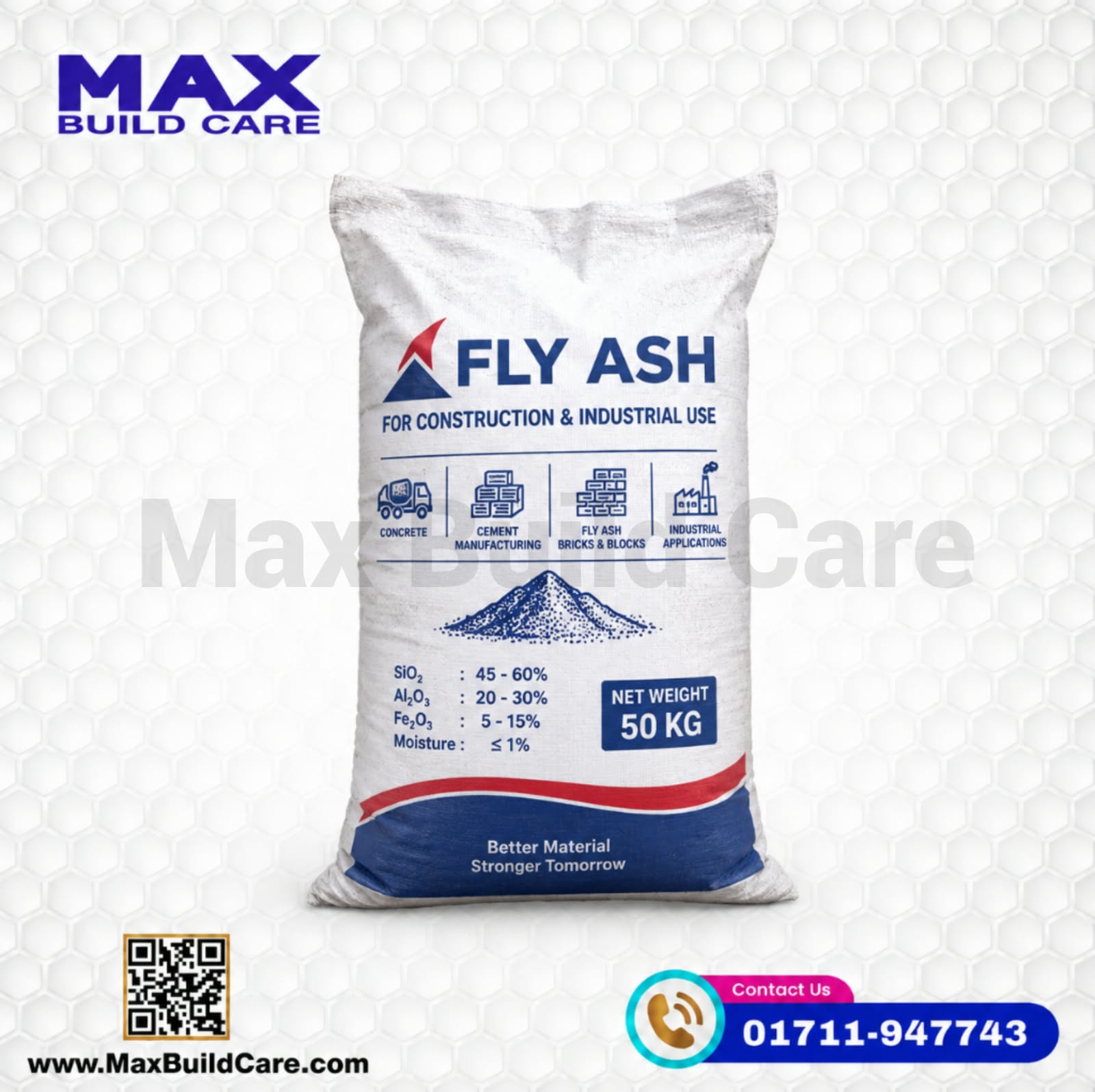
Fly Ash in Bangladesh
৳ 6.00
Fly Ash is a fine powder collected from the flue gases of coal-fired power plants. It is widely used as a supplementary cementitious material in concrete, cement manufacturing and other construction applications. Fly ash can improve concrete workability and, when properly selected and proportioned, contribute to long-term strength and durability.
Fly Ash – High-Quality Industrial Raw Material for Cement and Concrete
What Is Fly Ash?
Fly Ash is a fine, powdery material produced during the combustion of pulverized coal in thermal power plants. It is collected from flue gases using specialized dust collection systems, such as electrostatic precipitators or bag filters. Fly Ash is widely used in the construction industry as a supplementary cementitious material (SCM) and industrial raw material.
Its chemical composition generally includes silica (SiO₂), alumina (Al₂O₃), and iron oxide (Fe₂O₃), along with varying amounts of calcium oxide (CaO) and other compounds. The composition and performance of Fly Ash depend on the coal source, combustion process, and collection method.
Fly Ash is an important material for cement manufacturers, ready-mix concrete producers, precast concrete manufacturers, and construction material suppliers seeking suitable alternatives to conventional raw materials.
Key Features and Benefits of Fly Ash
Fly Ash offers several technical and practical benefits when selected and used according to the relevant application requirements.
- Improved Concrete Workability: Fine particles can help improve the flow and workability of fresh concrete when properly proportioned.
- Long-Term Strength Development: Suitable reactive Fly Ash can contribute to strength development through pozzolanic reactions.
- Reduced Heat of Hydration: Replacing part of the Portland cement with suitable Fly Ash can reduce heat generation in mass concrete.
- Improved Durability: Properly designed Fly Ash concrete can offer improved resistance to certain forms of chemical attack and reduced permeability.
- Cement Manufacturing: Fly Ash may be used as a constituent in blended cement, subject to applicable standards and quality requirements.
- Resource Efficiency: Using suitable Fly Ash can reduce the demand for conventional cementitious materials and support beneficial reuse of industrial by-products.
Actual performance depends on Fly Ash quality, replacement percentage, mix design, curing conditions, and project specifications.
Major Applications of Fly Ash
1. Cement Manufacturing
Fly Ash is used in the production of blended cement and other cementitious products where permitted by applicable standards. Cement manufacturers evaluate its chemical composition, fineness, moisture, and reactivity before incorporating it into their production processes.
2. Ready-Mix Concrete (RMC)
Ready-mix concrete producers use suitable Fly Ash as a partial replacement for Portland cement in designed concrete mixtures. It can improve workability, support long-term strength development, and help control the heat of hydration.
3. Precast Concrete Products
Fly Ash may be used in manufacturing concrete blocks, paving products, precast panels, and other precast elements. Its suitability depends on the required early strength, production cycle, curing method, and product specifications.
4. Fly Ash Bricks and Concrete Blocks
Fly Ash is used as a raw material in certain types of bricks and blocks, often combined with lime, gypsum, cement, sand, or other ingredients. The appropriate formulation depends on the manufacturing process and required finished-product strength.
5. Infrastructure and Mass Concrete
Suitable Fly Ash can be incorporated into concrete for foundations, retaining structures, bridges, dams, and other infrastructure projects. Mix design and testing are essential to ensure compliance with project requirements.
6. Other Industrial Applications
Depending on its properties and local regulations, Fly Ash may also be used in selected applications involving soil stabilization, mine filling, embankments, and other engineered construction materials.
Types and Quality of Fly Ash
Fly Ash is commonly classified by its chemical and performance characteristics. ASTM C618, for example, includes Class F and Class C classifications for coal ash used as a pozzolan or in concrete, subject to the standard’s definitions and requirements.
Class F generally contains lower calcium oxide and is commonly associated with pozzolanic behavior. Class C typically has higher calcium content and may exhibit cementitious properties. Classification should be confirmed through appropriate laboratory testing rather than assumed from appearance alone.
Important quality parameters include fineness, loss on ignition (LOI), moisture content, chemical composition, specific gravity, and strength activity index. Buyers should review the supplier’s Technical Data Sheet (TDS), Certificate of Analysis (COA), and applicable test reports before purchase.
Storage and Handling
Fly Ash should be stored in a dry, covered environment, preferably in sealed silos or moisture-resistant packaging. Exposure to water or excessive humidity can affect handling and material consistency. Because fine powder may generate airborne dust, workers should use suitable respiratory protection, safety glasses, and gloves in accordance with the product safety documentation.
Fly Ash Supplier in Bangladesh
Max Build Care serves the construction and industrial materials market in Bangladesh. Fly Ash supply can be arranged according to availability, quantity, intended application, and required specifications. Buyers should confirm the grade, source, packaging, delivery terms, and quality documentation before placing an order.
Whether you are a cement manufacturer, ready-mix concrete producer, precast product manufacturer, or construction material distributor, selecting suitable Fly Ash and verifying its quality can support consistent production and reliable project performance.