
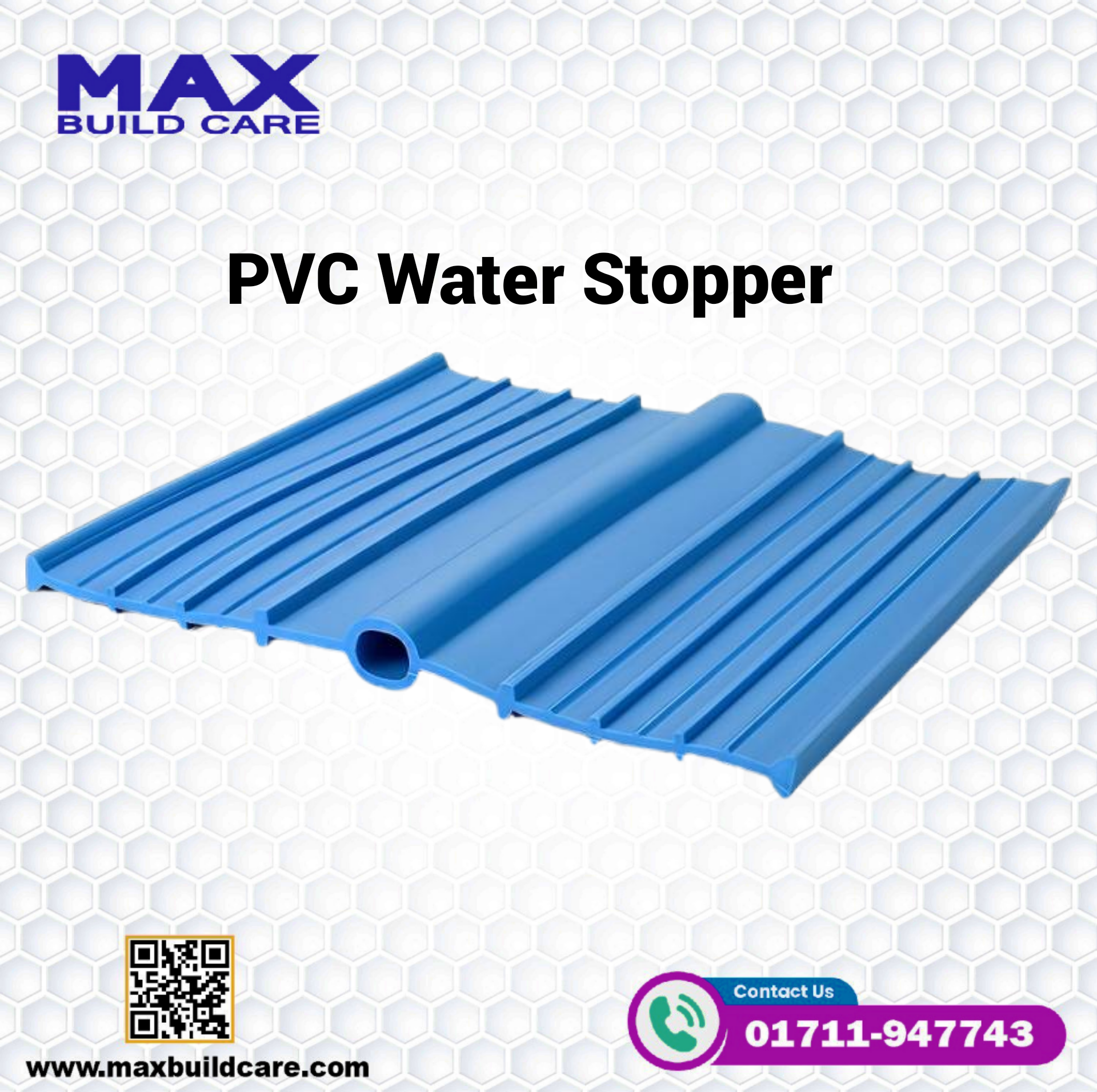
Description
Water Stopper – Complete Waterproofing & Joint Sealing Description
Product Name: Water Stopper
Product Type: Waterproofing & Joint Sealing System
Common Materials: PVC / Rubber / TPE / Hydrophilic Rubber
Chemical Formula: Product-specific; Water Stopper-এর একক কোনো নির্দিষ্ট রাসায়নিক সংকেত নেই
Main Function: Preventing Water Penetration Through Concrete Joints
Applications: Basement, Water Tank, Swimming Pool, Tunnel, Dam, Bridge, Retaining Wall & Underground Structure
Water Stopper is a specialized waterproofing component designed to prevent the passage of water through joints and interfaces in concrete structures. It is an essential material for construction projects where maintaining water-tightness and long-term structural protection is critical. Water Stopper is commonly installed at construction joints, expansion joints, contraction joints, and other locations where separate concrete sections meet and may create a potential pathway for water penetration.
In reinforced concrete construction, joints are often unavoidable. If these joints are not properly treated, water can penetrate through small gaps, cracks, or interfaces and eventually cause dampness, leakage, corrosion of reinforcement, concrete deterioration, and other maintenance problems. A properly selected and installed Water Stopper forms a continuous barrier across the joint, significantly reducing the risk of water movement through the concrete structure.
Depending on the project requirements, Water Stopper systems may be manufactured from PVC, rubber, TPE, or hydrophilic materials. The appropriate type should be selected according to joint movement, water pressure, chemical exposure, temperature, and structural requirements.
What is a Water Stopper?
A Water Stopper is a specially designed strip or profile incorporated into concrete joints. It acts as a physical barrier that interrupts the path of water through the joint.
PVC Water Stoppers are among the most commonly used types for conventional concrete construction. Hydrophilic Water Stoppers, on the other hand, are designed to swell when they come into contact with water and are often used as an additional waterproofing measure around construction joints.
The product does not have one universal chemical formula, because its composition depends on the type and manufacturer.
Key Features & Benefits
1. Excellent Water Leakage Prevention
Water Stopper creates a reliable barrier inside concrete joints and helps prevent water from passing through vulnerable joint areas.
2. Flexible Joint Protection
Flexible Water Stopper profiles can accommodate certain levels of joint movement while maintaining their waterproofing function.
3. Durable Performance
High-quality Water Stopper materials are designed to withstand prolonged exposure to water and demanding construction environments.
4. Suitable for High Water Pressure
Properly selected Water Stopper systems can be used in structures exposed to significant hydrostatic water pressure.
5. Long-Term Waterproofing
When correctly installed, Water Stopper provides continuous joint protection throughout the service life of the structure.
Major Applications
1. Water Tanks
Water Stopper is widely used in reinforced concrete water tanks to prevent leakage through construction and expansion joints.
2. Basements
Basement walls and slabs are constantly exposed to soil moisture and groundwater. Water Stopper helps protect basement structures from water penetration through concrete joints.
3. Swimming Pools
Used around construction joints and other vulnerable areas to maintain the water-tightness of swimming pool structures.
4. Dams and Reservoirs
Water-retaining structures require highly reliable joint sealing. Water Stopper can be incorporated into concrete joints to control water penetration.
5. Tunnels
Tunnel structures can experience groundwater pressure from surrounding soil and rock. Water Stopper systems help protect tunnel joints against leakage.
6. Bridges and Flyovers
Used in selected concrete joints and structural connections where protection against water ingress is required.
7. Retaining Walls
Water Stopper helps protect joints in retaining walls exposed to groundwater and soil moisture.
8. Underground Structures
Suitable for underground parking areas, utility structures, treatment plants, pump rooms, and other below-ground concrete construction.
Types of Water Stopper
PVC Water Stopper
PVC Water Stopper is widely used in construction joints and expansion joints. It is flexible, durable, and resistant to water.
Rubber Water Stopper
Rubber profiles offer excellent flexibility and can be suitable for joints requiring greater movement accommodation.
TPE Water Stopper
Thermoplastic elastomer Water Stoppers combine flexibility with durable performance and can be selected for specialized construction applications.
Hydrophilic Water Stopper
Hydrophilic Water Stoppers are designed to expand when exposed to water. Their swelling action helps seal small pathways that may develop around construction joints.
Installation Method
Correct installation is essential for achieving maximum waterproofing performance.
General Installation Procedure:
1. Joint Preparation
The joint should be clean, properly formed, and free from loose materials and contaminants.
2. Positioning
Place the Water Stopper accurately along the centerline or specified location of the joint.
3. Fixing
Secure the Water Stopper using suitable clips, wires, or fixing accessories so that it does not move during concrete placement.
4. Concrete Placement
Concrete should be placed carefully around the Water Stopper to ensure proper compaction and avoid voids.
5. Joint Continuity
At intersections and changes in direction, the Water Stopper should be properly joined or welded according to the manufacturer’s instructions.
6. Inspection
Before concrete placement, inspect the Water Stopper for damage, displacement, or improper joints.
Advantages in Construction
Water Stopper provides several important benefits:
- Helps prevent water leakage
- Protects concrete joints
- Reduces moisture-related deterioration
- Helps protect reinforcement from corrosion
- Suitable for underground structures
- Available in different profiles and sizes
- Flexible and durable
- Cost-effective compared with major leakage repairs
Storage & Handling
Water Stopper should be stored properly before installation.
Recommended Conditions:
- Keep in a clean and dry area.
- Protect from direct sunlight for prolonged periods.
- Avoid sharp objects that may damage the profile.
- Keep away from excessive heat and chemicals.
- Store rolls or profiles without excessive deformation.
During installation, care should be taken to prevent cutting, puncturing, or bending beyond the manufacturer’s recommendations.
Quality Considerations
When selecting a Water Stopper, important factors include:
- Material type
- Width and thickness
- Profile design
- Joint movement requirements
- Water pressure
- Chemical exposure
- Temperature conditions
- Concrete compatibility
- Welding/jointing method
For major infrastructure projects, the product should be selected according to the project specification and relevant technical documentation.
Why Choose Max Build Care?
Max Build Care supplies waterproofing and construction materials for residential, commercial, industrial, and infrastructure projects across Bangladesh. We can provide suitable Water Stopper solutions for concrete construction, basements, water tanks, tunnels, retaining structures, swimming pools, and other water-retaining or underground applications.
We focus on:
✔ Quality Construction Materials
✔ Competitive Pricing
✔ Bulk Project Supply
✔ Reliable Delivery
✔ Technical Product Information
✔ TDS/COA Support Where Applicable
✔ Professional Customer Service
Contact for Price & Availability
If you are looking for Water Stopper in Bangladesh for your construction or waterproofing project, contact Max Build Care with your required type, width, quantity, and application.
Our team can provide a suitable product option and competitive quotation based on your project requirements.
Max Build Care – Your Trusted Partner for Waterproofing, Construction Chemicals & Building Materials.
Reviews
There are no reviews yet.