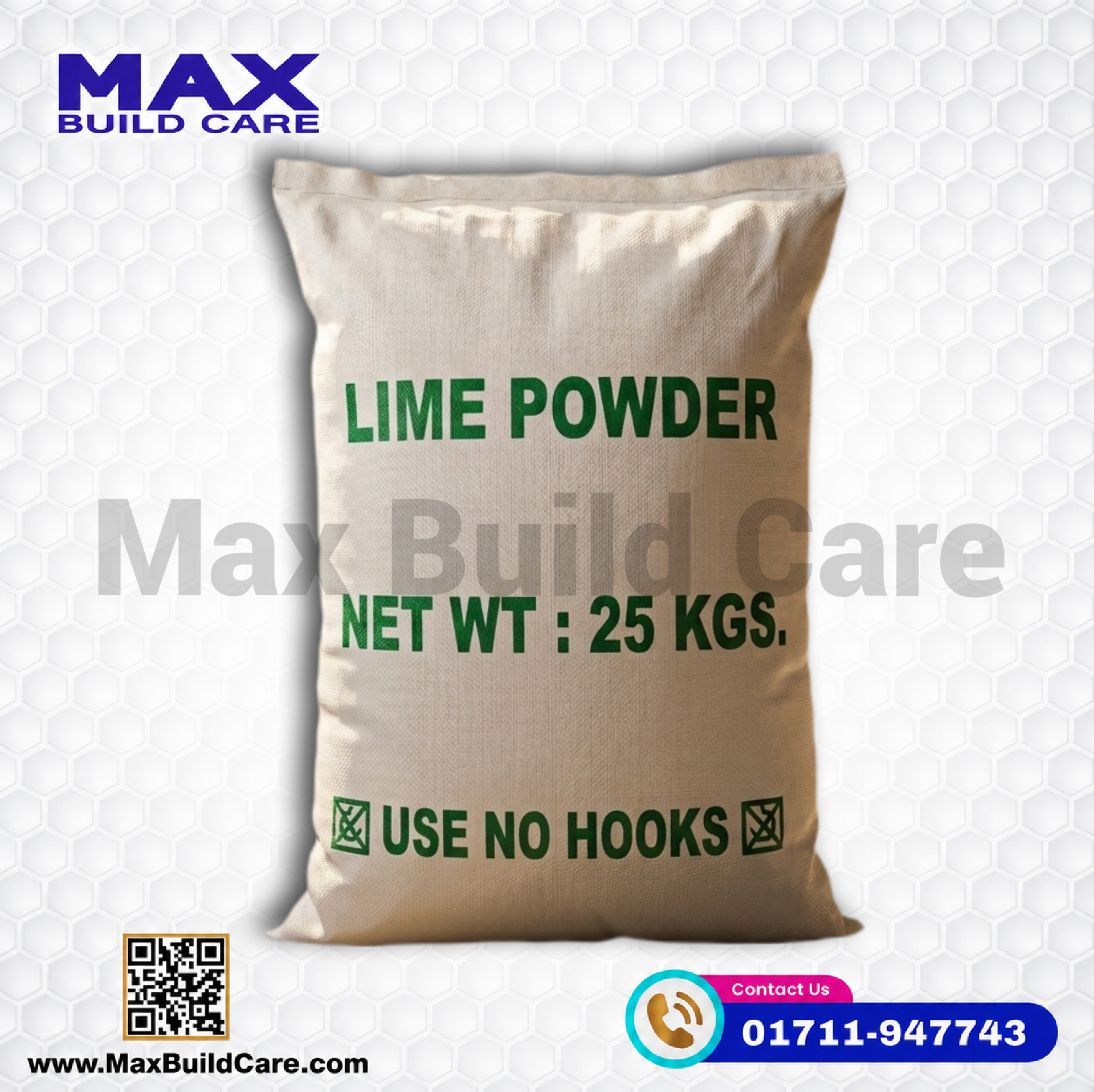
Lime Powder (Ca(OH)₂) is a highly alkaline calcium-based fine powder widely used in construction, agriculture, water treatment, chemical processing, and soil stabilization. It works as a neutralizing, binding, and pH control agent with strong reactivity and cost-effective performance.
Type: Calcium-Based Alkaline Mineral Powder
Appearance: White to Off-White Fine Powder
Application: Construction, Water Treatment, Agriculture, Chemical Industry, Soil Stabilization
Lime Powder is a finely processed calcium-based material mainly derived from limestone or quicklime hydration. It is widely used in construction, agriculture, water treatment, and various industrial processes due to its strong alkaline properties, chemical reactivity, and cost-effectiveness. Lime Powder plays a vital role in improving soil quality, neutralizing acidity, and supporting multiple chemical reactions in industrial systems.
Its high reactivity, versatility, and wide availability make it one of the most important industrial minerals used globally.
Lime Powder is produced by processing limestone (CaCO₃) through calcination to form quicklime (CaO), which is then hydrated to produce calcium hydroxide [Ca(OH)₂], commonly known as hydrated lime or lime powder.
Depending on the production method and application, Lime Powder is available in different grades such as industrial grade, construction grade, and agricultural grade.
It is widely used as a low-cost, highly effective chemical agent in multiple industries.
Lime Powder mainly consists of calcium hydroxide, a strong alkaline compound.
Its strong alkalinity makes it highly effective in neutralization and stabilization processes.
Lime Powder is widely used across major industrial sectors due to its chemical reactivity and versatility.
It improves efficiency, reduces impurities, and enhances process stability.
In construction, Lime Powder is used as a binding and stabilizing material.
It is also used in soil stabilization for road construction projects.
Lime Powder plays an important role in agriculture as a soil conditioner.
It is especially useful in acidic and low-fertility soils.
Lime Powder is widely used in water purification and wastewater treatment systems.
Its strong alkaline nature makes it effective in neutralizing acidic wastewater.
In chemical manufacturing, Lime Powder is used as a raw material and processing agent.
It is an essential base material in many chemical industries.
Lime Powder is a key fluxing agent in steel production.
It is critical in producing high-quality steel.
Lime Powder is widely used for environmental protection and waste treatment.
It helps in maintaining environmental safety standards.
✔ Strong alkaline and neutralizing properties
✔ Cost-effective industrial material
✔ Wide range of applications
✔ Improves soil and water quality
✔ Enhances industrial process efficiency
✔ Easy to store and handle
✔ Highly reactive and effective
These advantages make it an essential material in multiple sectors.
Proper storage ensures product quality and effectiveness.
Moisture exposure should be avoided to maintain reactivity.
Proper safety measures ensure safe industrial use.
Lime Powder is a highly versatile and essential industrial mineral widely used in construction, agriculture, water treatment, chemical processing, steel manufacturing, and environmental applications. Its strong alkaline nature, chemical reactivity, and cost-effectiveness make it a key material in modern industry.
Whether used for soil improvement, water purification, or industrial processing, Lime Powder consistently delivers reliable performance and efficiency. It remains one of the most important and widely used mineral products in global industrial systems.
Supplied By: Max Build Care
Quality Industrial Minerals & Construction Chemicals
+880 9638-076453
+8801711-947743
maxbuildcarebd@gmail.com
28 Kawran Bazar, Taj-Mention,Tejgaon, Dhaka-1215, Bangladesh.
Chunkutia Chowrasta,
South Keraniganj, Dhaka-1310, Bangladesh.
123/2 Jail Road,
South Keraniganj, Dhaka-1310, Bangladesh.