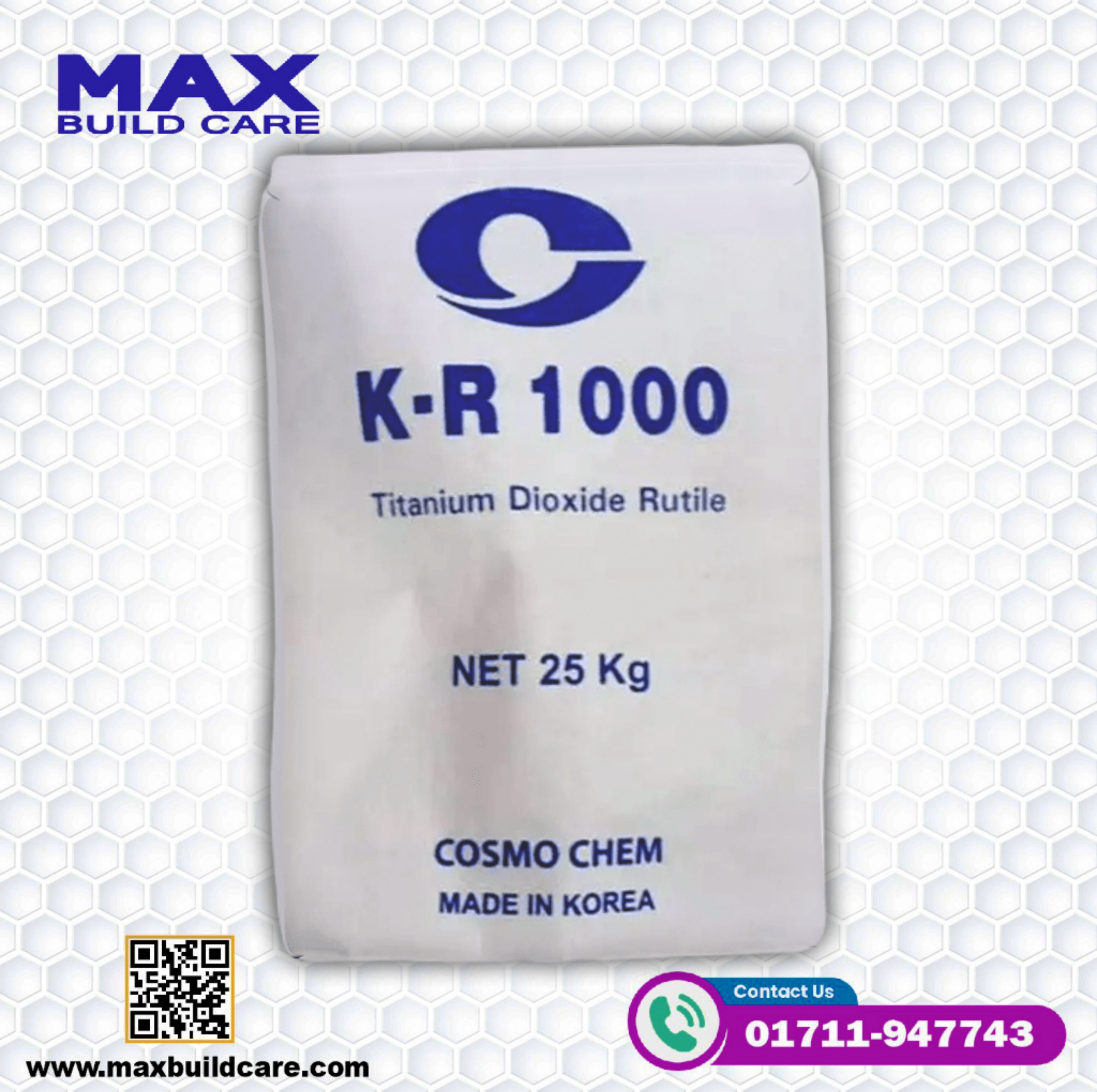
Titanium Dioxide Rutile
৳ 1.00
Titanium Dioxide Rutile is a high-performance white pigment widely used in paints, plastics, inks, paper, and coating industries. It offers excellent brightness, opacity, UV resistance, and weather durability, ensuring superior whiteness and long-lasting color performance in industrial applications.
Titanium Dioxide Rutile (TiO₂) – Complete Industrial Description
Chemical Formula: TiO₂
Appearance: Bright white fine powder
Titanium Dioxide Rutile (TiO₂) is one of the world’s most widely used and valuable white pigments, known for its exceptional brightness, opacity, UV resistance, and durability. It is extensively used in paints, coatings, plastics, inks, paper, rubber, cosmetics, and many industrial applications where superior whiteness and long-lasting performance are required.
Among the different crystalline forms of titanium dioxide, the Rutile Grade is considered the most stable and high-performance type due to its excellent weather resistance, high refractive index, and strong hiding power. It delivers outstanding optical properties and long-term durability, making it the preferred choice for premium industrial formulations.
Titanium dioxide rutile is generally produced through advanced chemical processing methods such as the sulfate process or chloride process, ensuring high purity and consistent particle quality suitable for demanding industrial applications.
Chemical Composition and Structure
Titanium dioxide consists of titanium and oxygen atoms arranged in a crystalline structure.
Chemical Formula:
TiO₂
Rutile titanium dioxide has a dense crystal structure that provides superior stability, excellent light scattering ability, and high refractive index compared to other forms such as anatase.
Key Properties
Titanium Dioxide Rutile offers numerous important industrial properties:
- Exceptional whiteness and brightness
- High opacity and hiding power
- Excellent UV resistance
- Outstanding weather durability
- High refractive index
- Excellent dispersion capability
- Chemical and thermal stability
- Non-toxic and environmentally stable
These properties make rutile titanium dioxide one of the most effective white pigments available in the global market.
Manufacturing Process
Titanium dioxide rutile is primarily manufactured using two industrial methods:
1. Sulfate Process
Titanium-containing ores are chemically processed using sulfuric acid to produce purified titanium dioxide.
2. Chloride Process
Titanium ores are converted into titanium tetrachloride and then oxidized at high temperatures to produce high-purity rutile TiO₂.
The finished product is micronized, surface-treated, and processed to achieve optimal pigment performance.
Major Industrial Applications
Paint and Coating Industry
Titanium dioxide rutile is widely used in decorative paints, industrial coatings, automotive paints, and protective coatings because of its:
- Superior whiteness
- Excellent hiding power
- UV protection
- Long-term weather resistance
It improves coating durability and color retention.
Plastic Industry
Used in PVC, masterbatch, films, and engineering plastics to improve:
- Brightness
- UV stability
- Opacity
- Surface finish
Ink Industry
Enhances print clarity, brightness, and color consistency in printing inks.
Paper Industry
Used as a coating pigment to improve paper brightness, smoothness, and printability.
Rubber Industry
Improves color stability and appearance in rubber products.
Cosmetic Industry
Used in sunscreens and cosmetic products for UV-blocking capability and whiteness.
Advantages
- Outstanding brightness and whiteness
- Superior UV resistance and weatherability
- Excellent opacity with low dosage requirement
- Improves product durability and appearance
- High chemical stability
- Multi-purpose industrial applications
Technical Parameters (Typical)
- TiO₂ Content: 92%–95%
- Appearance: Bright white powder
- Oil Absorption: Low
- Particle Size: Fine micronized powder
- pH Value: Neutral
- Specific Gravity: ~4.0
Working Principle
Titanium dioxide rutile functions primarily as a light-scattering pigment. Due to its very high refractive index, it efficiently reflects and scatters visible light, creating exceptional whiteness and opacity.
Its UV absorption capability also protects materials such as paints and plastics from sunlight degradation, improving long-term durability and color stability.
Packaging and Storage
Titanium dioxide rutile is commonly supplied in:
- 25 kg bags
- Jumbo bags for industrial use
Storage Conditions:
Store in a cool, dry, and well-ventilated environment away from moisture and contamination.
Proper sealing helps prevent clumping and maintains product quality.
Safety and Handling
Titanium dioxide rutile is generally considered safe for industrial use under standard handling conditions.
Safety Precautions:
- Avoid inhalation of fine dust
- Use masks and protective gloves
- Ensure proper workplace ventilation
- Follow standard industrial hygiene practices
Environmental Considerations
Titanium dioxide is chemically stable and environmentally inert under normal conditions. Responsible handling and waste management should be followed according to local environmental regulations.
Conclusion
Titanium Dioxide Rutile (TiO₂) is a premium-quality white pigment widely recognized for its exceptional brightness, opacity, UV resistance, and durability. Its extensive applications in paints, plastics, inks, paper, rubber, and cosmetics make it one of the most important industrial pigments worldwide. With superior optical performance, chemical stability, and long-lasting weather resistance, rutile titanium dioxide continues to be an essential material for high-quality industrial manufacturing and modern product formulations.