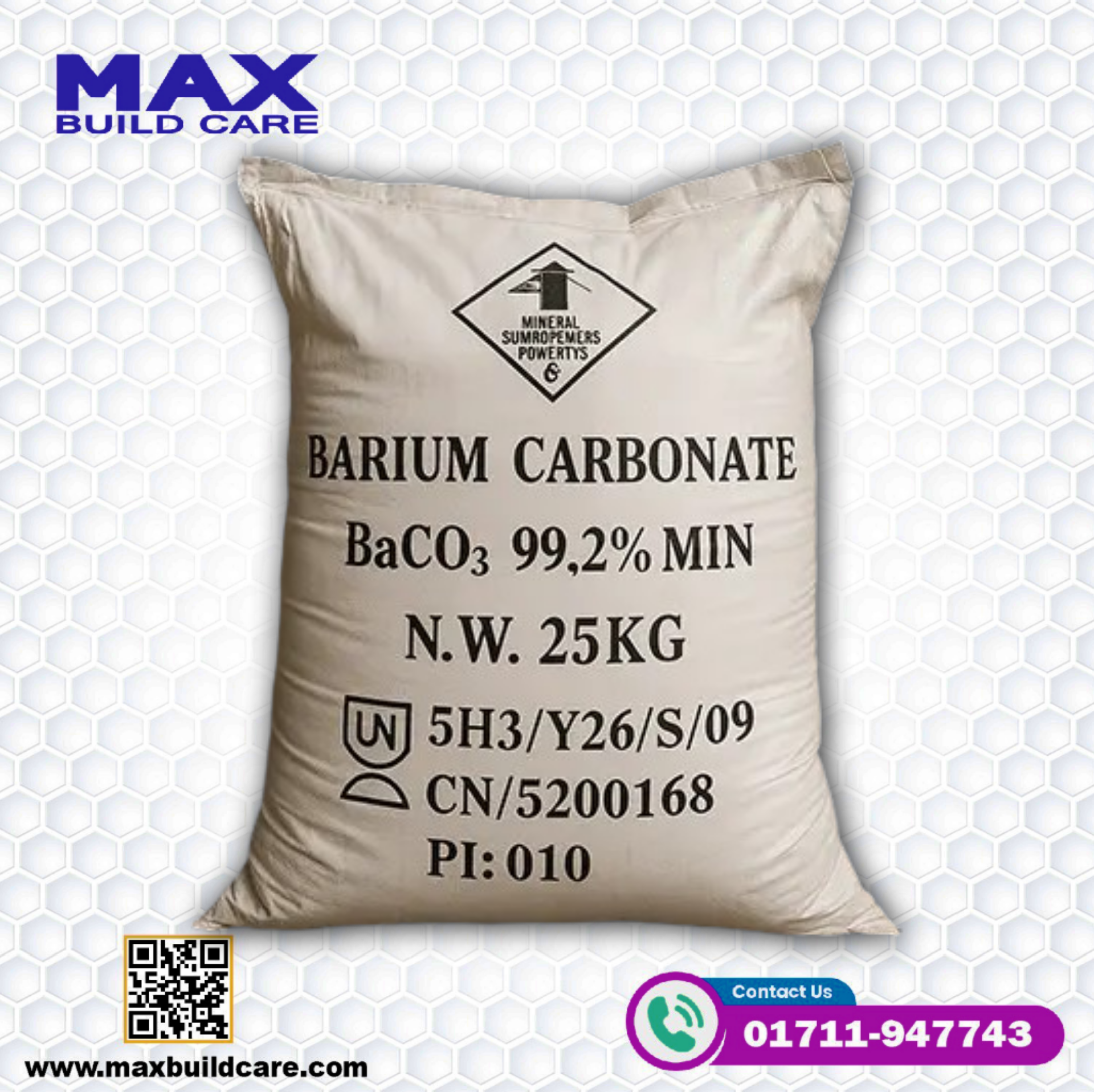
Barium Carbonate
৳ 1.00
Barium Carbonate is a high-purity inorganic compound widely used in ceramics, glass, bricks, and chemical industries. It acts as a fluxing agent and helps improve durability, surface finish, and chemical resistance in ceramic and industrial manufacturing applications.
Barium Carbonate (BaCO₃) – Complete Industrial Description
Chemical Formula: BaCO₃
Appearance: White powder or granular form
Barium Carbonate is a high-quality inorganic chemical compound widely used in ceramics, glass, bricks, chemicals, and specialty industrial applications. Known for its excellent chemical stability, high purity, and fluxing properties, barium carbonate plays an essential role in improving the quality, durability, and performance of various industrial products.
This compound is primarily produced through controlled chemical reactions involving barium sulfide and sodium carbonate. The final product is processed into a fine white powder or granular form suitable for industrial manufacturing processes. Due to its unique characteristics, barium carbonate is highly valued in ceramic and glass industries where it enhances product strength, finish, and chemical resistance.
Barium carbonate is insoluble in water but reacts with acids to release carbon dioxide. Its stability under normal storage conditions and compatibility with many industrial formulations make it a reliable raw material for modern manufacturing operations.
Chemical Composition and Structure
Barium carbonate is composed of barium, carbon, and oxygen atoms arranged in a stable crystalline structure.
Chemical Formula:
BaCO₃
It is chemically stable and exhibits low solubility in water, which makes it suitable for applications requiring controlled chemical reactions and thermal stability.
Key Properties
Barium Carbonate offers several important industrial properties:
- High purity and chemical stability
- Excellent fluxing capability
- Low water solubility
- Fine particle size and uniformity
- Improves surface finish and product durability
- Resistant to high temperatures
- Compatible with ceramic and glass formulations
These characteristics make it highly effective in industrial processing and manufacturing applications.
Manufacturing Process
Barium carbonate is commonly produced by reacting barium sulfide (BaS) with sodium carbonate (Na₂CO₃) under controlled conditions.
Production Steps:
- Preparation of barium sulfide solution
- Controlled chemical precipitation
- Filtration and washing
- Drying and grinding
- Packaging
Strict quality control ensures consistent purity and particle size.
Major Industrial Applications
Ceramic Industry
Barium carbonate is extensively used in ceramic tiles, sanitary ware, porcelain, and glazes. It helps prevent scumming caused by soluble salts and improves surface smoothness and appearance.
Brick and Clay Products
Used in brick manufacturing to reduce efflorescence and improve product durability.
Glass Industry
Acts as a fluxing agent in specialty glass production, improving clarity, strength, and chemical resistance.
Chemical Industry
Used in the production of barium compounds, pigments, and specialty chemicals.
Electronics Industry
Applied in electronic ceramics and components requiring high purity materials.
Welding Electrodes
Used in electrode coatings to improve arc stability and welding performance.
Advantages
- Enhances product strength and durability
- Prevents efflorescence in bricks and ceramics
- Improves surface finish and appearance
- Excellent thermal stability
- Cost-effective industrial additive
- Reliable performance across multiple industries
Technical Parameters (Typical)
- Purity: 98%–99%
- Moisture Content: ≤ 0.5%
- Particle Size: Fine powder or granular
- Solubility: Insoluble in water
- Appearance: White powder
Working Function in Ceramics
One of the most important functions of barium carbonate in ceramic manufacturing is the neutralization of soluble sulfate salts. These salts can migrate to the surface during drying and firing, causing white stains or scumming.
Barium carbonate reacts with these sulfates to form insoluble barium sulfate, preventing defects and improving the final product quality.
Packaging and Storage
Barium carbonate is generally supplied in:
- 25 kg bags
- 50 kg bags
- Jumbo bags for bulk industrial use
Store in a dry, cool, and well-ventilated area away from moisture and acidic materials.
Safety and Handling
Although widely used industrially, barium carbonate should be handled carefully because soluble barium compounds may be harmful if ingested.
Safety Recommendations:
- Use protective gloves and masks
- Avoid inhalation of dust
- Ensure proper ventilation
- Wash hands thoroughly after handling
Follow all industrial safety guidelines during use and storage.
Conclusion
Barium Carbonate (BaCO₃) is a versatile and high-performance industrial chemical widely used in ceramics, glass, bricks, chemicals, and specialty manufacturing applications. Its excellent chemical stability, fluxing properties, and ability to prevent efflorescence make it an essential raw material in modern industrial production. With reliable performance, high purity, and broad industrial compatibility, barium carbonate continues to play a critical role in enhancing product quality and manufacturing efficiency across various industries.