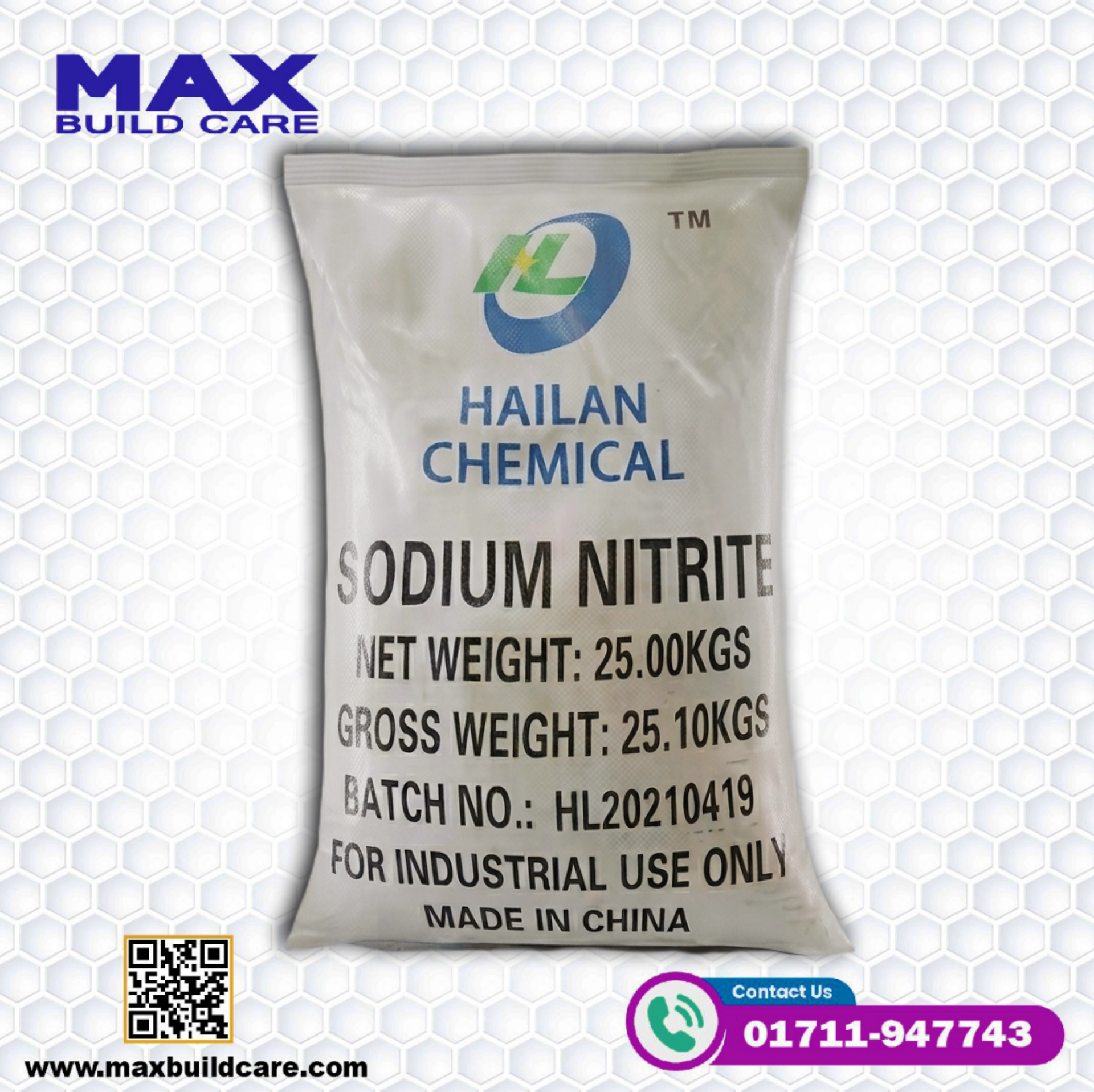
Sodium Nitrite
৳ 1.00
Sodium Nitrite is a versatile inorganic compound widely used in food preservation, water treatment, metal processing, dyes, and chemical manufacturing. It acts as an effective corrosion inhibitor and oxidizing agent, offering high purity, fast solubility, and reliable industrial performance.
Sodium Nitrite (NaNO₂) – Complete Industrial Description
Chemical Formula: NaNO₂
Appearance: White to slightly yellow crystalline powder or granules
Sodium Nitrite is a highly important inorganic chemical widely used in food preservation, pharmaceuticals, dyes, metal treatment, rubber processing, water treatment, and chemical manufacturing industries. Known for its excellent solubility, strong oxidizing and reducing properties, and corrosion inhibition capability, sodium nitrite plays a critical role in numerous industrial and commercial applications.
This compound is generally produced through controlled chemical reactions involving nitrogen oxides and sodium compounds. High-purity sodium nitrite is carefully processed to ensure consistent quality, particle size, and reliable industrial performance.
Sodium nitrite is highly soluble in water and exhibits excellent chemical activity, making it suitable for applications requiring oxidation control, metal protection, preservation, and chemical synthesis.
Chemical Composition and Structure
Sodium nitrite is composed of sodium, nitrogen, and oxygen atoms arranged in a stable ionic structure.
Chemical Formula:
NaNO₂
It forms a white or slightly yellow crystalline material that dissolves rapidly in water. Sodium nitrite can act as both an oxidizing and reducing agent depending on reaction conditions.
Key Properties
Sodium Nitrite offers several valuable industrial properties:
- High water solubility
- Strong corrosion inhibition capability
- Excellent oxidizing and reducing properties
- Fast chemical reactivity
- Good thermal stability under controlled conditions
- Uniform crystalline structure
- Reliable industrial-grade purity
These properties make it suitable for multiple industrial applications.
Manufacturing Process
Sodium nitrite is commonly manufactured by reacting nitrogen oxides with sodium carbonate or sodium hydroxide under controlled conditions.
Basic Production Steps:
- Generation of nitrogen oxides
- Controlled absorption reaction
- Neutralization process
- Crystallization and purification
- Drying and packaging
Advanced quality control ensures stable composition and purity.
Major Industrial Applications
Food Preservation Industry
Food-grade sodium nitrite is widely used as a curing and preservative agent in processed meats. It helps:
- Prevent bacterial growth
- Maintain meat color
- Extend shelf life
Its use is carefully regulated to ensure food safety.
Water Treatment Industry
Used as a corrosion inhibitor in industrial cooling systems, boilers, and closed-loop water systems to protect metal surfaces from oxidation and rust formation.
Metal Processing Industry
Applied in metal treatment and surface finishing processes to improve corrosion resistance and cleaning efficiency.
Dye and Pigment Industry
Used in the manufacture of azo dyes, pigments, and coloring compounds.
Pharmaceutical Industry
Used in certain medicinal and laboratory applications under controlled conditions.
Rubber and Chemical Industry
Acts as a processing chemical and intermediate in various chemical reactions.
Advantages
- Excellent corrosion protection capability
- Fast and efficient solubility
- Reliable oxidizing and reducing performance
- Multi-purpose industrial applications
- High purity and consistent quality
- Cost-effective chemical solution
Technical Parameters (Typical)
- Purity: 98%–99%
- Appearance: White to pale yellow crystals
- Solubility: Highly soluble in water
- Moisture Content: ≤ 1%
- pH Value: Slightly alkaline
Working Principle
In corrosion inhibition applications, sodium nitrite forms a protective oxide layer on metal surfaces, preventing oxygen and moisture from causing rust or corrosion.
In food preservation, it inhibits the growth of harmful bacteria such as Clostridium botulinum while stabilizing meat color through chemical reactions with myoglobin.
Its oxidizing and reducing properties also make it valuable in chemical synthesis and dye production.
Packaging and Storage
Sodium nitrite is generally supplied in:
- 25 kg bags
- 50 kg bags
- Industrial bulk packaging
Storage Conditions:
Store in a cool, dry, and well-ventilated area away from moisture, acids, combustible materials, and direct sunlight.
Containers should remain tightly sealed to maintain product quality and prevent contamination.
Safety and Handling
Sodium nitrite should be handled carefully because it is a reactive chemical.
Safety Precautions:
- Use gloves, masks, and safety goggles
- Avoid inhalation of dust
- Prevent direct skin and eye contact
- Keep away from combustible and reducing materials
In case of contact, wash immediately with plenty of clean water and seek medical advice if necessary.
Environmental Considerations
Proper disposal and controlled handling are important to prevent environmental contamination. Industrial users should follow local safety and environmental regulations regarding storage, transportation, and waste management.
Conclusion
Sodium Nitrite (NaNO₂) is a highly versatile industrial chemical widely used in food preservation, water treatment, metal processing, dyes, and chemical manufacturing. Its excellent solubility, corrosion inhibition capability, and chemical reactivity make it an essential material for modern industrial operations. With reliable performance, high purity, and broad industrial compatibility, sodium nitrite continues to serve as a critical chemical solution across numerous industries worldwide.