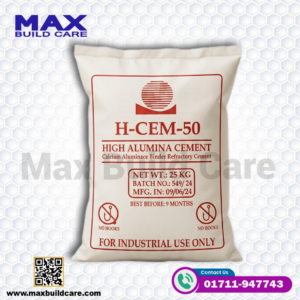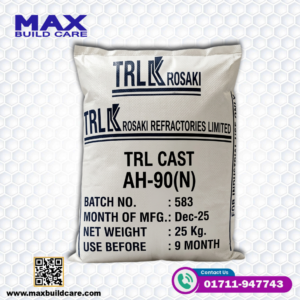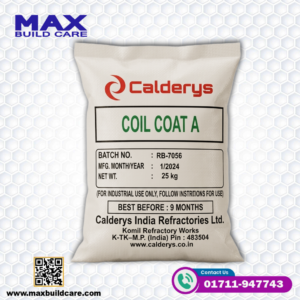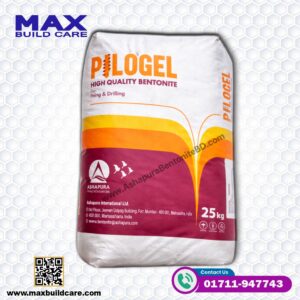
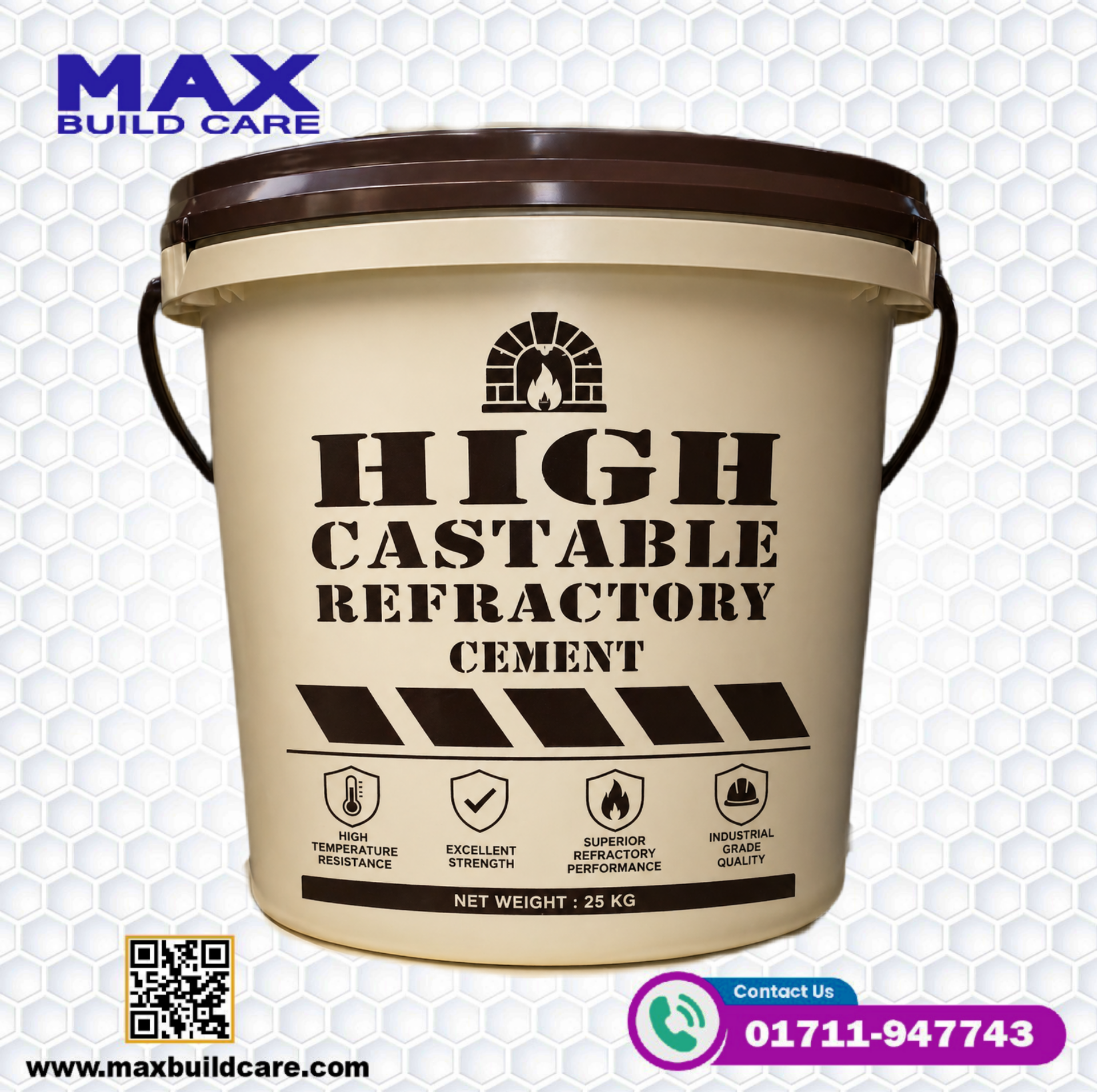
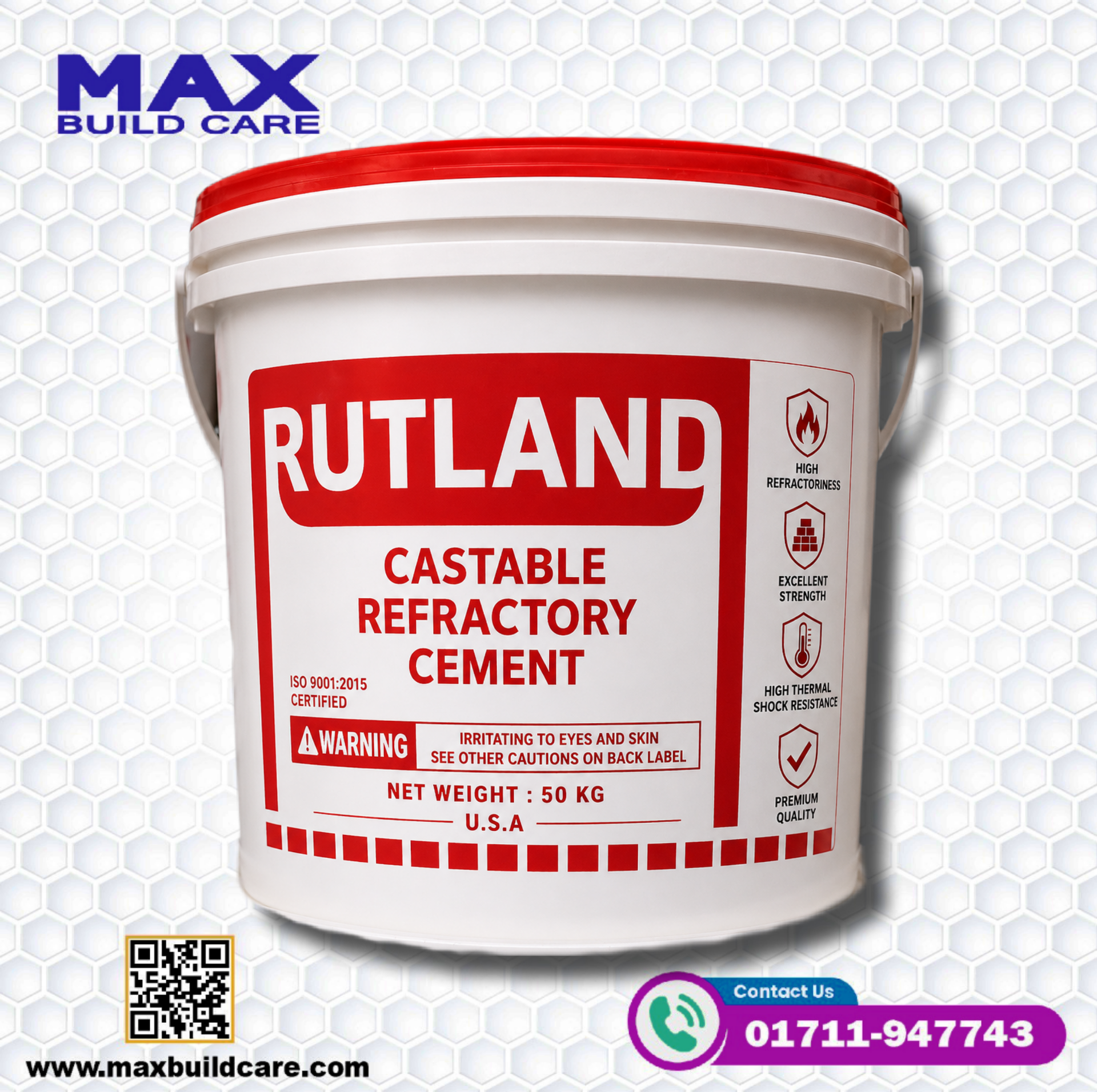
High Castable Refractory Cement (HCRC) is a high-temperature resistant material suitable for applications up to 1400°C–1700°C. With high alumina content, it ensures strong bonding, low shrinkage, and long-lasting performance. Ideal for furnaces, kilns, boilers, and various industrial heat-resistant applications.
High Castable Refractory Cement is a high-performance, heat-resistant construction material specially designed for use in extreme temperature environments. It is widely used in furnaces, kilns, boilers, incinerators, and other thermal processing units where conventional cement cannot withstand high heat. This type of refractory cement is formulated using high-purity calcium aluminate cement combined with carefully selected refractory aggregates to deliver excellent strength, durability, and thermal stability.
The material is typically supplied as a dry powder that can be mixed with water to form a castable mixture. Once applied and properly cured, it develops a dense, मजबूत and heat-resistant structure capable of withstanding very high temperatures without cracking or losing integrity. Because of its easy application and strong performance, high castable refractory cement has become an essential material in modern industrial construction and maintenance.
High castable refractory cement is mainly composed of:
The use of high-alumina content ensures superior resistance to heat and chemical attack. The combination of fine and coarse aggregates creates a dense matrix that improves mechanical strength and thermal shock resistance.
High castable refractory cement offers a range of advanced properties that make it suitable for demanding industrial applications:
These properties allow the material to perform reliably even in continuous high-temperature operations.
When mixed with water, the cement undergoes a hydraulic setting process, similar to conventional cement but with enhanced heat-resistant characteristics. After casting and curing, the material forms a strong monolithic structure. Upon exposure to high temperatures, it undergoes further ceramic bonding, which increases its strength and stability.
This dual bonding mechanism (hydraulic + ceramic) ensures long-lasting performance in high-heat conditions.
High castable refractory cement is used in a wide range of industries:
Furnaces and Kilns:
Used for lining industrial furnaces, rotary kilns, and reheating furnaces.
Boilers and Power Plants:
Applied in boiler linings, combustion chambers, and thermal insulation areas.
Steel and Metal Industry:
Used in ladles, tundishes, and other high-temperature processing units.
Cement Industry:
Used in kiln linings and clinker production units.
Incinerators:
Provides heat-resistant lining for waste incineration systems.
Petrochemical Industry:
Used in reactors and high-temperature processing equipment.
High castable refractory cement offers several benefits:
These advantages make it a cost-effective solution for industrial heat-resistant construction.
For best performance, proper installation is important:
Gradual heating is recommended after curing to avoid thermal shock.
High castable refractory cement is typically supplied in 25 kg or 50 kg bags. It should be stored in a dry, moisture-free environment to prevent premature setting. Proper storage ensures longer shelf life and consistent performance.
During handling, protective equipment such as gloves, masks, and goggles should be used to avoid contact with dust. Proper ventilation is recommended during mixing and application.
High Castable Refractory Cement is a reliable and high-performance material designed for extreme temperature applications. Its excellent heat resistance, strong संरचना, and durability make it ideal for industrial furnaces, kilns, boilers, and other thermal systems. With easy application and long-lasting performance, it provides an efficient and cost-effective solution for modern high-temperature construction needs.
+880 9638-076453
+8801711-947743
maxbuildcarebd@gmail.com
28 Kawran Bazar, Taj-Mention,Tejgaon, Dhaka-1215, Bangladesh.
Chunkutia Chowrasta,
South Keraniganj, Dhaka-1310, Bangladesh.
123/2 Jail Road,
South Keraniganj, Dhaka-1310, Bangladesh.