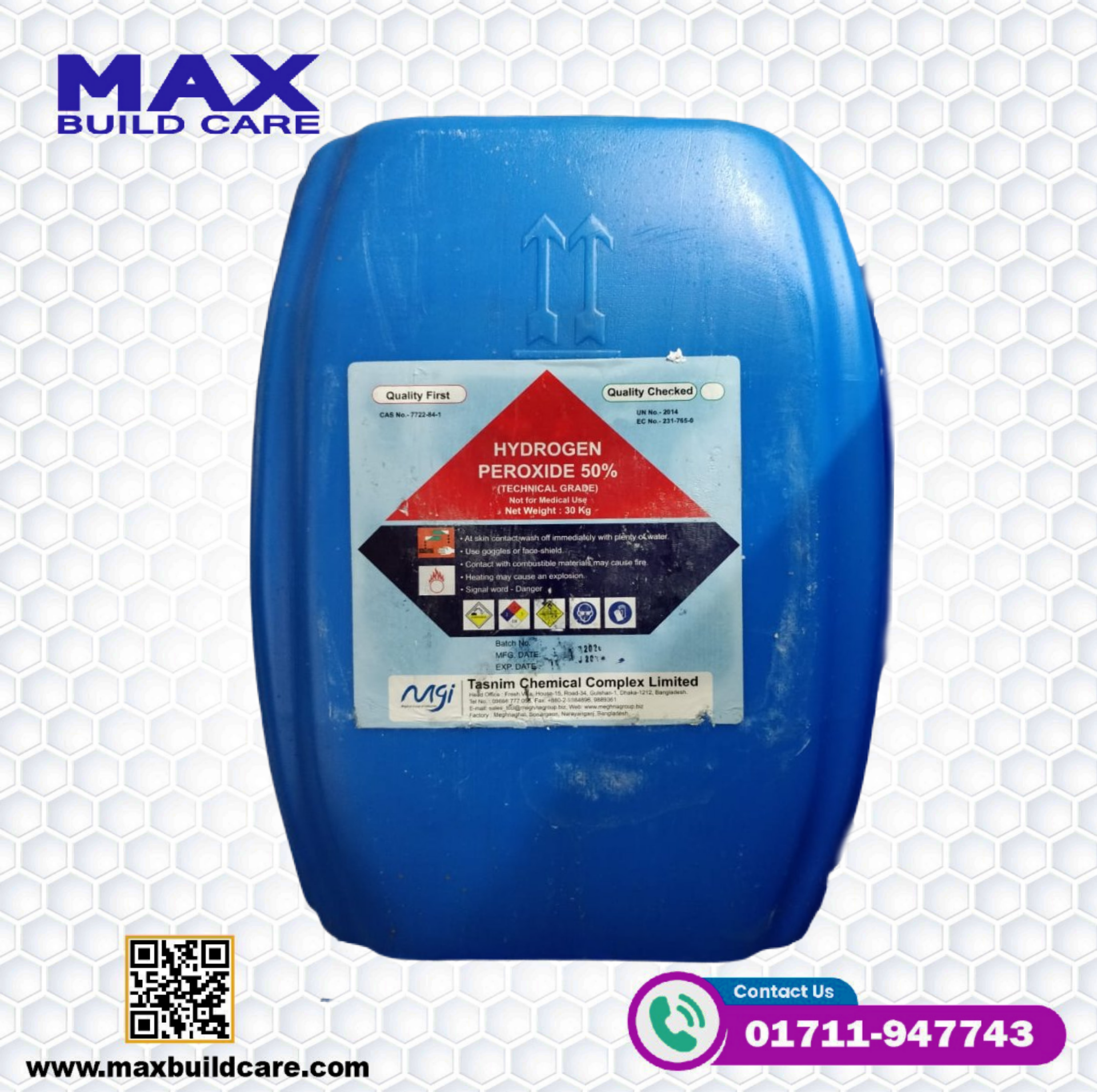
Hydrogen Peroxide 50% (Technical Grade)
৳ 52.00
Hydrogen Peroxide 50% is a powerful oxidizing agent widely used in textile bleaching, water treatment, paper processing, and industrial cleaning. It effectively removes impurities, disinfects surfaces, and improves processing efficiency in various technical and chemical applications.
Hydrogen Peroxide 50% (Technical Grade) – Complete Industrial Description
Chemical Formula: H₂O₂
Concentration: 50% Aqueous Solution
Appearance: Clear, colorless liquid
Hydrogen Peroxide 50% (Technical Grade) is a highly effective oxidizing agent widely used across various industrial sectors, including textiles, pulp and paper, water treatment, chemical processing, and environmental applications. It is a versatile and powerful chemical known for its ability to release active oxygen, making it ideal for bleaching, disinfection, oxidation, and purification processes. Due to its strong reactivity and eco-friendly decomposition into water and oxygen, hydrogen peroxide is considered a cleaner alternative to many traditional chemical oxidants.
Hydrogen peroxide in 50% concentration is supplied as a stabilized aqueous solution. It offers a balanced combination of high oxidation strength and manageable handling properties, making it suitable for industrial-scale applications where controlled performance is essential.
Chemical Properties and Characteristics
Hydrogen peroxide (H₂O₂) is composed of hydrogen and oxygen, forming a simple yet highly reactive compound. It is slightly viscous compared to water and has no color or strong odor.
Key Properties:
- Strong oxidizing agent
- Decomposes into water (H₂O) and oxygen (O₂)
- Slightly acidic in nature
- Miscible with water in all proportions
- Releases oxygen rapidly in the presence of catalysts
- Thermally unstable at high temperatures
The decomposition reaction releases oxygen gas, which plays a crucial role in bleaching, cleaning, and disinfection processes.
Manufacturing Process
Hydrogen peroxide is primarily produced using the anthraquinone process, a widely adopted industrial method. This process involves hydrogenation and oxidation cycles of anthraquinone compounds, followed by extraction and concentration to achieve the desired strength, such as 50%.
The final product is carefully stabilized to prevent premature decomposition during storage and transportation.
Major Industrial Applications
Textile Industry
Hydrogen peroxide is extensively used as a bleaching agent in textile processing. It effectively removes natural color from cotton, wool, and synthetic fibers without damaging the material. It provides uniform whitening and improves dye absorption in subsequent processes.
Pulp and Paper Industry
In paper manufacturing, hydrogen peroxide is used for pulp bleaching. It enhances brightness while maintaining fiber strength, making it an environmentally preferred alternative to chlorine-based bleaching agents.
Water Treatment
Hydrogen peroxide plays a key role in water and wastewater treatment. It helps remove organic pollutants, neutralize harmful substances, eliminate odors, and disinfect water. It is often used in advanced oxidation processes (AOP) for effective purification.
Chemical Processing
As a strong oxidizing agent, hydrogen peroxide is used in the production of various chemicals, including peroxides, epoxides, and other specialty compounds. It supports controlled oxidation reactions in industrial chemical synthesis.
Cleaning and Disinfection
Hydrogen peroxide is widely used for industrial cleaning and sanitation. It effectively kills bacteria, viruses, and fungi, making it suitable for surface disinfection and hygienic applications.
Environmental Applications
Due to its eco-friendly nature, hydrogen peroxide is used in pollution control systems. It helps break down hazardous substances into harmless components, reducing environmental impact.
Advantages of Hydrogen Peroxide 50%
Hydrogen peroxide offers several advantages over traditional chemical oxidants:
- Environmentally friendly (decomposes into water and oxygen)
- Strong and effective oxidizing power
- Leaves no harmful residues
- Versatile for multiple industrial applications
- Improves process efficiency
- Reduces environmental pollution
These benefits make it a preferred choice in industries focusing on sustainable and clean processes.
Storage and Handling
Hydrogen peroxide 50% should be stored in cool, well-ventilated areas away from direct sunlight and heat sources. It must be kept in specially designed containers made of compatible materials such as high-density polyethylene (HDPE) or stainless steel.
Key storage precautions include:
- Avoid contamination with organic materials or metals
- Keep away from combustible substances
- Store in tightly sealed containers
- Maintain stable temperature conditions
Proper storage ensures product stability and prevents decomposition.
Safety Considerations
Hydrogen peroxide at 50% concentration is a strong oxidizer and should be handled with care. It can cause irritation or burns upon contact with skin and eyes.
Recommended safety measures:
- Use protective gloves, goggles, and clothing
- Avoid inhalation of vapors
- Ensure proper ventilation
- Handle with appropriate industrial safety protocols
Emergency procedures should be in place for spills or accidental exposure.
Packaging
Hydrogen peroxide 50% is typically supplied in:
- HDPE drums
- IBC tanks
- Bulk tanker deliveries
Packaging is designed to ensure safety, stability, and ease of handling during transportation.
Conclusion
Hydrogen Peroxide 50% (H₂O₂) is a powerful, versatile, and environmentally friendly oxidizing agent widely used in modern industrial applications. Its effectiveness in bleaching, disinfection, oxidation, and purification processes makes it indispensable in textiles, paper, water treatment, and chemical industries. With its clean decomposition into water and oxygen, hydrogen peroxide supports sustainable industrial practices while delivering high performance and reliability. Proper handling, storage, and application ensure maximum efficiency and safety in all operational environments.