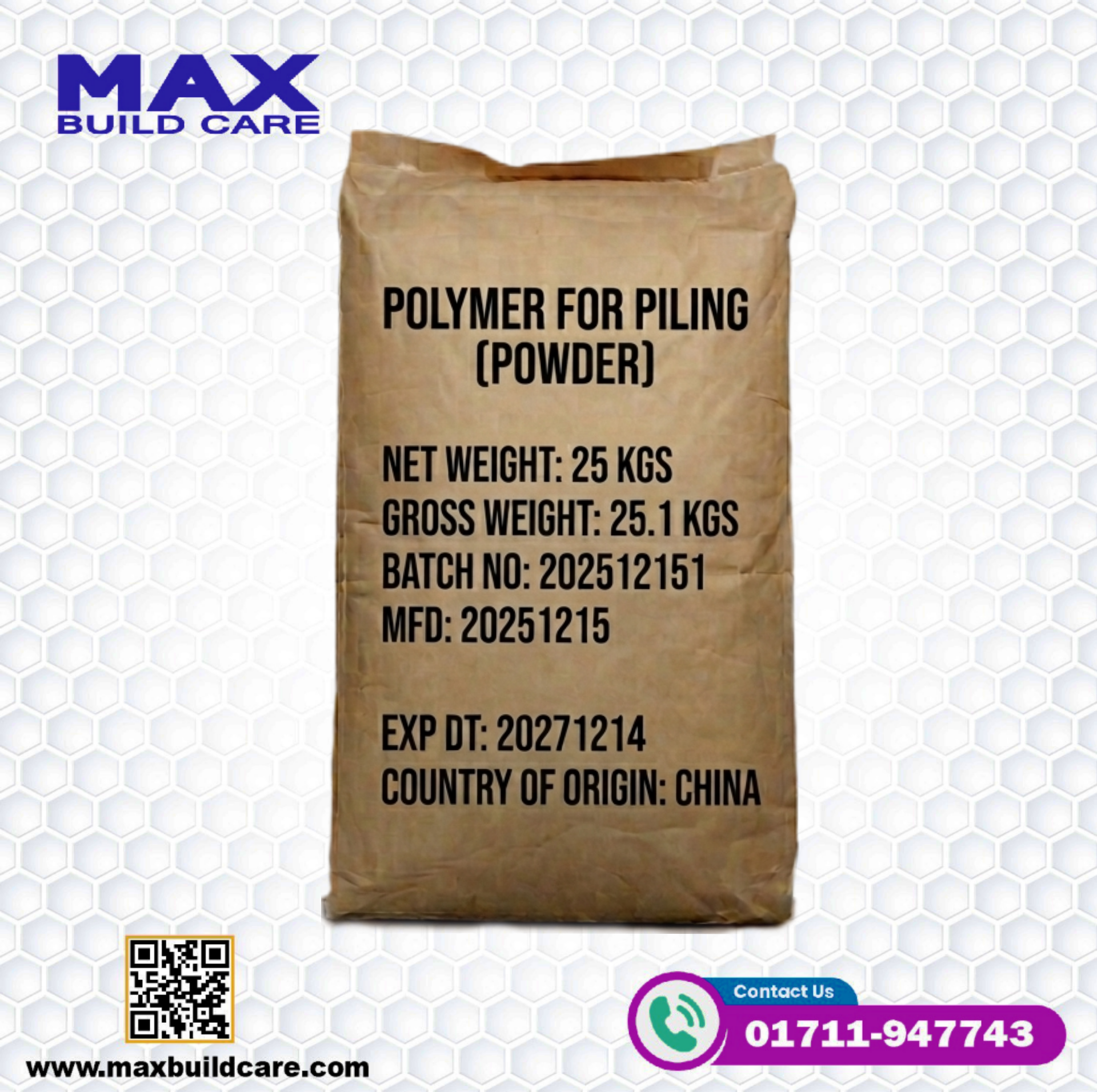
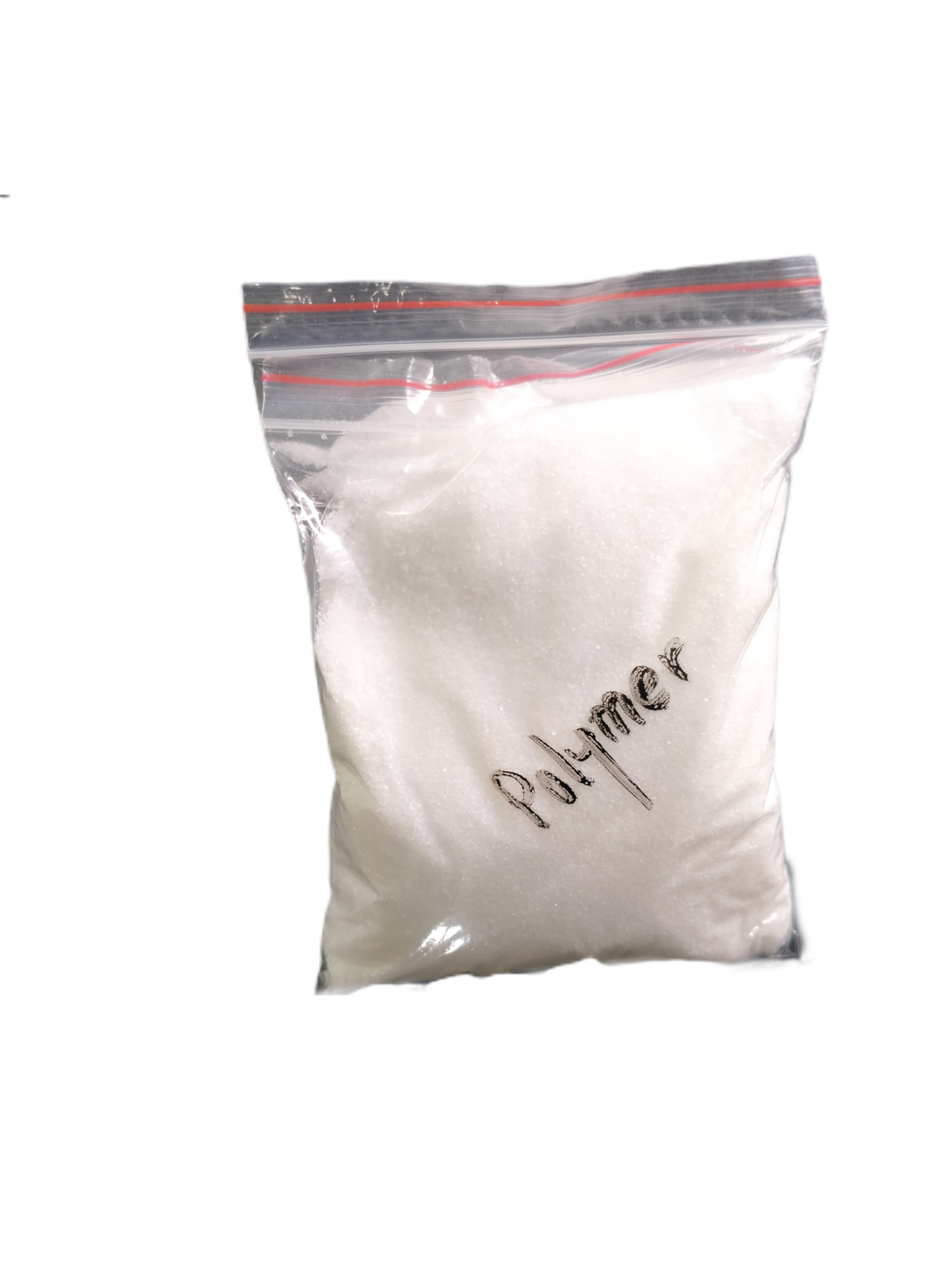
Polymer For Piling (PHPA)
৳ 1.00
Polymer for Piling is a high-performance drilling fluid additive used in bored piling and foundation work. It forms a protective layer on borehole walls, stabilizes soil, reduces fluid loss, and improves drilling efficiency, offering a cleaner and more efficient alternative to traditional bentonite slurry.
Polymer for Piling is an advanced, high-performance drilling fluid additive used in modern foundation engineering as an alternative to traditional bentonite slurry. It is specially formulated using synthetic or natural polymers designed to stabilize boreholes during piling, diaphragm wall construction, and deep excavation works. Due to its superior efficiency, cleaner operation, and reduced environmental impact, polymer-based piling systems are increasingly preferred in complex and sensitive construction projects.
Polymer for piling is typically supplied in liquid or powder form and, when mixed with water, forms a low-solid, high-performance drilling fluid. Unlike bentonite, which creates a thick slurry, polymer solutions work by modifying the rheological properties of water and forming a protective coating around soil particles. This helps maintain borehole integrity while keeping the drilling process clean and efficient.
Chemical Nature and Composition
Piling polymers are generally composed of partially hydrolyzed polyacrylamide (PHPA) or other advanced water-soluble polymers. These compounds are engineered to provide high viscosity, excellent fluid loss control, and soil stabilization properties.
Typical Characteristics:
High molecular weight polymer chains
Water-soluble and fast hydration
Strong bonding with soil particles
Low solid content system
These polymers interact with soil and water at a molecular level, creating a stable drilling environment without forming heavy mud like bentonite.
Working Principle in Piling Operations
When polymer is added to clean water (usually in very low concentrations such as 0.2%–0.5%), it forms a clear or slightly viscous solution. This solution performs several critical functions:
Borehole Stabilization
Polymer fluid increases the viscosity of water and forms a thin protective film around the borehole walls, preventing soil collapse.
Encapsulation of Soil Particles
Polymer molecules bind with soil particles, reducing dispersion and maintaining structural stability.
Fluid Loss Control
It minimizes water loss into surrounding soil, maintaining consistent fluid levels in the borehole.
Cuttings Suspension
Helps lift and carry drilled soil particles to the surface efficiently.
Unlike bentonite, polymer fluids do not rely on filter cake formation but instead stabilize the borehole through chemical interaction and viscosity control.
Key Technical Features
Low dosage requirement (cost-efficient usage)
High viscosity at low concentration
Minimal residue and cleaner boreholes
Excellent soil stabilization properties
Reduced slurry disposal issues
Improved drilling speed and efficiency
Applications in Construction
Bored Pile Foundations
Polymer drilling fluids are widely used in deep foundation piling for high-rise buildings, bridges, and infrastructure projects. They provide excellent borehole stability even in challenging soil conditions.
Diaphragm Wall Construction
Used in underground retaining walls where clean excavation and minimal contamination are required.
Horizontal Directional Drilling (HDD)
Provides lubrication, stability, and efficient cuttings removal in trenchless construction.
Sensitive Environmental Areas
Ideal for projects near water bodies or urban zones where disposal of bentonite slurry is difficult.
Advantages Over Bentonite
Polymer for piling offers several advantages compared to traditional bentonite systems:
✔ Requires significantly lower quantity
✔ Produces cleaner boreholes (better concrete bonding)
✔ Reduces disposal and environmental issues
✔ Faster mixing and easy handling
✔ Lower transportation and storage cost
✔ Improves overall site efficiency
Additionally, polymer fluids reduce the risk of contamination in concrete, resulting in stronger and more durable foundations.
Mixing and Usage Guidelines
Add polymer slowly into clean water with continuous stirring
Use proper dosing equipment for accurate concentration
Avoid over-mixing, which may degrade polymer chains
Maintain recommended pH and water quality
Regularly monitor viscosity and fluid properties
Hydration time is usually short, and the solution becomes effective quickly compared to bentonite.
Limitations
While polymer systems offer many advantages, they require proper technical understanding. Poor water quality, incorrect dosing, or contamination can reduce effectiveness. Additionally, polymers may not perform as effectively in extremely loose gravel or highly permeable formations without proper control measures.
Storage and Handling
Polymer products should be stored in a dry, cool environment away from direct sunlight. Liquid polymers must be protected from freezing or extreme heat. Proper sealing of containers is essential to maintain product quality.
During handling, operators should use basic protective equipment such as gloves and masks to avoid direct contact or inhalation.
Conclusion
Polymer for piling represents a modern, efficient, and environmentally friendly solution for borehole stabilization in deep foundation construction. Its low dosage requirement, high performance, and clean operation make it a superior alternative to traditional bentonite in many applications. By improving drilling efficiency, reducing environmental impact, and ensuring better structural integrity, piling polymers are becoming an essential component in advanced construction technology.
With proper selection, mixing, and quality control, polymer-based piling systems provide a reliable and cost-effective solution for complex and high-performance foundation projects.