Gypsum Plaster
৳ 1.00
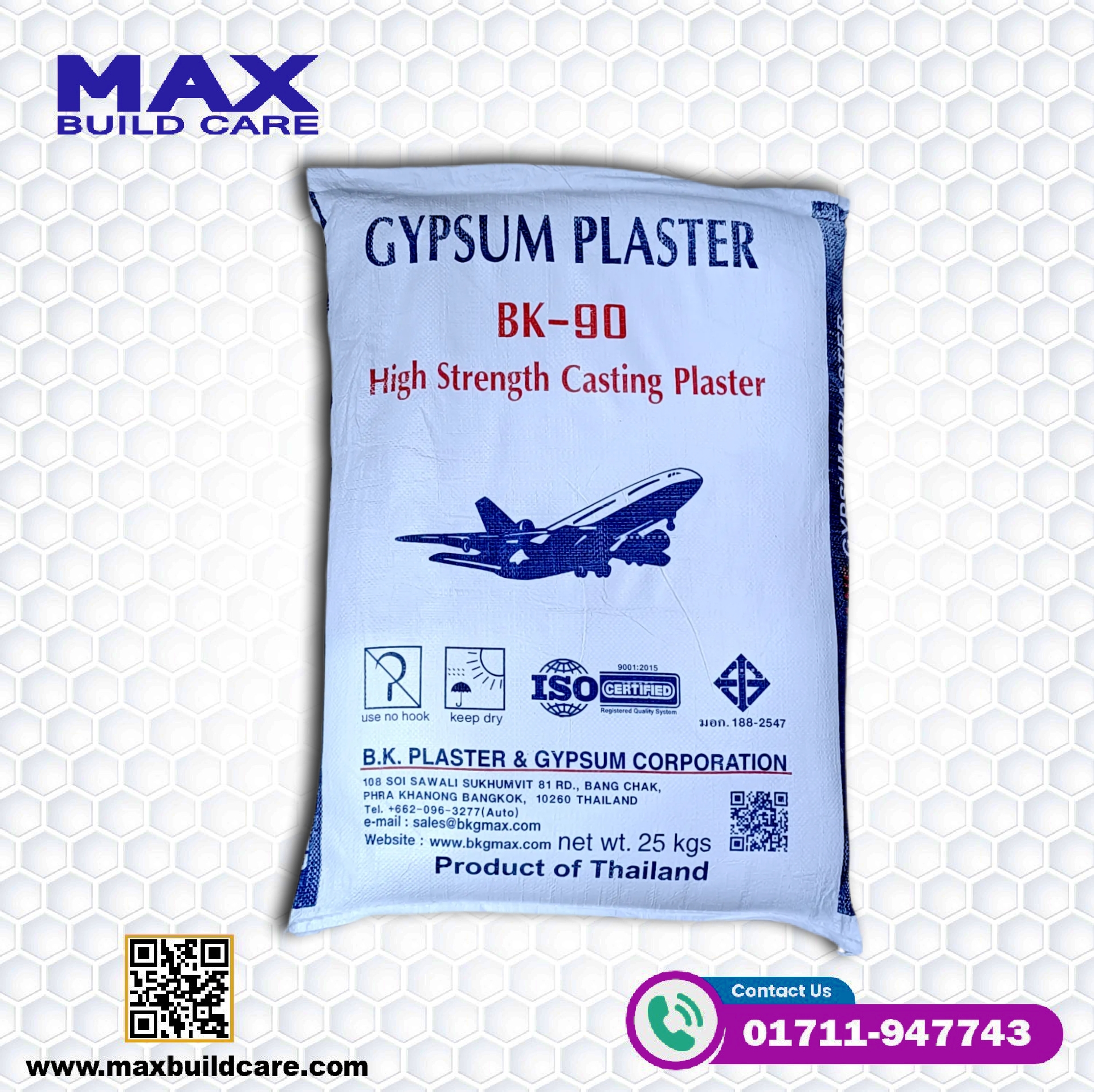
Gypsum Plaster (CaSO₄·½H₂O) is a high-quality building material produced from partially dehydrated gypsum. It provides a smooth, crack-resistant finish, sets quickly, and is widely used for wall finishing, false ceilings, decorative mouldings, and interior plastering applications.
Gypsum Plaster, chemically known as Calcium Sulphate Hemihydrate (CaSO₄·½H₂O), is a premium construction and finishing material widely used for interior wall finishing, ceiling works, decorative mouldings, and architectural detailing. It is produced by partially dehydrating natural gypsum (CaSO₄·2H₂O) under controlled temperature conditions, resulting in a fine white powder that sets rapidly when mixed with water. Due to its smooth finish, fast setting time, and excellent workability, gypsum plaster has become an essential material in modern construction and interior design.
Gypsum plaster is especially valued for its ability to provide a crack-free, smooth, and elegant surface without the need for multiple coats of finishing putty. It is an environmentally friendly and energy-efficient material that significantly reduces construction time while enhancing aesthetic quality.
Chemical Composition & Physical Properties
Gypsum plaster is mainly composed of calcium sulfate hemihydrate, which reacts with water to form calcium sulfate dihydrate, a hard crystalline structure that bonds strongly to surfaces. This chemical reaction is known as hydration, and it is responsible for the quick setting and strength development of plaster.
Key Properties:
Chemical Formula: CaSO₄·½H₂O
Appearance: Fine white powder
Setting Time: 5–30 minutes (adjustable)
Density: Lightweight compared to cement plaster
Finish: Smooth, uniform, and paint-ready
Fire Resistance: Non-combustible
Thermal Insulation: Moderate
Sound Insulation: Good acoustic performance
Once applied, gypsum plaster forms a hard, durable, and breathable layer that allows moisture to escape without damaging the surface.
Manufacturing Process
Gypsum plaster is manufactured by heating natural gypsum stone at around 120–180°C to remove part of its chemically bound water. This process converts gypsum into hemihydrate form, commonly known as Plaster of Paris. After calcination, the material is finely ground, sieved, and packed under quality-controlled conditions to ensure consistent performance.
Modern production plants use advanced rotary kilns and flash calciners, which ensure uniform particle size, controlled setting time, and high purity. This results in superior strength, workability, and surface finish.
Major Applications of Gypsum Plaster
1. Interior Wall Plastering
Gypsum plaster is widely used for plastering brick, concrete, and block walls. It eliminates the need for cement-sand plaster and wall putty, saving time and cost. The final surface is smooth, even, and ready for paint within 24 hours.
2. False Ceiling & Partition Works
Due to its lightweight and fast setting properties, gypsum plaster is ideal for ceiling boards, decorative panels, and partition systems. It provides excellent fire resistance and sound insulation, making it perfect for residential, commercial, and institutional buildings.
3. Decorative Mouldings & Architectural Designs
Gypsum plaster is extensively used to produce cornices, medallions, columns, ceiling roses, and artistic mouldings. It allows sharp detailing and smooth finishing, making it a favorite material for interior decorators and architects.
4. Repair & Patching Works
Cracks, surface damages, and holes in walls or ceilings can be easily repaired using gypsum plaster. It bonds strongly and sets quickly, enabling fast renovation work without extended downtime.
5. Prefabricated Building Elements
Gypsum plaster is used in making precast panels, wallboards, tiles, and ornamental components for quick and efficient construction systems.
Advantages of Gypsum Plaster
Fast Setting & Time Saving
Unlike cement plaster, which takes days to cure, gypsum plaster sets within minutes and dries in a few hours. This accelerates project completion.
Superior Surface Finish
It provides a smooth, glossy, and paint-ready surface without additional putty layers.
Lightweight & Reduced Structural Load
Gypsum plaster is significantly lighter than cement plaster, reducing the load on building structures and foundations.
Fire Resistance
Gypsum contains chemically combined water that is released when exposed to fire, acting as a natural fire barrier.
Eco-Friendly Material
It requires less energy for production, produces minimal waste, and is recyclable, making it environmentally sustainable.
No Curing Required
Gypsum plaster does not require water curing, saving large quantities of water and labor.
Comparison with Cement Plaster
Feature
Gypsum Plaster
Cement Plaster
Setting Time
Minutes
24–48 hours
Curing
Not required
Required
Finish
Very smooth
Rough
Weight
Lightweight
Heavy
Shrinkage Cracks
Minimal
Common
Construction Speed
Very fast
Slow
Packaging & Storage
Gypsum plaster is typically supplied in 25 kg or 40 kg moisture-proof bags. It must be stored in a dry, covered area, away from moisture and humidity, as contact with water before use will reduce its effectiveness. Proper storage ensures long shelf life and consistent performance.
Safety & Handling
Gypsum plaster is safe and non-toxic, but dust inhalation should be avoided. Workers should use gloves, masks, and eye protection during handling and mixing. In case of skin contact, wash with clean water.
Conclusion
Gypsum Plaster (CaSO₄·½H₂O) is a modern, efficient, and high-performance interior finishing material that has transformed the construction industry. Its fast setting time, smooth finish, lightweight nature, and eco-friendly properties make it the ideal choice for residential, commercial, and decorative applications. Whether for wall plastering, ceilings, or artistic mouldings, gypsum plaster delivers superior quality, durability, and aesthetic excellence with unmatched speed and convenience.